A road that can replay the same problem
A driver-assistance system is difficult to evaluate on ordinary roads because conditions keep changing. A passing truck, a wet patch, or glare from the sun can alter what a camera or radar detects from one run to the next. On Virginia Tech’s Smart Road, researchers can hold key conditions steady, change one variable, and repeat a test. That makes it easier to tell whether a system’s response changed because of the experiment—or because the scene was different.
Why controlled weather matters
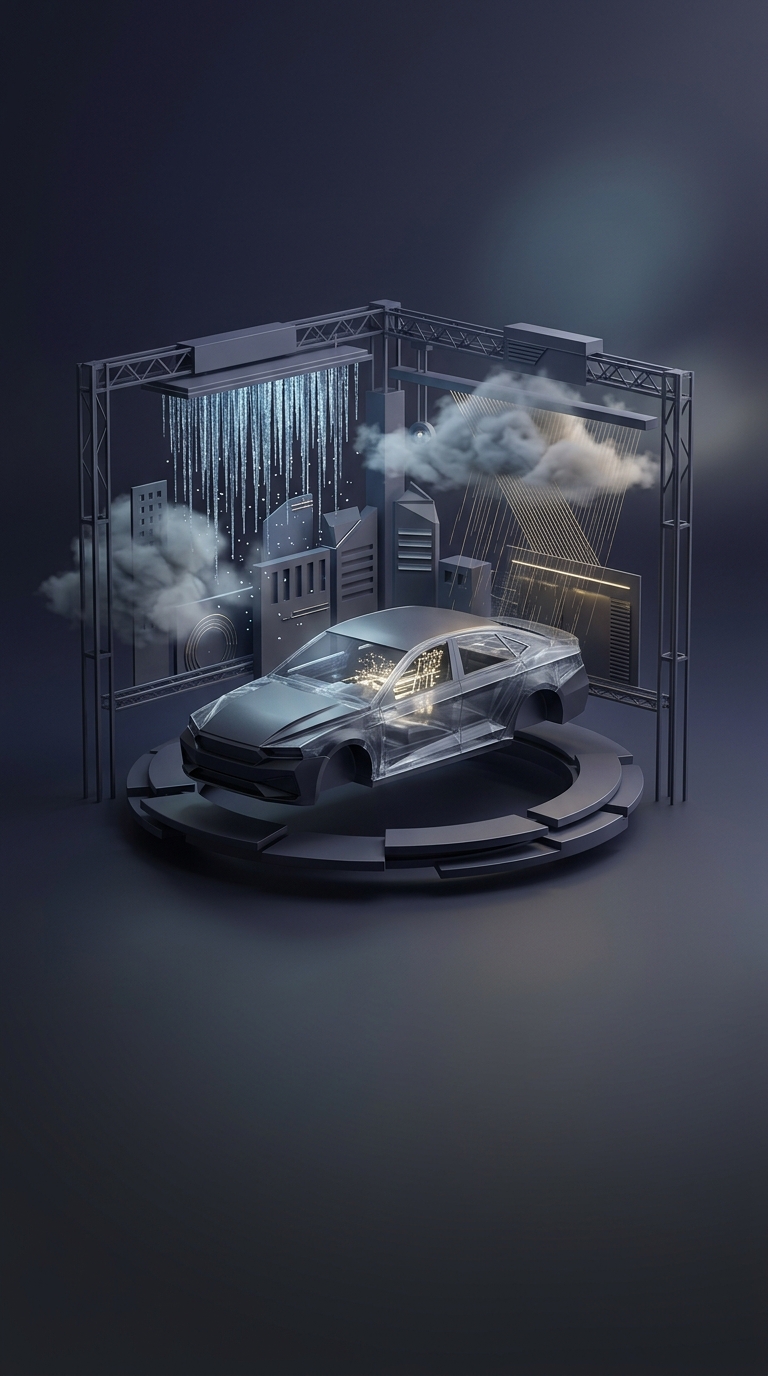
Rain is more than a slick surface. It can blur camera images, scatter light, and make lane markings harder to see. By producing rain on demand, researchers can examine how a vehicle’s sensors and software cope with a known level of visibility and road wetness, then compare the result with a clearer run. Adjustable lighting and movable obstacles allow similar tests of glare, nighttime detection, and reactions to hazards near the roadway.
The point is not to make the road realistic in every detail. It is to make a particular challenge repeatable. If a system detects an obstacle on one pass but misses it on another, researchers can investigate what changed without guessing whether the weather or traffic was responsible.
From a controlled trial to public roads
A closed course gives researchers room to test unfamiliar technology without exposing ordinary drivers to experimental behavior. It can reveal weaknesses early—for example, a sensor that works well in daylight but struggles when rain and darkness combine. Those findings help engineers decide what to adjust and what further testing is needed before a system encounters the messy variety of public roads.
The artificial setting is therefore useful precisely because it is less chaotic than real traffic: a test can be run again under nearly the same conditions, turning a surprising failure into something researchers can study.