The real limit is grip, not engine strength
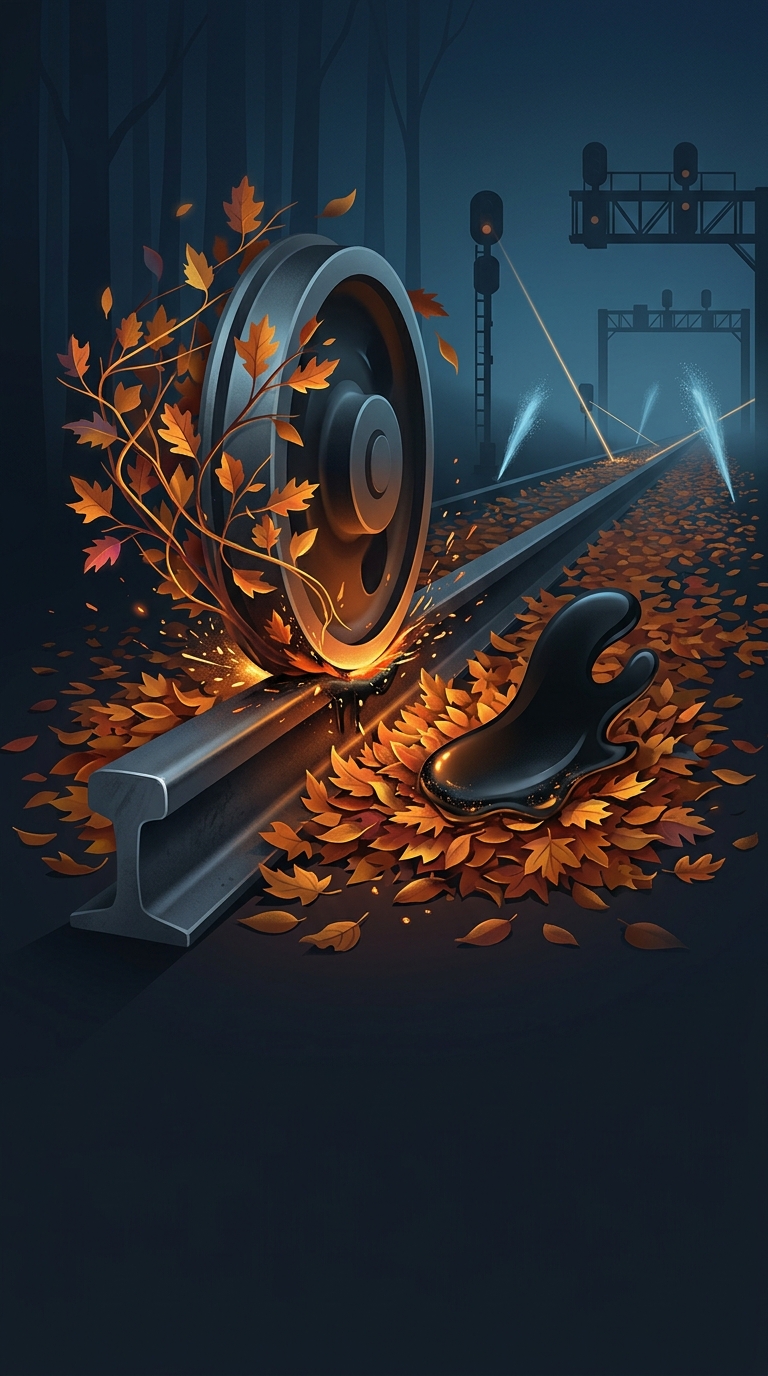
A locomotive can produce enormous pulling force, but that force reaches the track through a small contact patch where each steel wheel meets a steel rail. If the locomotive asks for more force than that patch can transmit, the wheels spin instead of pushing the train forward. A stronger engine alone may not solve the problem: it can simply overwhelm the available grip sooner.
That is why railways distinguish between power and adhesion. Power helps a train keep moving uphill at speed; adhesion determines how much weight the driven wheels can actually pull without slipping. Locomotives may carry sand and drop it onto the rails to improve grip, especially when the track is wet, leaf-covered, or otherwise slick.
A long train makes the challenge add up
The locomotive must overcome gravity’s pull on the entire train, not just its own mass. Each car adds a little more downhill force, so a grade that seems mild to a road vehicle can demand substantial, sustained effort from a freight train. The train’s length also means that more cars are being pulled at once, while only some of the wheels are powered.
Railways manage steep routes by limiting train length or weight, using additional locomotives, or choosing a less direct alignment with longer curves and gentler grades. On particularly steep mountain lines, a rack railway uses a toothed rail and matching locomotive gear to provide positive engagement rather than relying only on wheel grip. The tradeoff is built into rail travel: steel wheels roll efficiently over long distances, but that efficiency leaves little spare traction when the track tilts upward.