What Maglev Removes—and What It Doesn’t
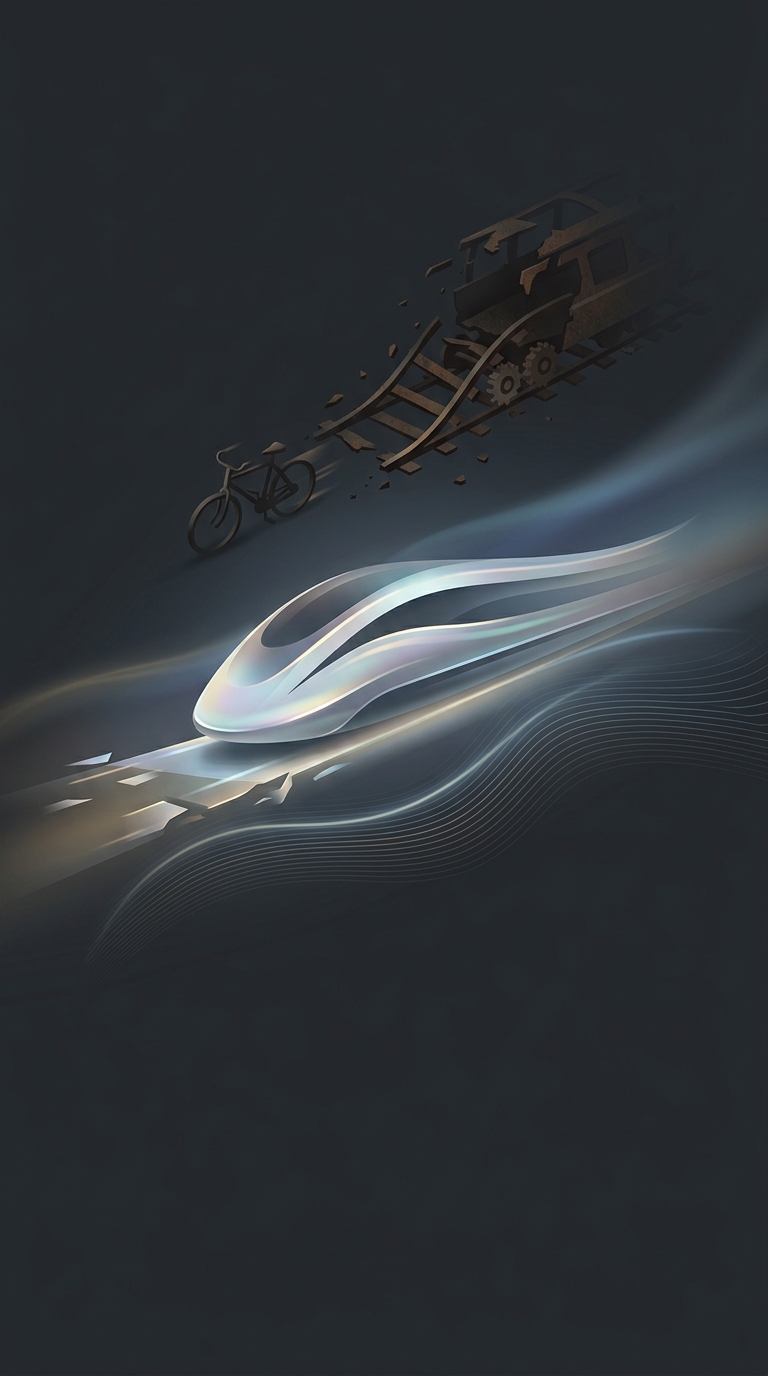
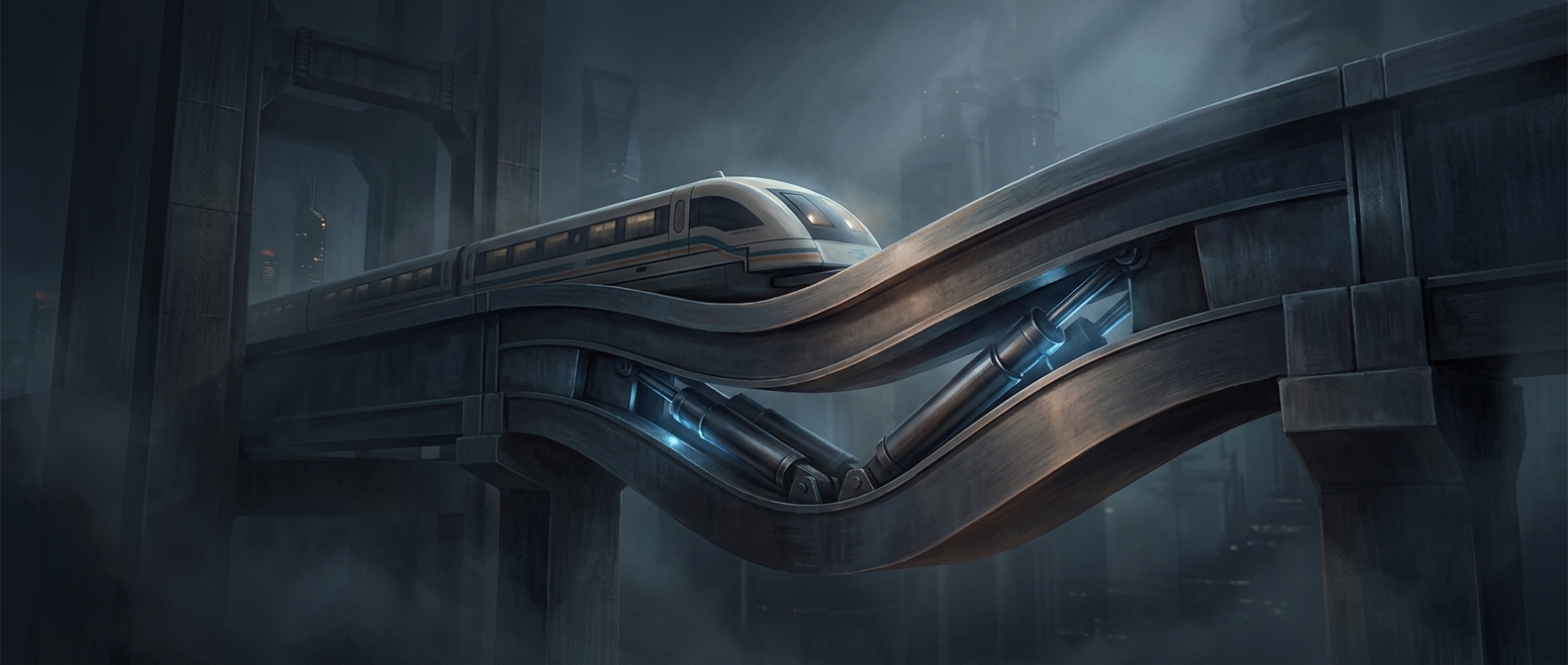
A maglev train is supported by magnetic forces rather than wheels rolling on rails. With no wheel–rail contact during levitation, it avoids much of the rolling resistance and mechanical wear that limit conventional trains. Magnets can also help propel it: a changing magnetic field along the guideway pulls or pushes the train forward.
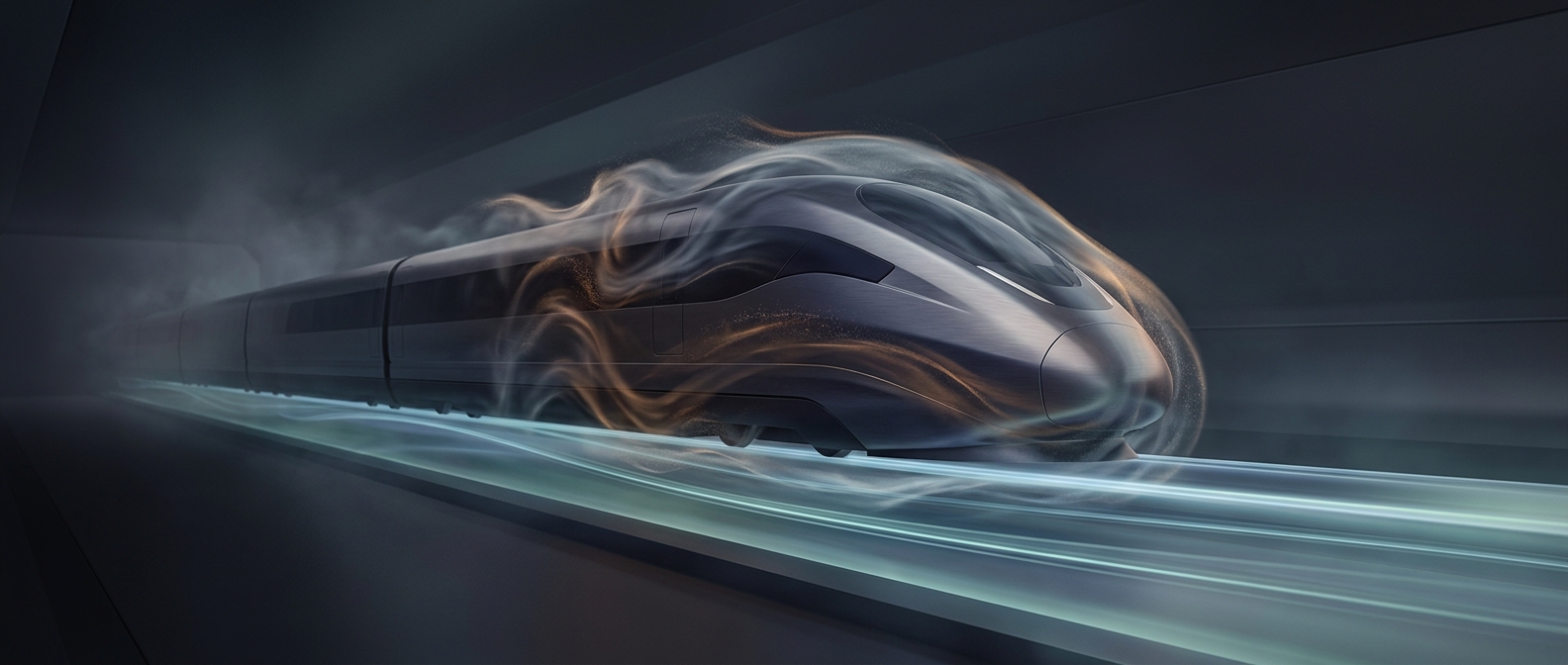
But the train still moves through air. Its nose must push air aside, and air flows along the body and beneath it. That aerodynamic drag grows sharply with speed: roughly speaking, doubling speed can quadruple the resisting force. Because the train must also cover twice as much distance each second, the power needed to overcome that drag can rise about eightfold.
The Atmosphere Becomes the Main Design Problem
Engineers therefore shape the train to part the air smoothly. A tapered nose and carefully managed gaps reduce turbulence and pressure changes; the body and guideway must also be designed as a system. At very high speeds, air can compress and form strong pressure waves. In tunnels, those waves have less room to spread, making tunnel shape and train entry especially important.
This is why eliminating contact with the track does not make speed effortless. It shifts the dominant obstacle: less energy is lost to wheels and rails, while more must go into overcoming air resistance. The faster a maglev goes, the more its performance depends on the shape of the train and the space it travels through.