How a coal-fired train made a mess
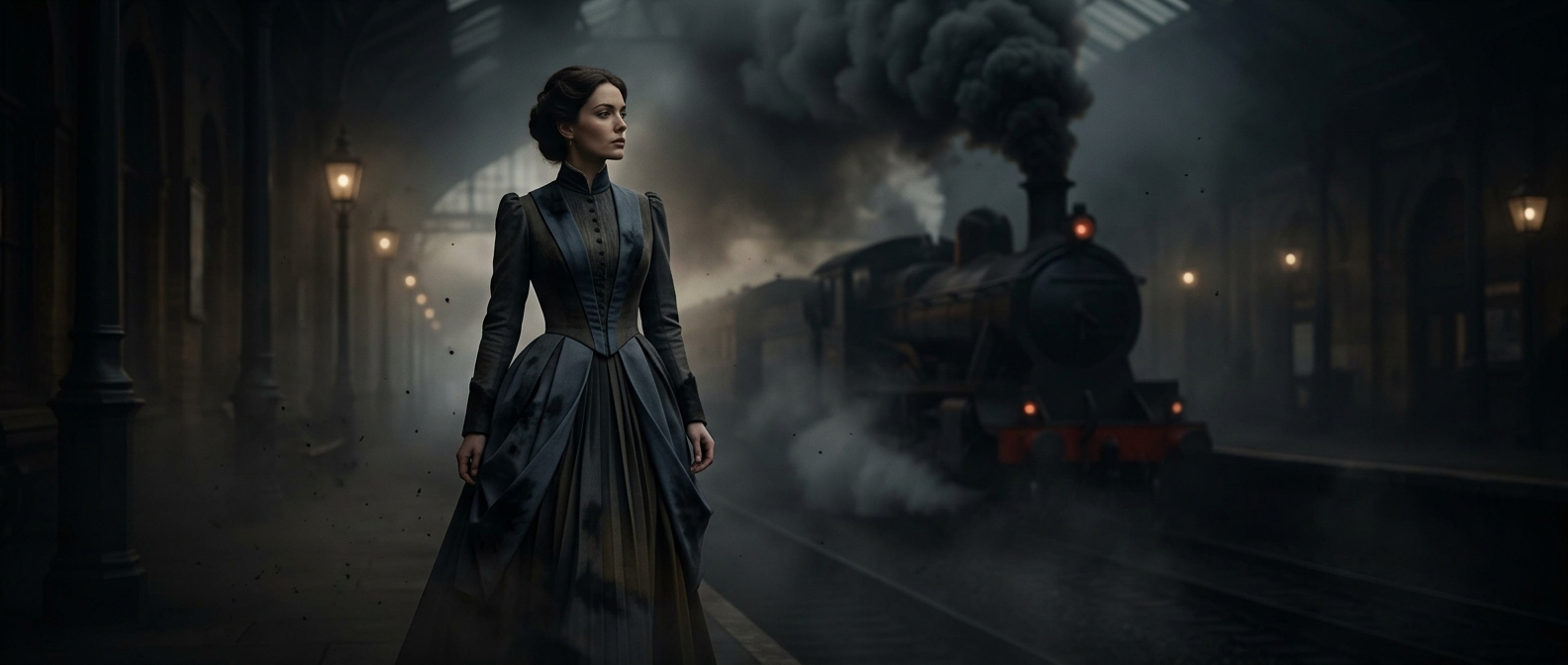
In a steam locomotive, burning coal heated water to make the steam that drove the engine. The fire also produced smoke carrying fine soot, while the moving train could stir up ash and dust along the track. Some particles escaped from the locomotive and settled on platforms, carriages, and passengers—especially when people boarded or stood near the train.
Soot is made of tiny carbon-rich particles. It clings to fabric and can be difficult to brush off cleanly, so even a brief journey could leave visible marks on a collar, sleeve, or skirt. A light-colored outfit made those marks stand out sharply.
Dark fabric was practical, not protective
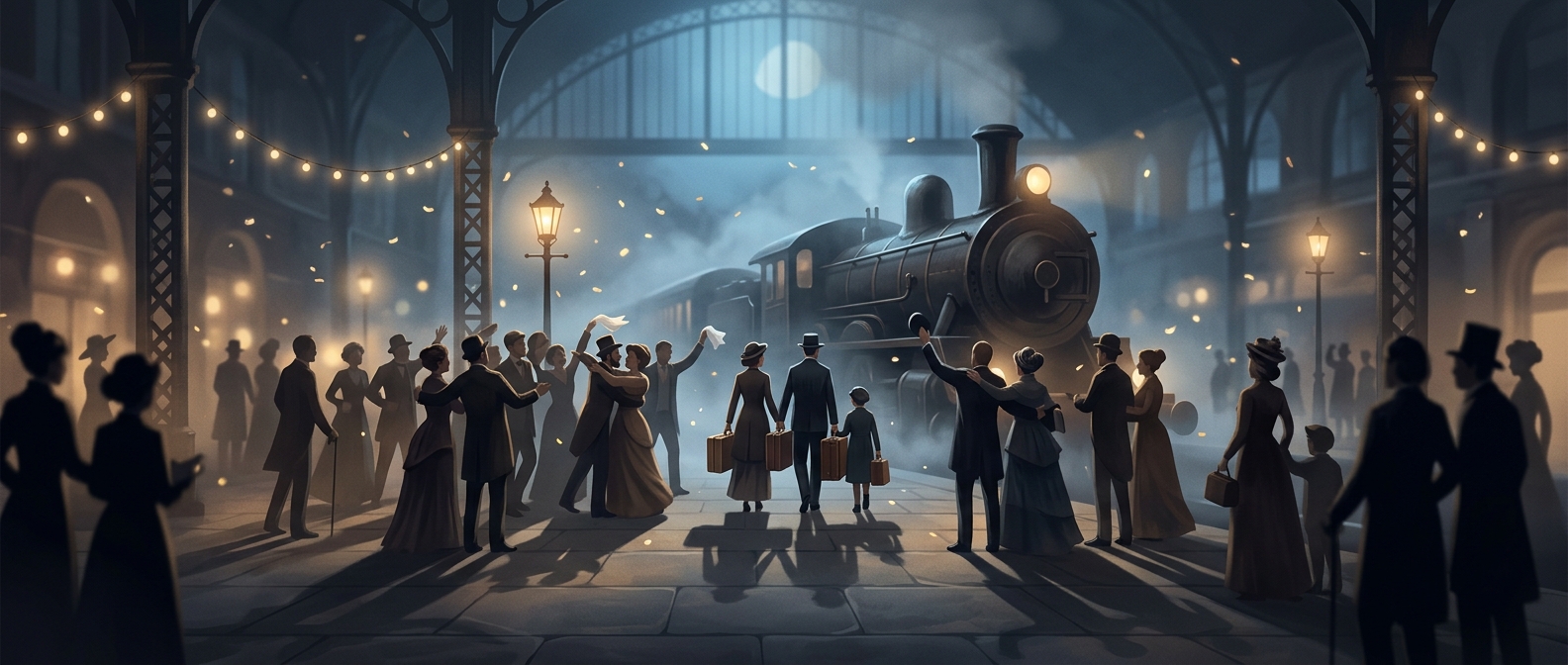
Brown and dark gray did not keep clothes clean; they simply made scattered grime less conspicuous. That mattered when travelers wanted to look presentable after a trip but could not count on changing or washing their clothes at the station. Choosing a darker outfit was a small way to manage the railway’s everyday mess.
The effect depended on the route, weather, train, and where someone sat or stood. But the basic tradeoff was easy to see: white fabric could show every smudge, while a darker garment let a traveler arrive looking less as though the locomotive had dusted them with its fuel.