A ticket for the goodbye
A platform ticket solved a small but practical problem: people wanted to accompany passengers to the train, but the railway needed to distinguish visitors from travelers. The ticket gave a non-traveler permission to pass into the station’s platform area without buying a fare for a journey.
That mattered because a platform was not simply a public hallway. It was where trains arrived and departed, passengers moved between cars and station staff managed boarding. Requiring a ticket made access legible: the person seeing someone off could enter, while the railway could still regulate who went beyond the station entrance.
Turning departure into a shared moment
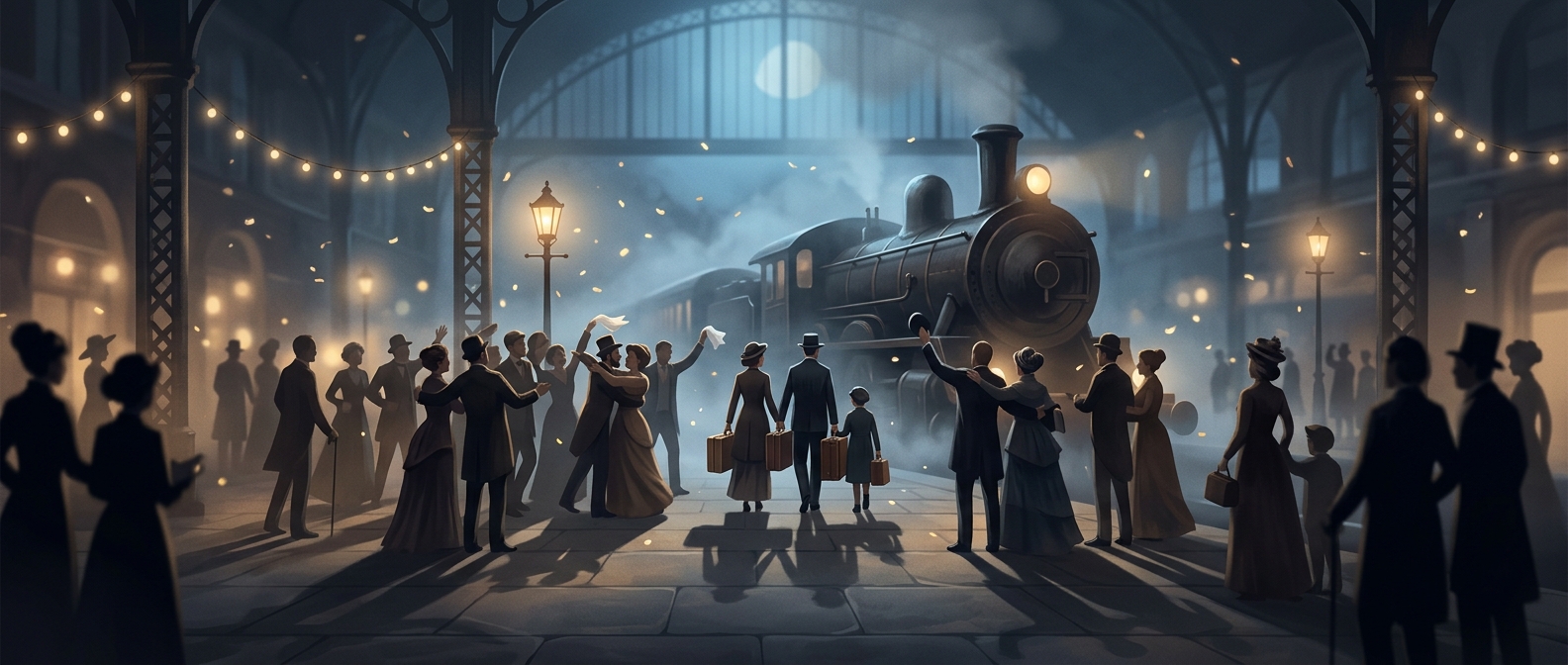
The ticket also gave farewells room to unfold. Friends or relatives could walk alongside a passenger, help with luggage, and stay near the carriage until departure. On steam railways, the engine’s noise and clouds of exhaust made the scene vivid; the train’s movement then turned a drawn-out goodbye into a clear ending.
A short trip could therefore receive the same ceremony as a long one. What mattered was not the distance ahead, but the brief stretch of time before the passenger was out of reach. The platform ticket made that pause possible—a small paid permission that let the station host both a journey and its send-off.