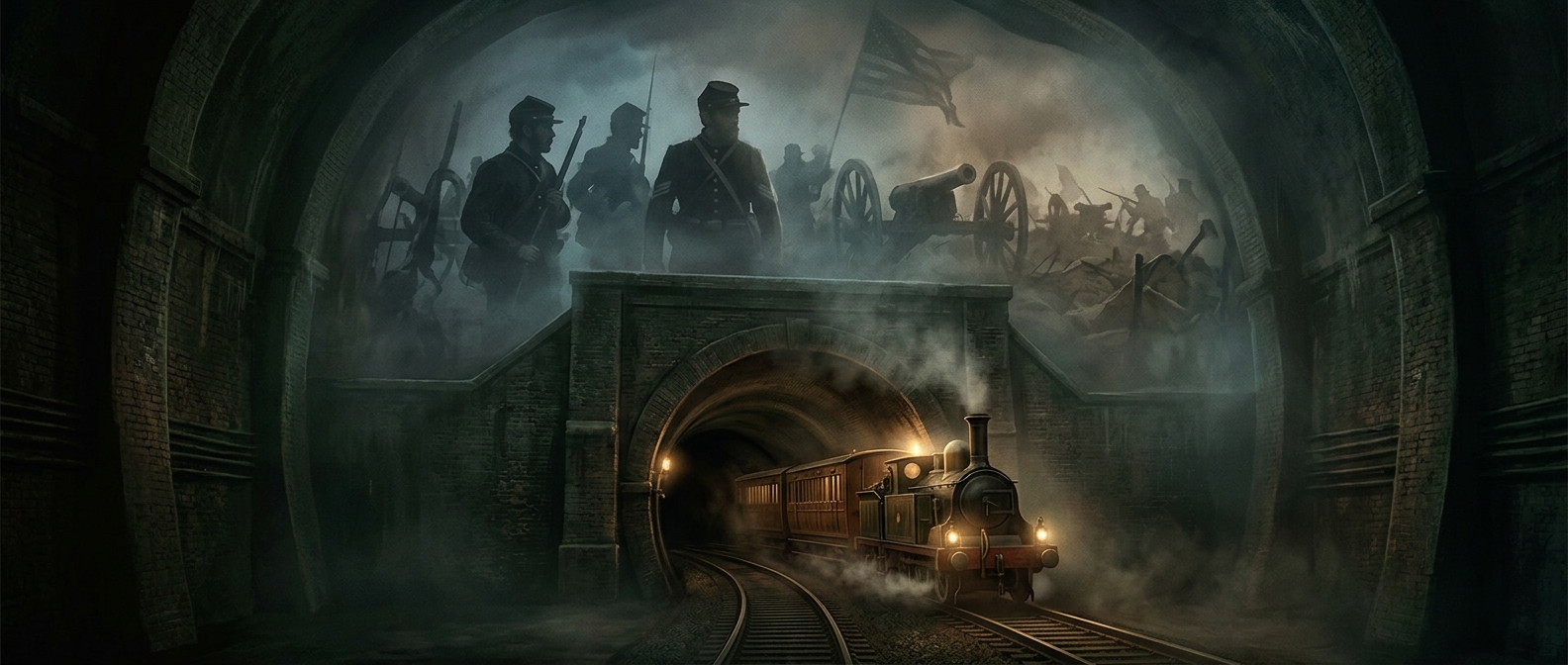
How London Put a Railway Under Its Streets
The first section of London’s Metropolitan Railway opened in 1863, linking major rail terminals through the crowded city. Building an elevated railway would have meant taking up valuable street space and cutting across the urban landscape. Engineers instead used a method suited to shallow routes: cut and cover.
Crews opened a long trench along existing streets, built the railway inside it, then covered it over. The tracks could run only a short distance below the surface, avoiding the deeper excavation and complex tunneling that a fully bored underground line would require. But the approach came at a visible cost: streets above the route had to be dug up, disrupting traffic and nearby buildings during construction.
A Tunnel That Still Had to Breathe
The railway’s early trains were steam-powered. Their engines needed air, and burning coal produced smoke and soot—an uncomfortable problem in an enclosed tunnel. The line therefore relied on openings to the surface and ventilation arrangements to let smoke escape. Even so, passengers encountered smoky conditions, especially where trains were moving through covered sections.
That was the central engineering compromise: burying the tracks kept the railway from dominating the streets, but it did not make the railway invisible or clean. The project shifted much of the disruption underground only after first bringing it directly into the city’s roads.
The result was a new way to move people through a dense metropolis without laying tracks across its surface. Its shallow construction also left a lasting mark on the network: some of London’s oldest underground routes follow corridors where streets could be opened and restored, rather than deep tunnels bored far beneath them.