Why Railways Became Practical Before Bicycles
A steam locomotive could be enormous, heavy, and difficult to maneuver; it only had to pull along a prepared track. Rails guided its wheels and carried much of its weight, while a stationary engine supplied power to the moving train. That made it possible to build a useful railway vehicle before anyone had solved the smaller but more intimate challenge of making a bicycle safe for ordinary riders.
By the early 19th century, steam locomotives were hauling loads on railways. Passenger railways followed, turning the train into a practical way to travel between towns. The railway’s track was not incidental infrastructure: it was the support and steering system that made the machine workable.
The Bicycle Had to Solve Balance and Control
Early two-wheeled machines were propelled by their riders, not engines. They had no track to keep them upright, so the rider had to balance while steering. A tall front wheel could travel quickly, but it also raised the rider high above the ground; a sudden stop or bump could send the rider forward. Other early designs were cumbersome or uncomfortable, limiting their usefulness.
The late-19th-century safety bicycle made everyday riding more manageable. Its two wheels were closer in size, and a chain drove the rear wheel from pedals mounted between them. This lowered the rider and made the machine easier to mount and control than the high-wheeled designs that preceded it. Improvements such as pneumatic tires also softened the ride.
A Different Kind of Transportation Problem
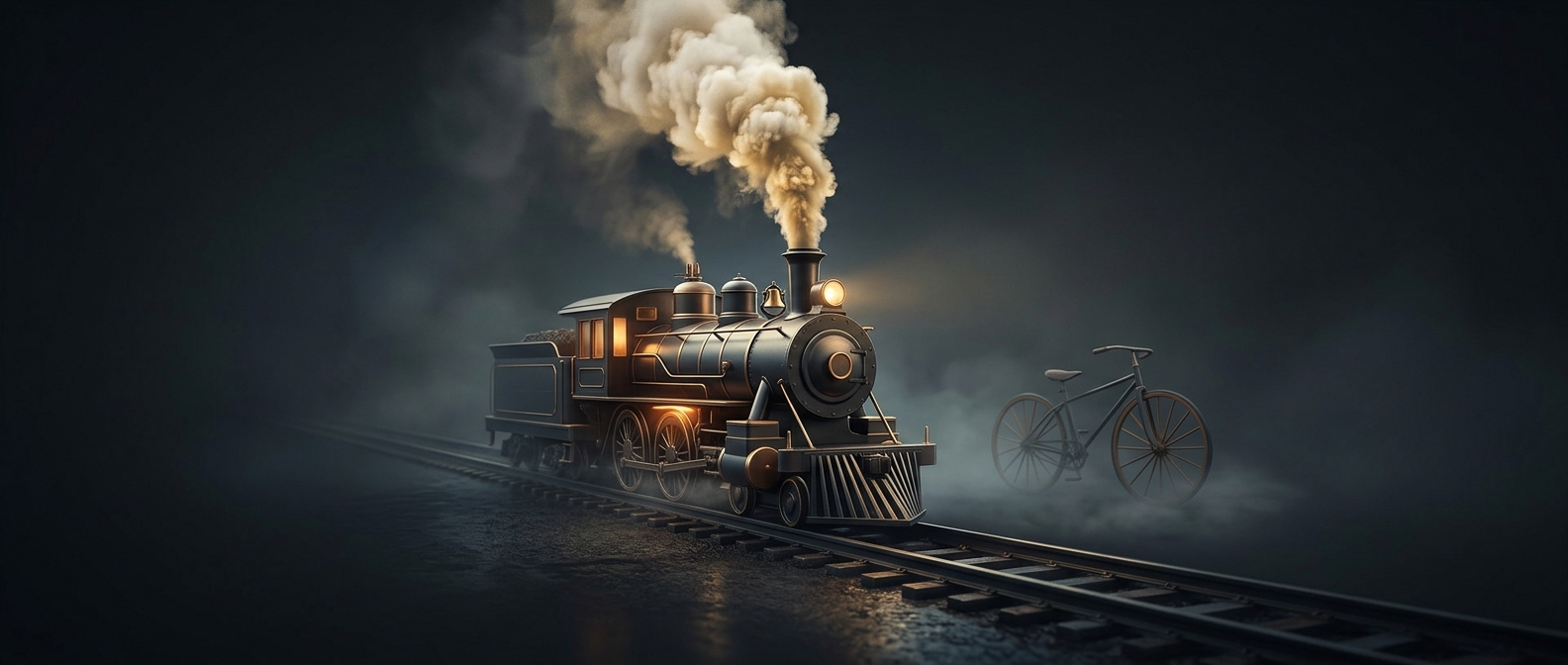
The chronology reflects two different engineering tasks. Railways made a powerful machine practical by building a fixed route beneath it. Bicycles had to combine propulsion, steering, and balance in a vehicle light enough for one person to operate on ordinary roads. Trains could connect distant places first; a dependable bicycle came later as a practical way to cover the journeys at either end.