Why the First Deep-Level Trains Felt Like Rooms Underground
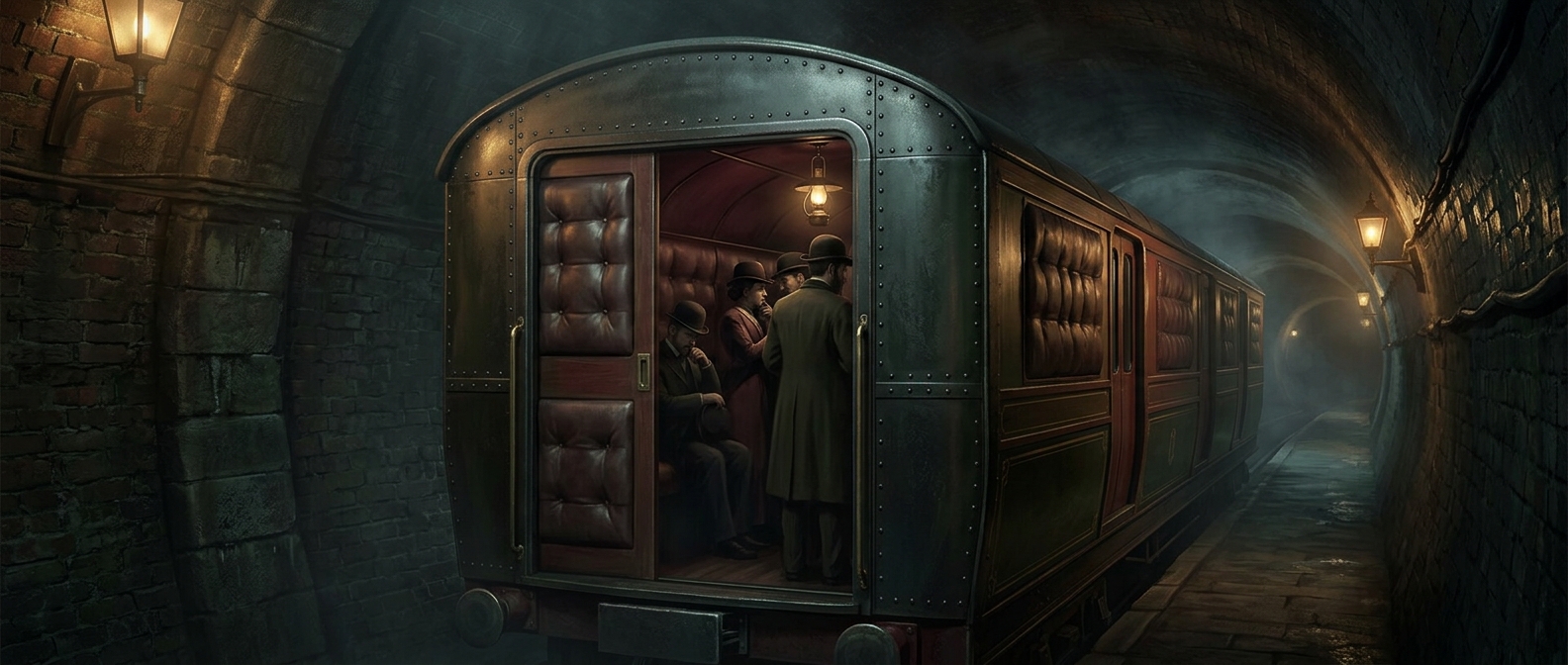
When the City and South London Railway opened in 1890, it introduced a new kind of journey: electric trains running through deep tunnels beneath the city. Unlike older railways, where passengers could look out at stations or passing scenery, this route offered little to see beyond its tunnel walls. The designers treated that absence as a reason to omit windows—and gave the carriages a snug, enclosed interior.
That logic missed what a window does even when the view is unremarkable. It tells passengers where they are in relation to the outside world and gives a confined space a sense of openness. Without that visual cue, the tunnel’s darkness became part of the experience inside the carriage. The thick upholstery added to the impression of a sealed room rather than a vehicle moving through a larger world.
The Design Had to Account for the Passenger, Too
For riders, the problem was not simply that the trip was dark. The closed-in carriages could feel claustrophobic, and some passengers experienced panic. A railway built to make an underground journey practical had created a new challenge: people had to feel comfortable enough to take it.
The carriages were redesigned with windows, acknowledging that passengers needed more than a seat and a route to their destination. Even a view of a tunnel can matter: the window helps make the space feel less closed off.