One wheel, a load shifted forward
A wheelbarrow carries weight differently from a person with a shoulder pole or a basket. The wheel supports much of the load against the ground; the handler mainly has to balance the barrow and push it forward. In a typical design, the wheel sits beneath the load, so the closer the cargo is to the wheel, the less force is needed at the handles to keep the barrow level.
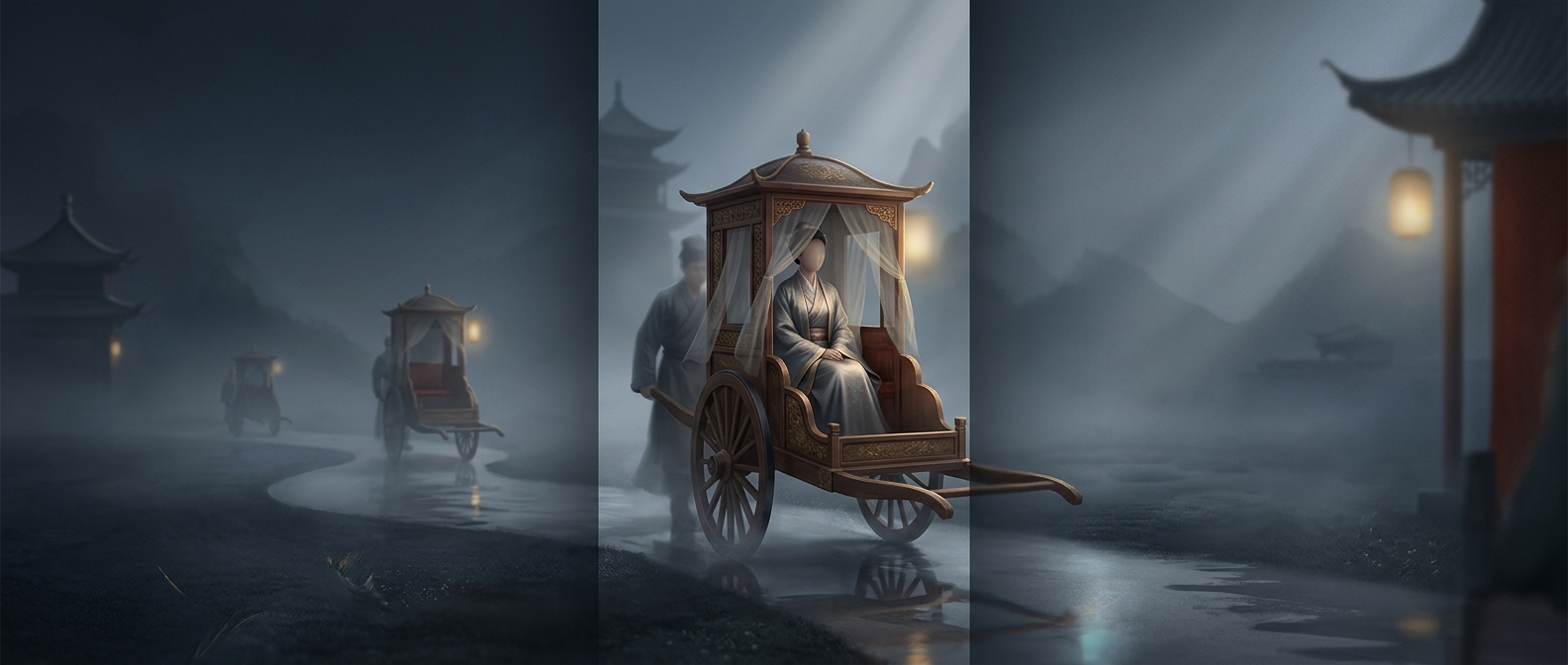
That arrangement made the Chinese wheelbarrow useful for more than hauling goods. A broad tray could hold a person, while the wheel took much of the rider’s weight. The passenger still had to sit steadily, and the operator had to steer and manage the remaining load, but the basic mechanics did not change: the wheel replaced much of the lifting that would otherwise fall to the carrier.
A practical answer to difficult routes
The advantage mattered especially where carts were awkward: narrow paths, uneven ground, or routes where a large team and vehicle were impractical. One person could move a substantial load with a compact machine, though the barrow’s balance and handling depended on how the weight was positioned. A rider placed too far from the wheel would press harder on the handles and make the trip more tiring.
Passenger-carrying was therefore not a separate invention so much as an extension of the wheelbarrow’s central design. The same platform that made sacks easier to move could support a person, turning a simple cargo tool into a small, human-powered transport vehicle.