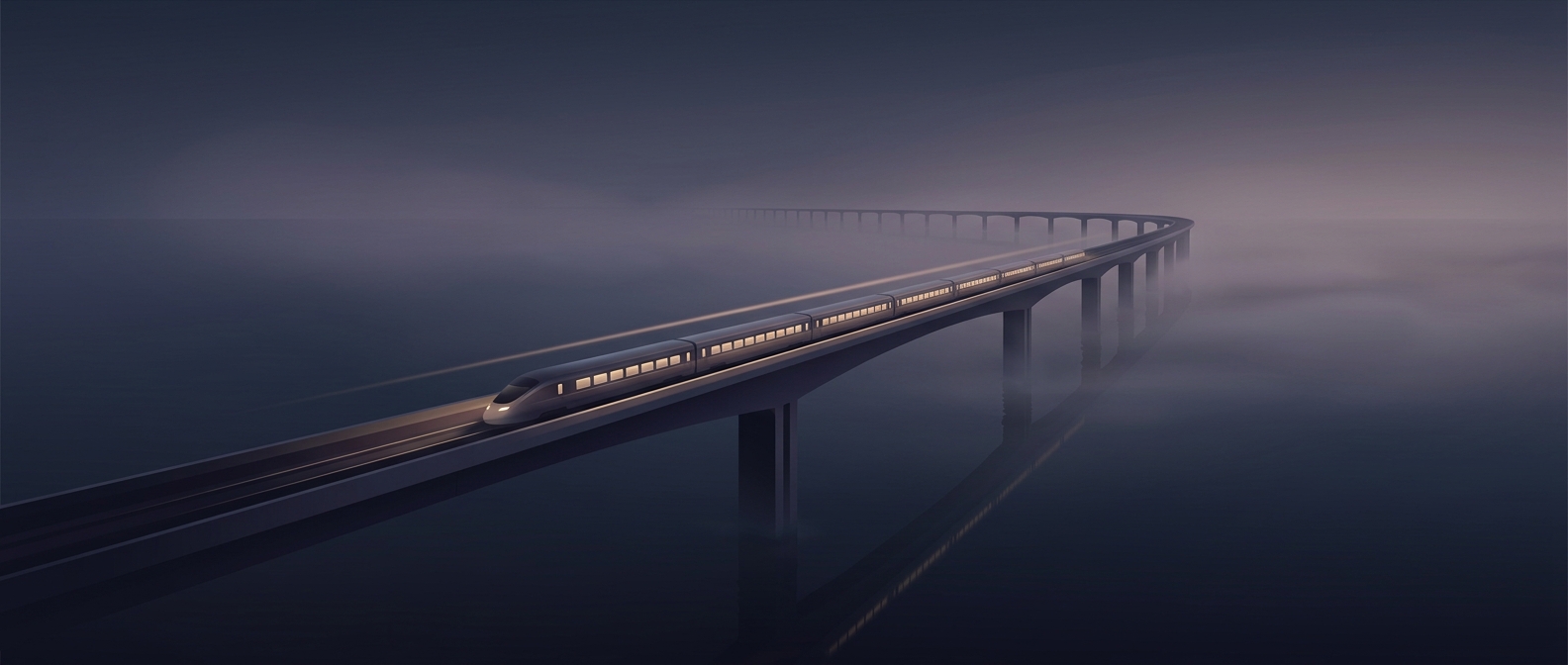
The challenge is keeping every span in line
On a very long rail crossing, the engineering problem is not just making each section strong. The sections must also meet with a smooth, precise track, because a train’s wheels cannot tolerate abrupt changes in direction or height. Surveyors and construction crews therefore work outward in carefully controlled stages, checking the position of each new span against the route as a whole.
The structure also has to move a little. Steel and concrete expand in heat and contract in cold, while wind and passing trains produce small shifts. Bearings—the supports between a span and its pier—allow limited movement without letting the bridge slide out of place. Expansion joints accommodate changes in length while keeping the rail’s transition safe and controlled.
A fixed route trades flexibility for continuity
A bridge can make a rail connection dependable where water, marshland, or unstable ground would otherwise interrupt the route. But that continuity comes with a cost: a long structure contains many supports and connections, each of which must be inspected and maintained. Conditions beneath the route matter too; the design of a pier depends on what lies below it, not just on the water visible from a train window.
That is why a seemingly simple ride across open water depends on a chain of separate engineering decisions. The train experiences one continuous track; the bridge must continually manage movement, support, and alignment to make it feel that way.