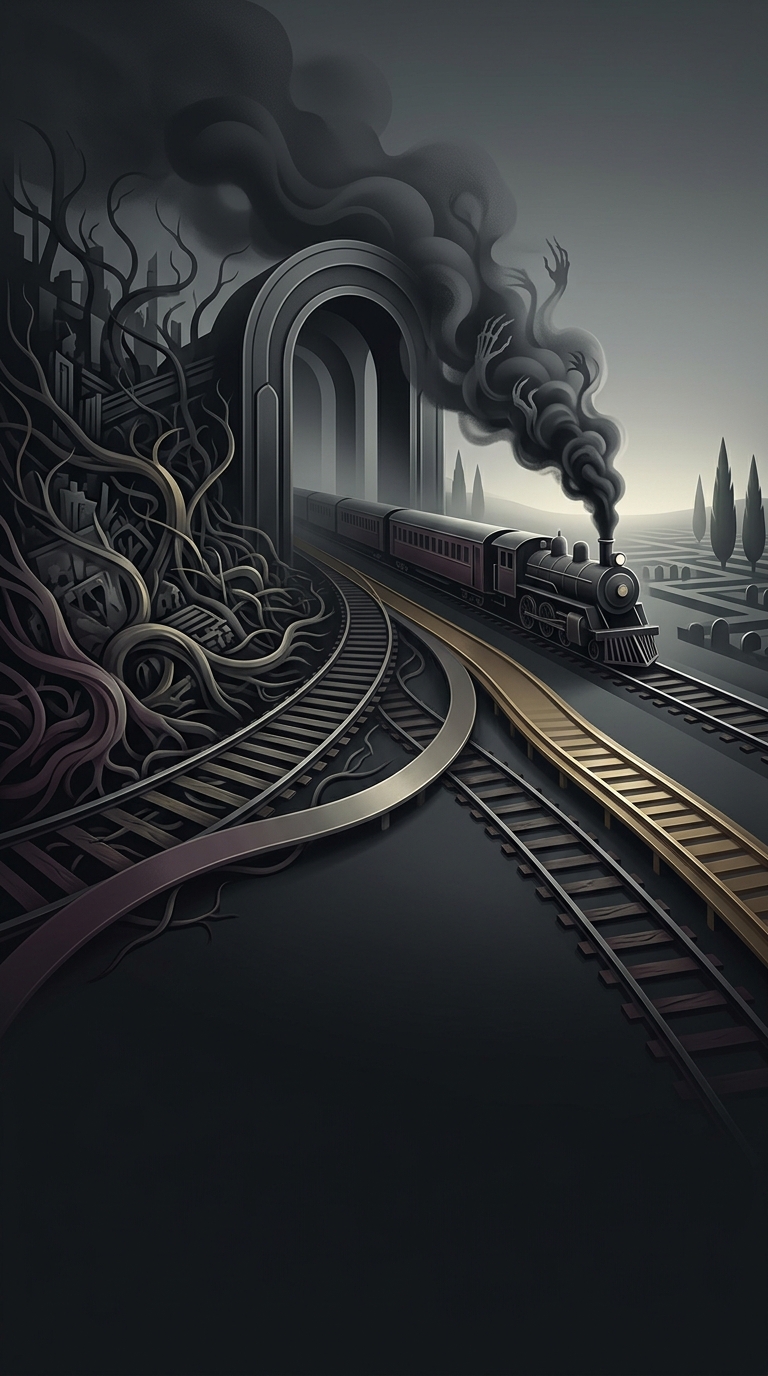
A railway built for London’s overflowing graveyards
By the mid-19th century, London’s burial grounds were struggling to keep pace with a rapidly growing city. Small churchyards and private cemeteries were crowded, and pressure to find burial space beyond the urban core was rising. Brookwood Cemetery, opened in Surrey in 1854, offered room on a scale London could not easily provide—but it lay about 23 miles from the city.
The London Necropolis Railway turned that distance into a scheduled journey. Funeral parties could travel from a dedicated station near Waterloo to a station within the cemetery grounds, while coffins were carried in separate railway carriages. At Brookwood, the station’s position meant the final transfer to a grave did not require a long road journey from an ordinary town station.
The railway carried social distinctions, too
The service was organized around the funeral, not simply the coffin. Passengers and the dead were assigned different classes, reflecting the Victorian expectation that a funeral should preserve distinctions of status even in death. The railway’s arrangements also accommodated different religious rites, including Anglican and nonconformist burials, rather than treating every funeral as interchangeable.
That combination made the line unusual: it was both public transport for mourners and a specialized link in the burial process. Its purpose was not to make grief impersonal, but to move a funeral from crowded London to a cemetery designed to receive it. The striking detail is that the journey’s social order extended all the way to the dead—the railway sold a class of travel for coffins as well as for their grieving relatives.