Why the Nullarbor Lets a Railway Run Straight
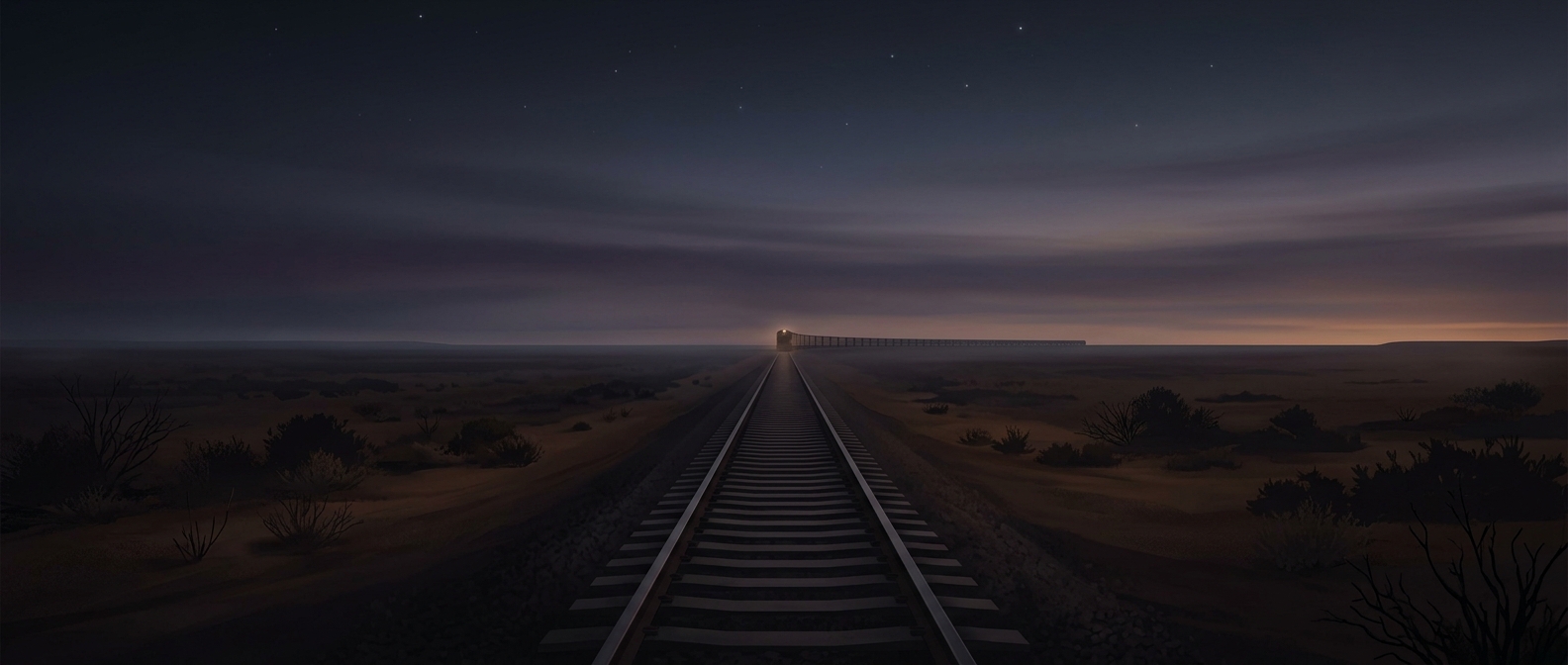
A railway can avoid curves when the ground does not force it to turn. Across the Nullarbor Plain, a vast, relatively level expanse of southern Australia, there are few hills, valleys, or other major obstacles to work around. That gives engineers room to lay track along a direct line rather than steering around the landscape.
Straight track is not simply a matter of pointing rails toward the horizon. A route still has to be surveyed, built on a stable formation, and made suitable for trains carrying heavy loads. Curves and steep gradients can add resistance, so avoiding them can make a route easier for trains to travel. But the benefit depends on what the land allows: in more broken terrain, a railway has to trade directness for workable grades and manageable construction.
A Long Line Through a Sparse Landscape
The Nullarbor’s openness makes the railway’s scale unusually visible. With few landmarks or bends to break up the view, the track can seem to run almost endlessly across the plain. The straight stretch is therefore more than a striking line on a map: it is the result of a route finding an unusually broad corridor where geography offers little reason to curve.
For passengers, that means a long stretch in which the view changes slowly. For railway builders, it means the landscape itself has done some of the work of choosing the alignment.