When a Train’s Floor Becomes a Capacity Measure
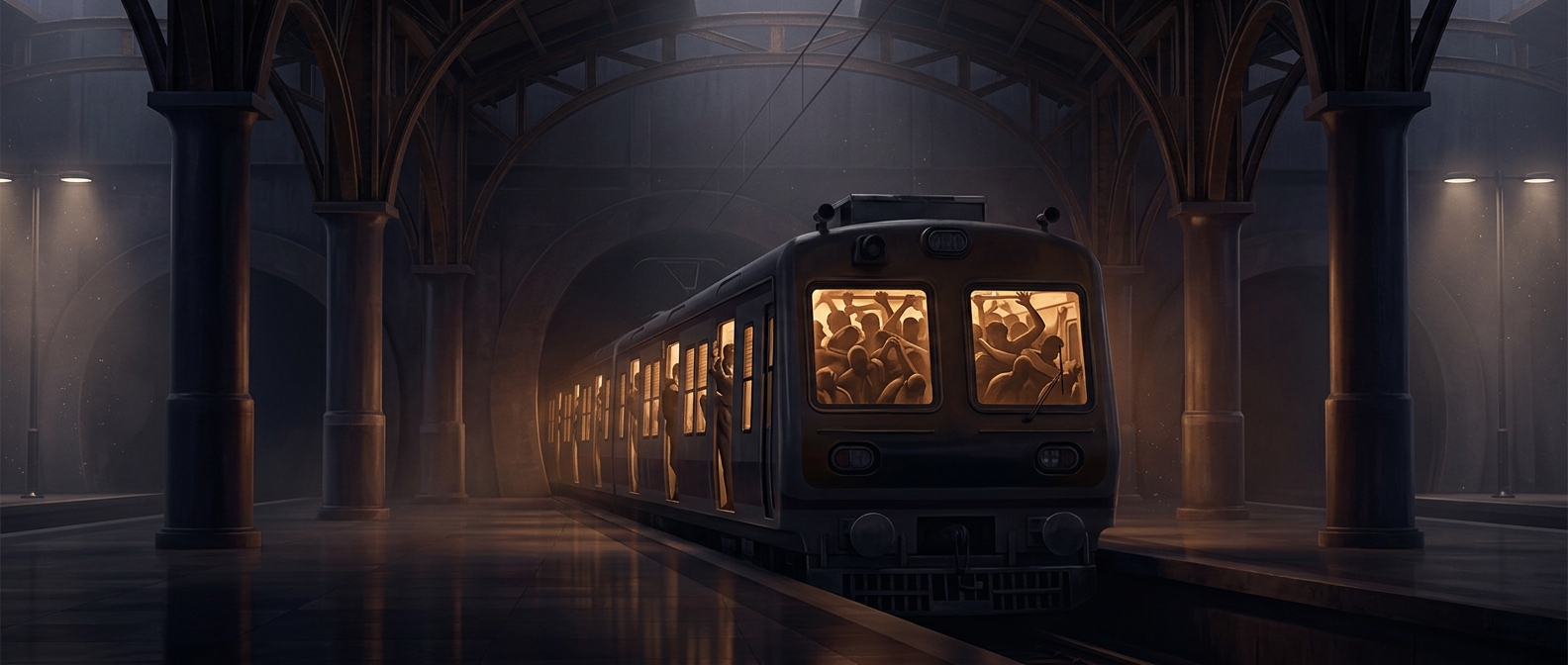
A figure such as 14–16 people per square meter is an average, not a promise that passengers are spaced evenly across the carriage. Some areas may be more crowded than others, especially near doors and passageways. At that density, a person has little control over where to stand: nearby bodies limit movement, and shifting position can depend on the crowd moving as a whole.
That changes what “capacity” means. A train may still physically carry more people, but the number alone says little about whether passengers can move toward an exit, make room for someone boarding, or stand without being pressed against others. A crush-load measure describes an extreme operating condition, not a comfortable target.
Why Planners Need a Name for the Extreme
For a railway, crowding is not just a problem inside one carriage. Slow movement through doors can lengthen stops; longer stops can disrupt the timing of trains behind them. A planning term gives engineers and operators a way to distinguish ordinary loading from a level at which passenger movement itself becomes constrained.
The label also makes a difficult experience measurable. It can inform decisions about how many people a service is expected to carry and whether changes to trains or operations might ease the bottleneck. But a density figure cannot capture every difference between one crowded journey and another: the distribution of passengers, the duration of the crush, and access to doors all matter.
The striking implication is that, at this scale, usable space is not simply the area of the floor. It is the space passengers can actually reach and move through—and that can shrink well before the train runs out of room to carry bodies.