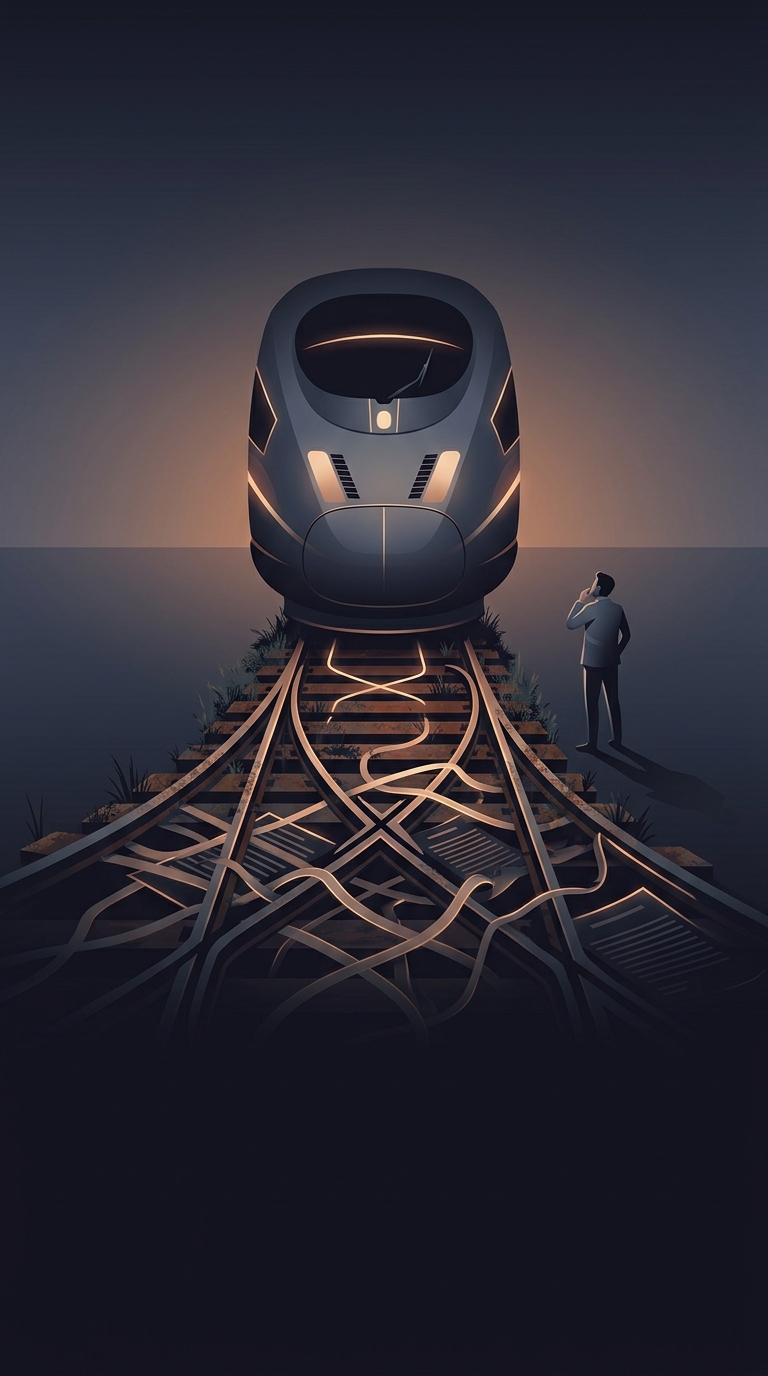
The missing ingredient was a dedicated track
The United States did not lack trains capable of high speeds. The harder problem was building long, uninterrupted corridors where they could safely run fast. High-speed trains need tracks with gentle curves, few crossings, and no freight trains or road traffic in their path. Creating those routes often means buying land, building bridges and tunnels, and reshaping or bypassing existing rail lines.
That is a much bigger undertaking than upgrading a few stations or putting faster trains on existing tracks. On many U.S. routes, passenger trains share privately owned lines with freight traffic. Those lines were laid out to move goods, not to support frequent, fast passenger service, and freight trains can delay passenger trains that must yield to them.
Why the United States struggled to build around that problem
Countries with extensive high-speed networks generally built dedicated passenger corridors with sustained public investment. In the United States, a new route has to win support across multiple levels of government, secure funding that can survive changes in political priorities, and navigate land acquisition and environmental review. The benefits may span several states, while the costs and disruption of construction are concentrated along the route—making agreement difficult.
Meanwhile, cars and airplanes already offer established ways to travel between many U.S. cities. That does not make rail impossible, but it weakens the political case for spending enormous sums before a new line can carry passengers. Without a continuous corridor, even a fast train is forced to slow down, share tracks, or stop short of its potential.
A network is harder than a showcase
The result is a few faster services rather than a connected high-speed system. The Acela, for example, reaches high speeds only on portions of its route; much of the Northeast Corridor has curves, crossings, and shared infrastructure that limit performance. The central obstacle was not inventing a fast train—it was assembling the land, money, and political agreement for a dedicated route long enough to make one useful.