A World’s Fair idea built above the street
Seattle’s monorail was designed for a moment when elevated transport looked like a way to make city travel faster without asking trains to share crowded roads. Built for the 1962 World’s Fair, it linked the fairgrounds—now Seattle Center—with downtown. The route turned the journey itself into a demonstration: passengers could glide above intersections instead of waiting behind them.
How the beam carries a train
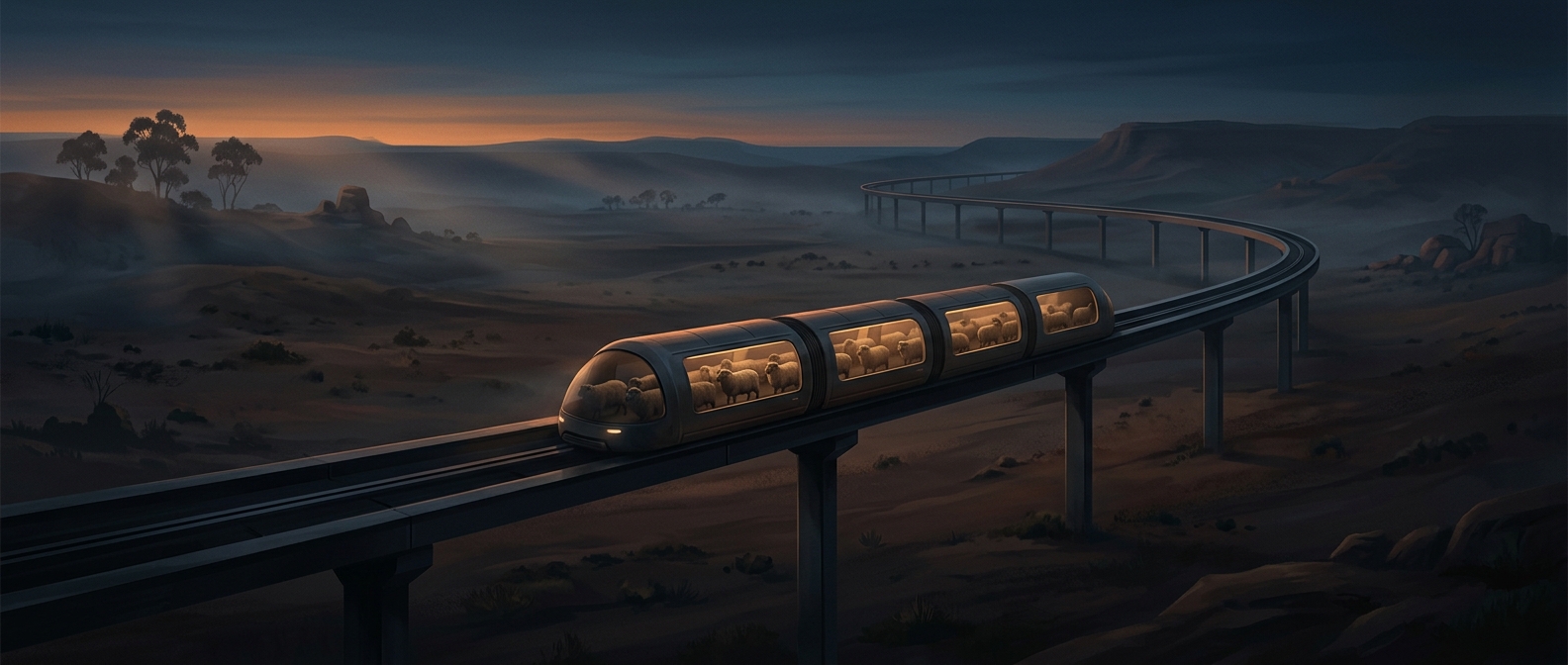
The monorail runs on rubber tires that roll along a concrete guideway, a raised beam that supports and directs the train. The tires provide traction and help soften the ride, while the fixed track keeps the vehicle on a dedicated path, separate from cars and traffic signals.
That separation is the system’s practical advantage. Street congestion can slow buses and cars, but it does not directly block a train on an elevated guideway. The tradeoff is that the infrastructure is highly specific: building the beam requires space, construction, and substantial investment, and the train can serve only places connected to that route.
A fast link, not a citywide cure
The line provides a direct connection between downtown and Seattle Center, but a single corridor cannot carry people across every neighborhood or eliminate the need for other transport. The original promise of frictionless, congestion-free movement ran up against a basic urban reality: getting above traffic helps on the stretch where the track exists, but it does not make the rest of the trip disappear.
That is what makes the monorail both useful and memorable. A concrete beam can lift a busy route out of street-level gridlock—but only where the city builds one.