An overhead route across road-poor country
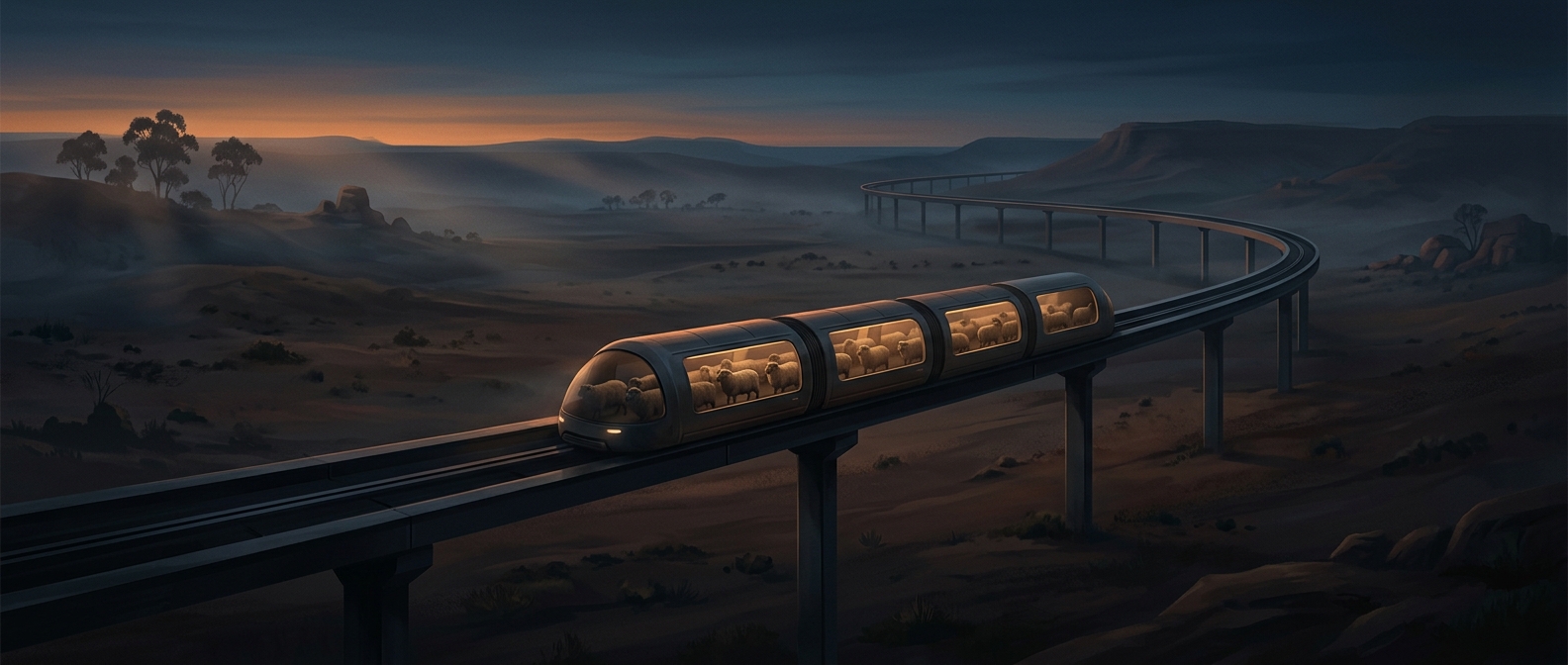
The proposed sheep monorail addressed a practical problem: moving animals or wool across rough country where building usable roads was difficult. Instead of hauling a load along the ground, a suspended carrier would travel on a track supported above it. The route could cross uneven terrain without needing a continuous road surface.
That changes the obstacle, rather than eliminating it. A ground vehicle must cope with ruts, mud, and steep or broken tracks; an overhead railway needs a supported line, loading points, and a way to transfer cargo onto and off the carriers. The design would trade road construction and rough-ground hauling for fixed infrastructure along the route.
Wool is simpler cargo than sheep
Wool can be bundled and loaded like other freight. Live sheep make the system more demanding: animals would need to be confined safely during loading and travel, then unloaded without injury or excessive stress. The carrier would also have to handle shifting weight as animals moved. Those practical requirements help explain why moving wool and moving sheep are related ideas, but not equivalent engineering problems.
The proposal’s appeal was its promise to make difficult country more accessible without first making it easy to drive across. Its central test was whether the overhead route and its handling facilities would be less troublesome than the roads and hauling it was meant to replace.