A railway built around a concrete beam
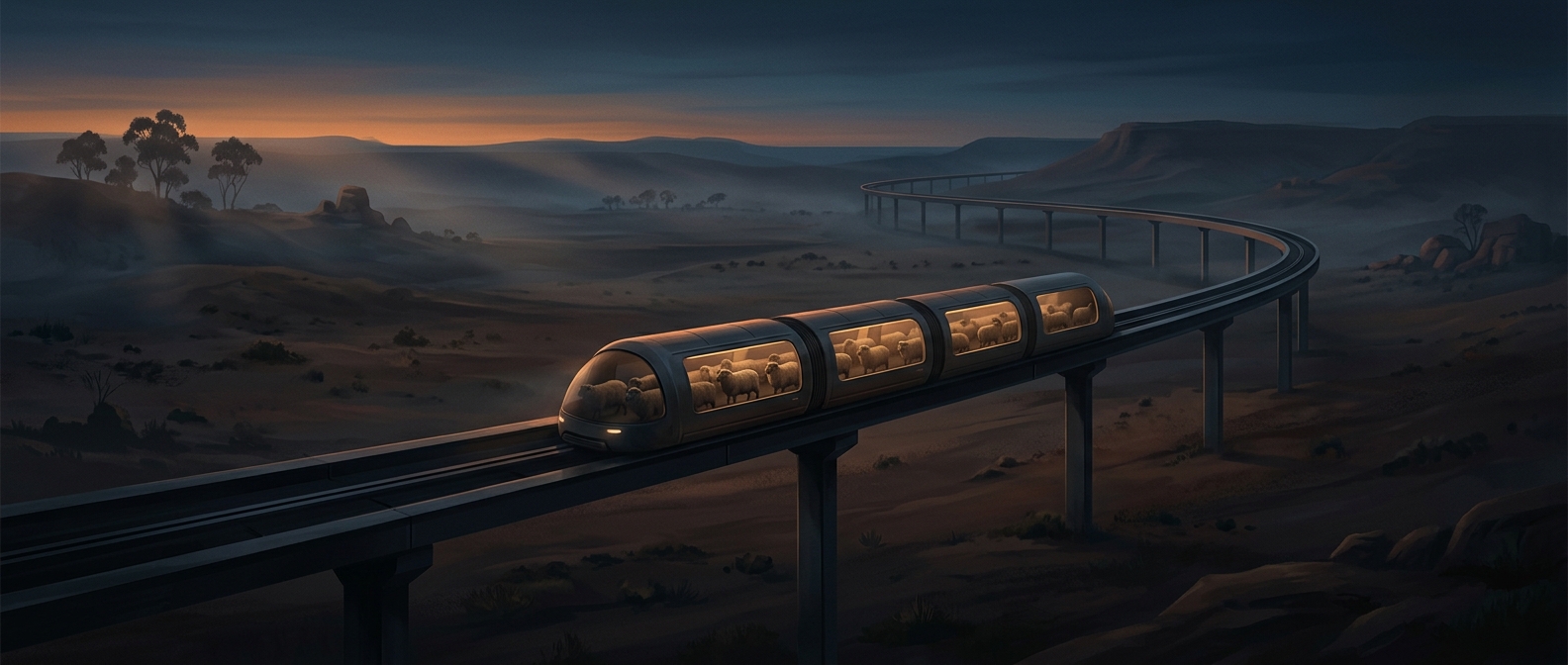
A Disney monorail does not balance on a narrow rail like a conventional train. Its main tires run along the top of a broad concrete beam, while smaller guide tires press against the beam’s sides to keep the car aligned. Electric motors turn the running tires, so the beam serves as both the route and the surface that carries the train.
That arrangement keeps the vehicles on an elevated, dedicated path. Roads and traffic lights cannot interrupt the ride, and the train does not need a separate steel track. But the route is fixed: it can connect only the places the beam reaches, and adding a stop means changing substantial infrastructure, not simply rerouting a vehicle.
The station is part of the system
At a theme park, moving people efficiently depends on more than how fast a train travels. Stations must handle surges when guests arrive in the morning or leave after a show, while trains are loaded, unloaded, and sent back into service. A monorail’s predictable path makes it useful for repeated trips between major destinations, but its usefulness depends on coordinating those station flows with the rest of the resort.
The result is a transit line that feels unusually close to the attractions it serves: passengers can board above the roads and travel directly between resort destinations. Its convenience comes with a tradeoff familiar to any fixed railway—the beam makes the journey independent of road congestion, but only along the route the resort has built.