Why a double-decker is tested on a steep slope
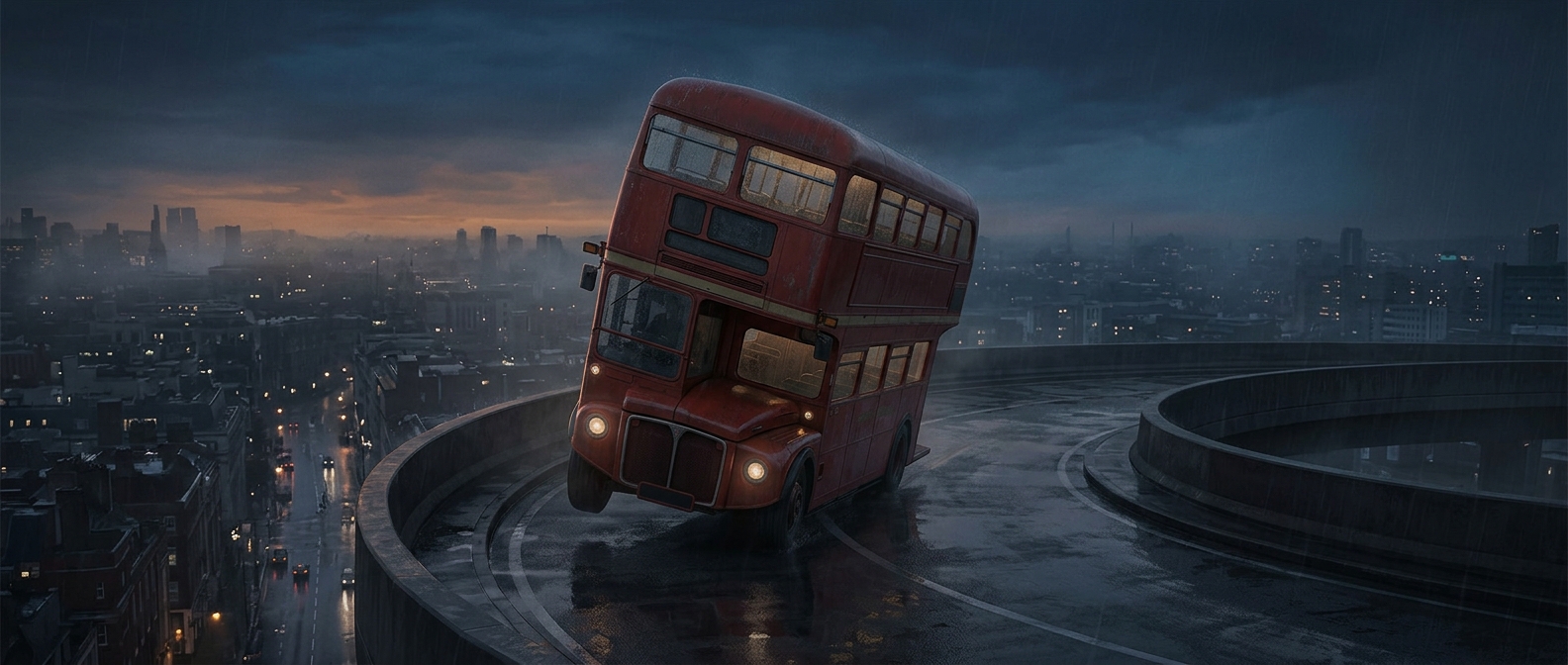
A double-decker carries much of its weight high above the road: passengers, seats, and structure on the upper floor raise its center of gravity, the point where the vehicle’s weight can be treated as concentrated. When a bus turns or stands on slanted ground, gravity and sideways forces can shift the effective load toward one side. If that load moves beyond the wheels’ support, the bus can overturn.
A stability test makes that risk visible in a controlled setting. Engineers place the bus on a tilting platform and raise one side, checking how it behaves as the slope becomes steeper. The angle is not a route condition or a target for ordinary driving; it is a way to assess whether the bus remains stable under a demanding test.
What the test reveals
The result depends on more than the bus’s height. Its weight distribution, suspension, and the position of its wheels all affect how much it can lean before becoming unstable. A double-decker’s upper deck makes that balance especially important, because weight carried higher up has more leverage to pull the vehicle over.
The test also gives engineers a consistent setup for checking a particular vehicle design. Rather than waiting for a dangerous combination of road slope, turning force, and passenger load to occur in service, they can examine the bus while it is stationary and supported by test equipment. The dramatic tilt is a controlled check of the vehicle’s limits—not a maneuver buses are expected to perform on London streets.