How a tire makes a moving connection
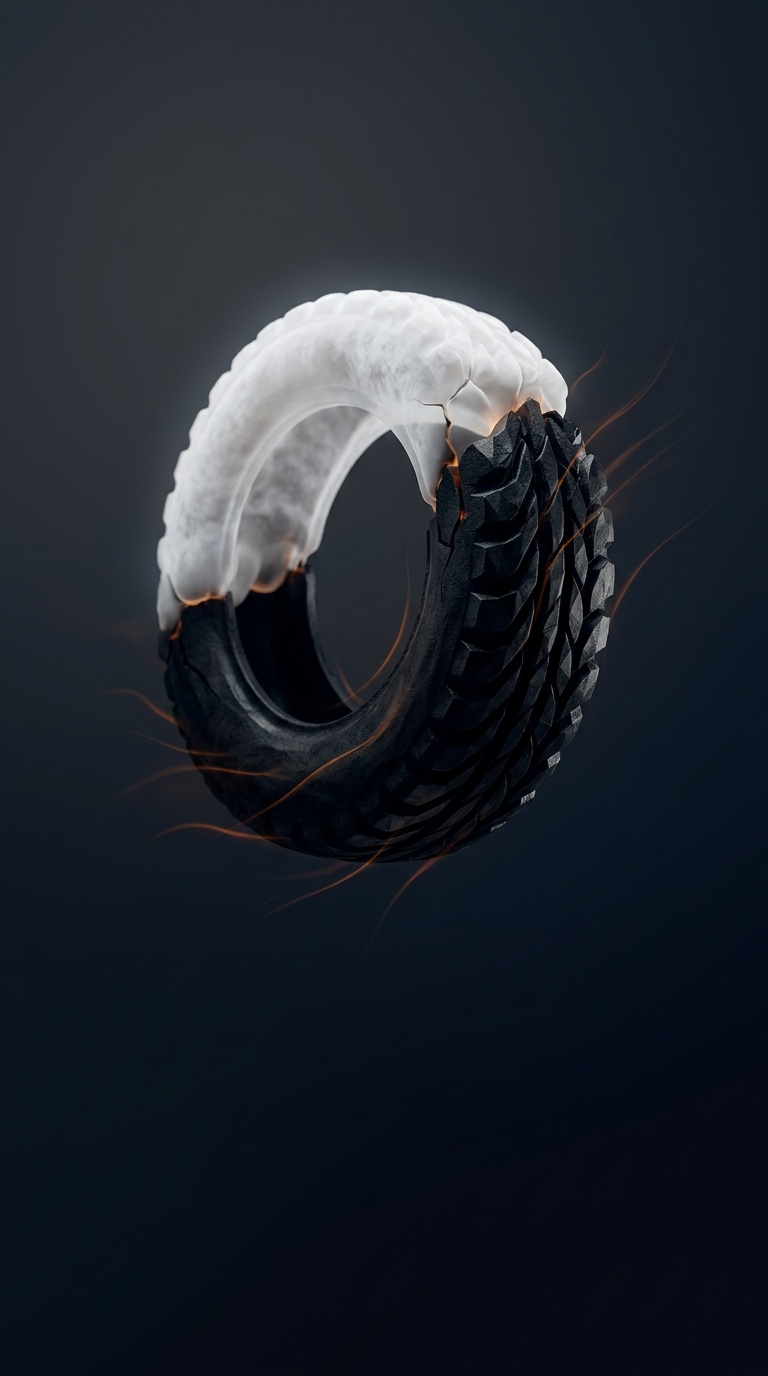
A tire does not cling to pavement like glue. Its rubber bends as the wheel rolls, pressing against tiny bumps and gaps in the road. That close, changing fit creates friction—the force that lets the car accelerate, turn, and brake. Because the tire is flexible, the part touching the ground is continually reshaped: each bit of tread compresses under the car’s weight, then springs back as it leaves the road.
Why grooves matter most in the wet
On a dry road, rubber can press directly against the pavement’s rough surface. On a wet one, water can form a separating layer. Tread grooves give much of that water somewhere to go as the tire rolls, helping the rubber reach the road rather than ride on top of the water. If the tire cannot clear water quickly enough—because of speed, water depth, or worn tread—the separating layer can grow and steering or braking can become less effective. This is hydroplaning.
The design is a compromise
Grooves cannot simply be made as deep and wide as possible. Tread also needs enough rubber in contact with the road, and its pattern affects handling, noise, and how much energy the tire loses as it flexes. Designers balance those demands for the tire’s intended use. As tread wears down, the channels become shallower, so their ability to carry water away declines.
That is why tire condition matters most when the road is slick: the same small, constantly renewing contact has to manage both the car’s forces and the water between rubber and pavement.