Why the station arrived in pieces
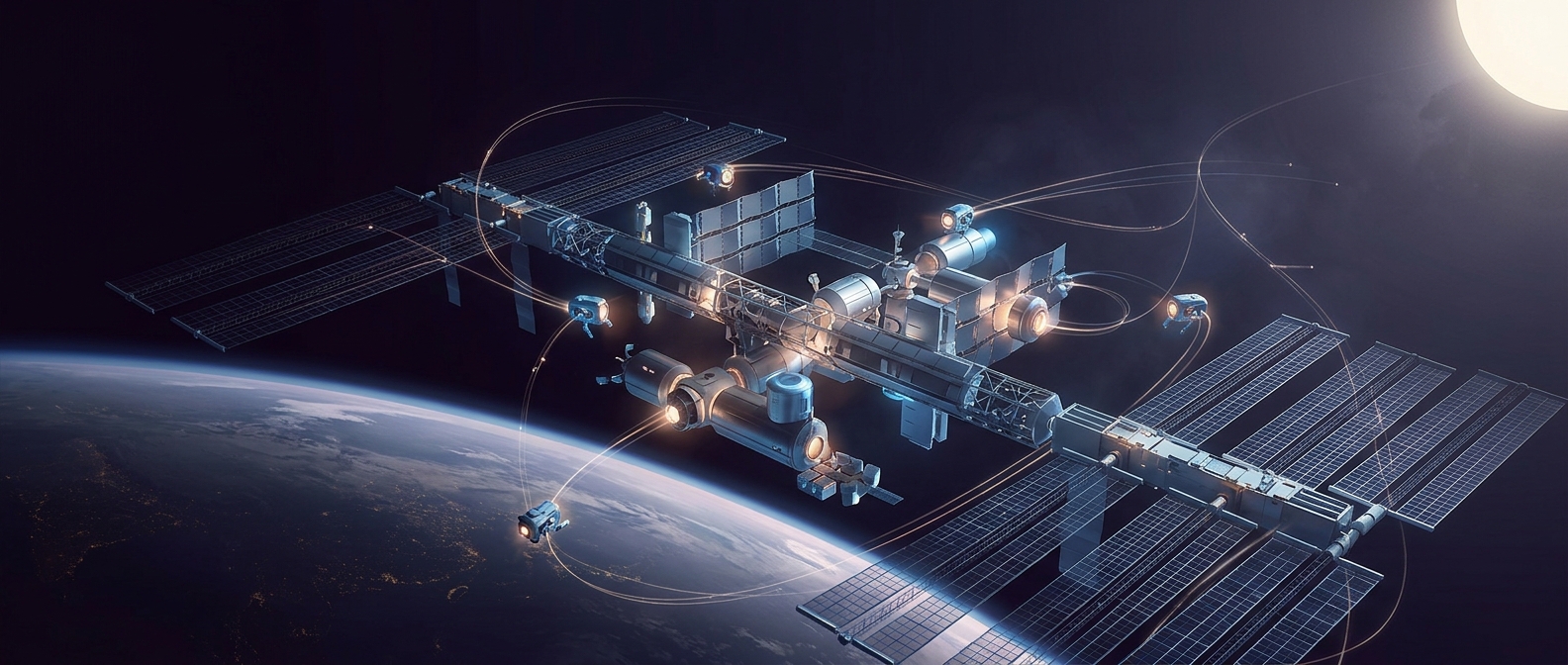
A rocket’s fairing—the protective shell around its payload—sets a hard limit on the size and shape of anything sent to orbit. A station large enough to house people and equipment could not simply be launched as one finished structure. Instead, its designers divided it into modules that could fit inside available rockets and be joined after launch.
That choice moved part of the construction job into space. Each launch had to deliver a piece to the right orbit, where it could meet the station without a hard collision. A docking port provides the mechanical connection and, once joined, can also link the modules’ internal passageways and systems.
A careful chain of connections
Assembly depended on more than docking. Robotic arms could grasp and position large sections, while crews and controllers checked that connections were aligned and secure. The modules also had to work as parts of one structure: power, data, air, and other services needed to pass across their boundaries.
The sequence mattered. A new module had to attach to an existing structure that could support it, and each added section changed the station’s shape and mass. Planning the order of launches and connections was therefore a bit like building outward from a foundation—but with no ground crew able to steady a misaligned beam.
Construction with no easy reset
On Earth, a builder can set a part down and try again. In orbit, a missed approach or faulty connection can consume time, fuel, and crew attention, while the station continues circling the planet. Building in modules made a large station possible within launch limits, but it also made every addition a coordinated operation. The finished structure is the result of many separate deliveries becoming one usable workplace, one connection at a time.