Why Bullet Trains Don’t Strap Passengers In
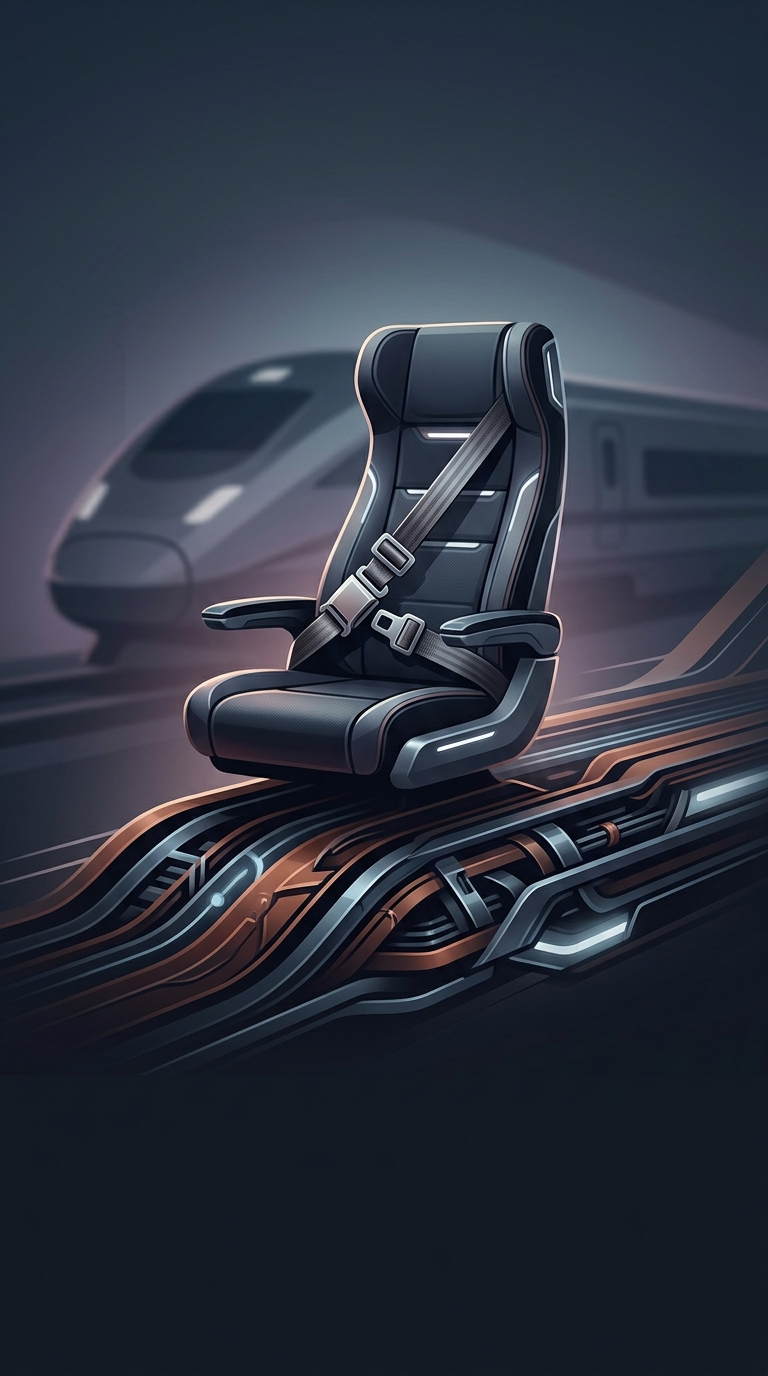
The claim that wearing a seatbelt on a bullet train is statistically deadlier than riding without one is not a sound general rule. High-speed trains typically have no passenger seatbelts, so there is no routine, comparable set of “belted” and “unbelted” riders from which to establish that statistic.
The real question is why trains can be designed without belts even though they travel fast. The answer is not that an unrestrained passenger is safer in every crash. It is that rail safety relies on a different combination of protections than car safety does.
The Train Is Designed Around the Whole Carriage
A car seatbelt keeps a person from being thrown forward when a car stops abruptly. In a train, a severe collision or derailment can involve the carriage twisting, striking obstacles, or being hit from the side. A belt might hold a passenger in place during some impacts, but it could also keep the body attached to a seat as the seat or surrounding structure moves or deforms. The outcome depends on the crash, not simply on whether a belt is present.
Train designers instead focus on preventing collisions and derailments, managing the forces that reach the passenger space, and arranging seats and interiors to reduce injuries. On many trains, seats are also oriented in different directions, making a single belt arrangement less straightforward than in a car.
Why the Comparison Misleads
A statistic comparing belted and unbelted bullet-train passengers would need to account for how often each group rides and the circumstances of their crashes. Because belts are generally not fitted, that comparison is largely hypothetical—not evidence that belts cause more deaths.
The useful takeaway is narrower: a safety feature cannot be judged apart from the vehicle and the crash it is meant to protect against. Bullet trains depend on layered system design rather than asking each passenger to buckle up.