How a Funicular Turns a Descent Into a Climb
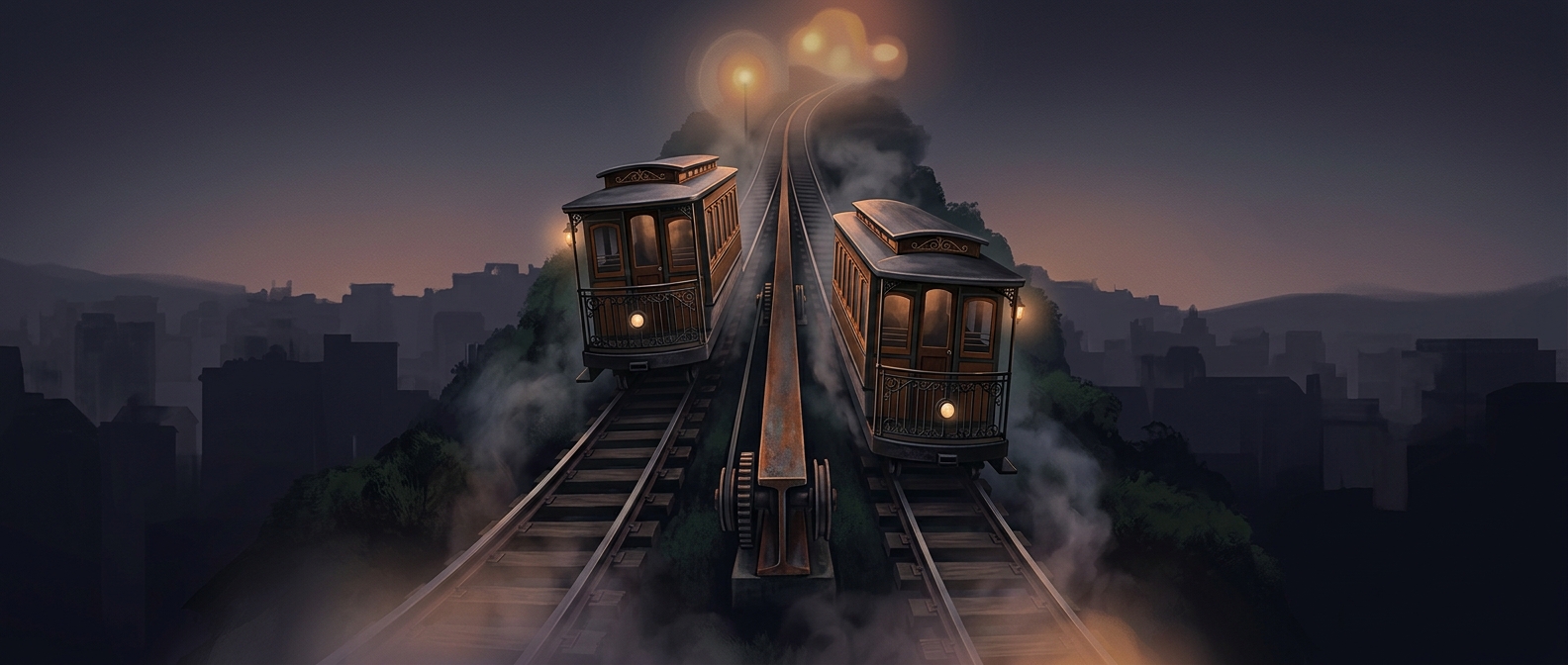
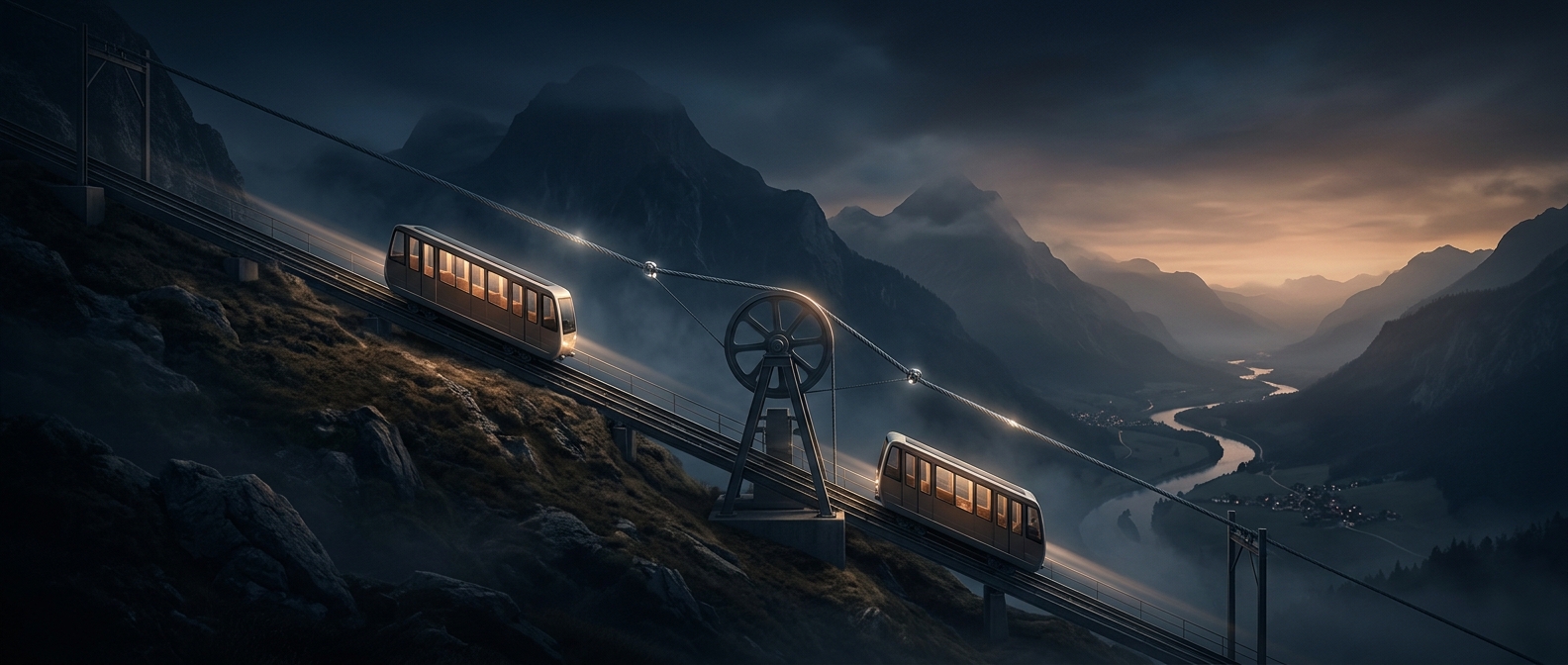
A funicular works like a moving balance scale on rails. Its two cars are joined by a cable that passes around a large wheel at the top of the incline. When the heavier car travels downhill, gravity pulls it down and draws the other car uphill. The cable keeps their motion linked: one cannot move without the other moving in the opposite direction.
Why the Motor Doesn’t Lift Both Cars
The motor turns the wheel to control and sustain the cars’ movement, but it usually does not have to supply the energy to haul both cars uphill from a stop. The descending car gives up gravitational energy as it loses height; much of that energy helps raise its partner. The motor supplies what the exchange cannot: energy lost to friction in wheels, rails, bearings, and cable, plus the extra effort needed when one car and its passengers outweigh the other.
That balance is never perfect. Passenger numbers change from trip to trip, and the cars may differ slightly in weight. A braking and control system manages speed and stops the cars safely, while the motor adjusts for the changing load.
A Clever Fit for Steep Routes
Because the cars counterbalance each other, a funicular can move people up a steep slope without making each car’s motor do the full lifting. Its defining trick is not simply using a cable, but using the downhill journey to help pay for the uphill one. On a busy route, every descending car is also part of the mechanism that brings the next group of passengers up.