How a narrow hillside railway lets its cars pass
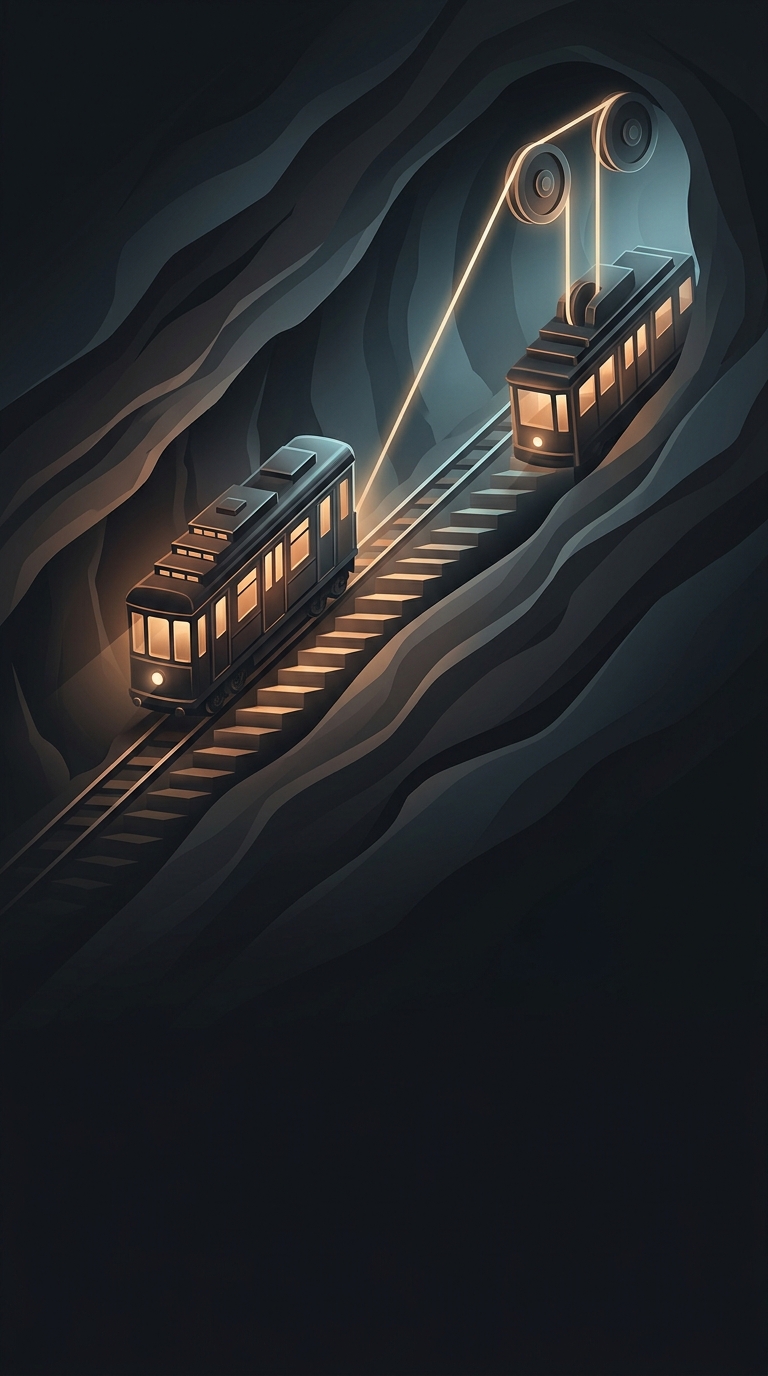
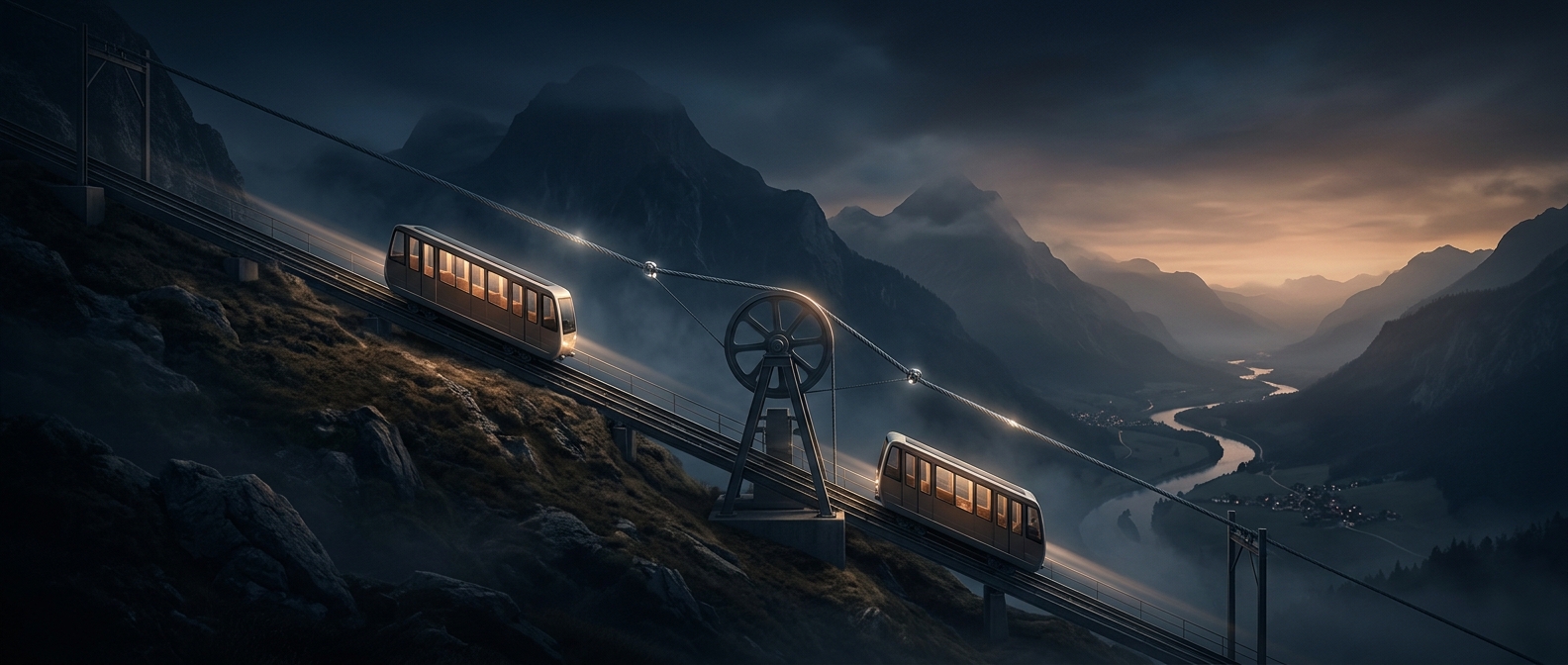
Angels Flight is a funicular: a railway on a steep slope in which a cable links two cars. As one car climbs, the other descends, so the descending car helps balance the load the uphill car would otherwise impose on the motor. The cable runs around a pulley at the top of the line.
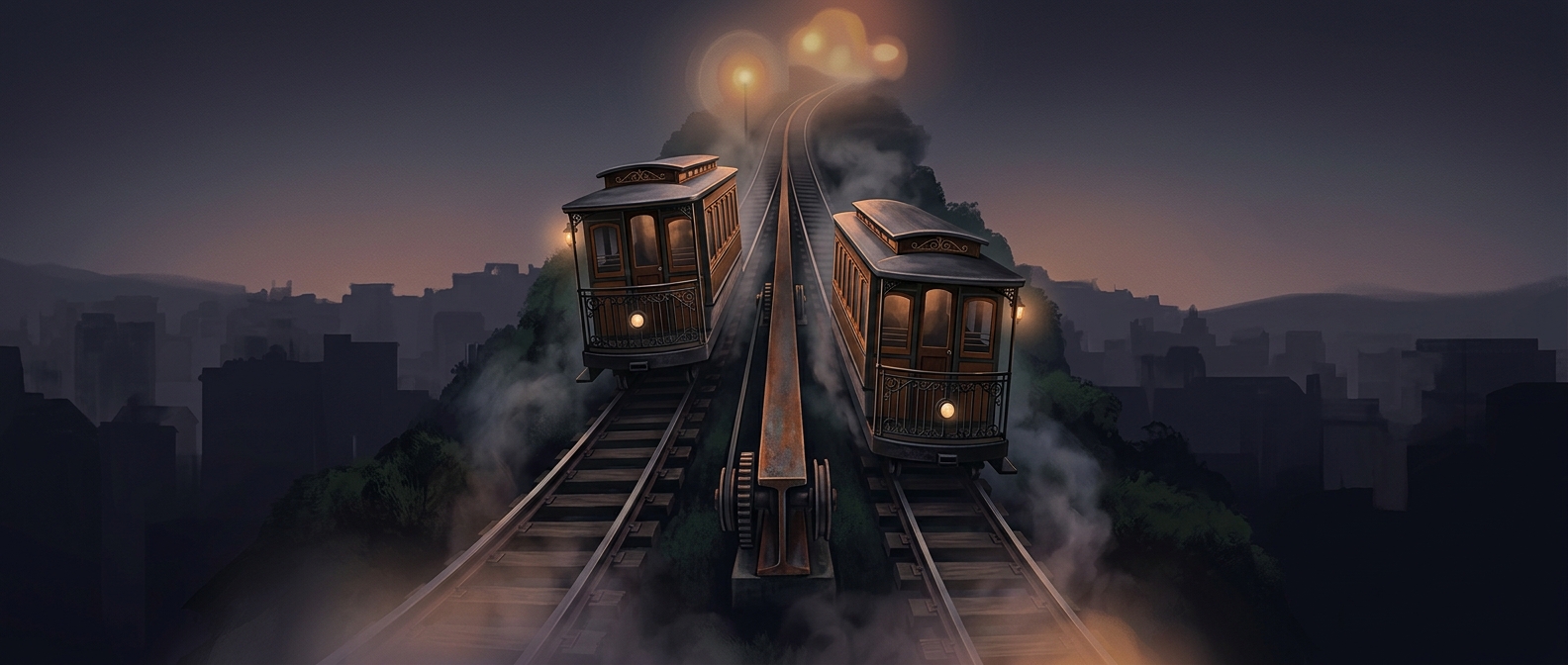
For most of the route, the cars can share a single track because they are moving in opposite directions and never need to pass there. Near the middle, the line widens into a passing loop. Each car follows its own rail through the loop, then returns to the shared track on the other side.
The loop solves a space problem
A hillside railway needs room for its track, but building two parallel tracks all the way up would take more space and material. The loop provides the extra width only where it is needed: at the point where the cars meet. That makes the arrangement practical on a confined slope while allowing both cars to run as a linked pair.
The geometry also keeps their paths predictable. The cars do not need to steer around one another or stop to let the other through; the rails guide each into its side of the loop and back together. What looks like a brief detour is really the small, carefully placed widening that lets the rest of the railway stay narrow.