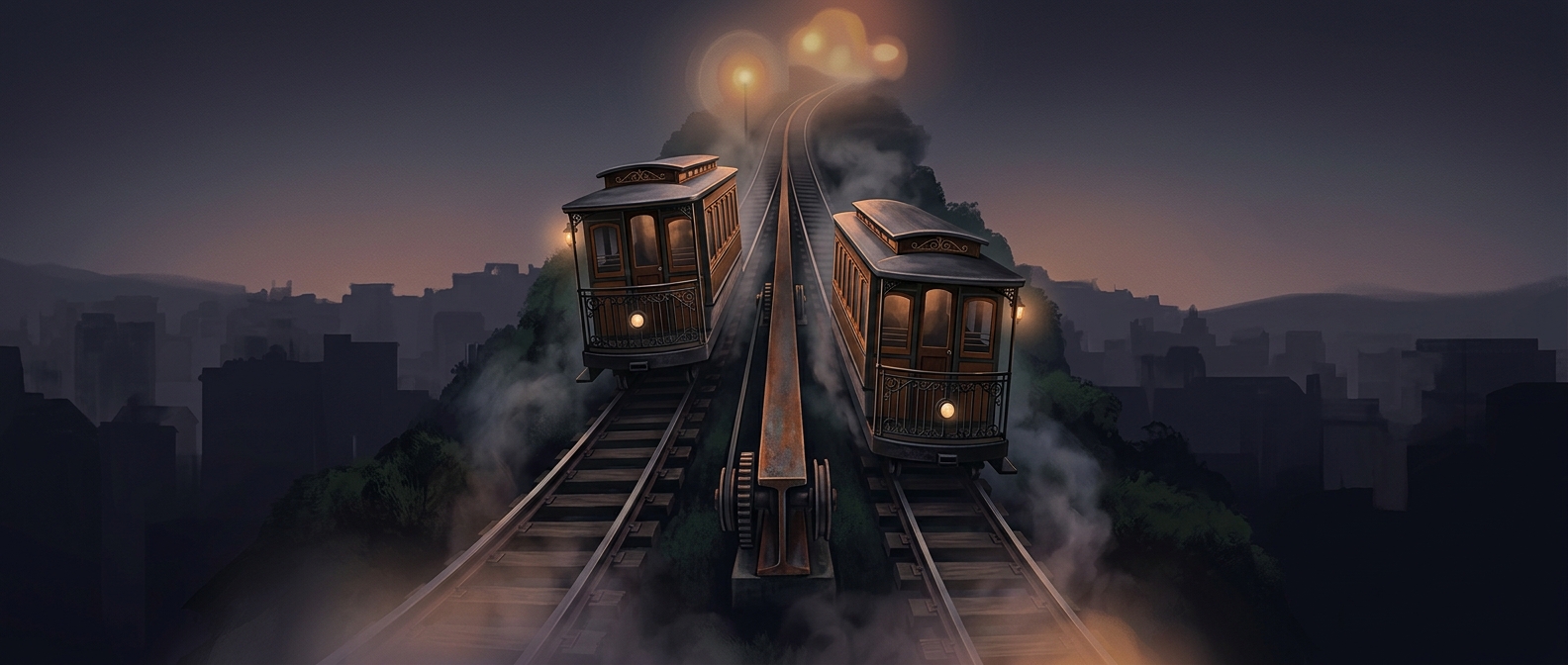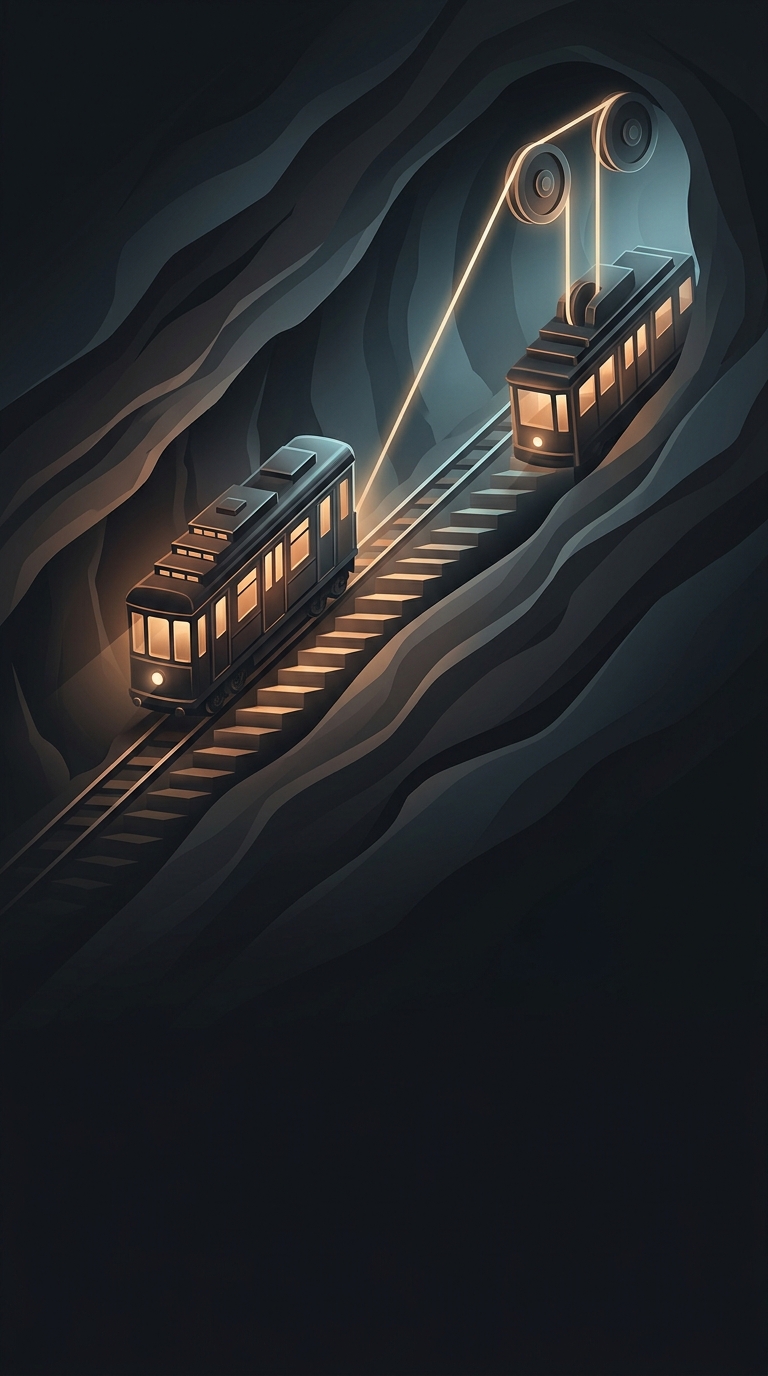
A funicular hidden inside a subway tunnel
A conventional subway car moves because its wheels grip the rails while motors push it forward. The Carmelit works differently: its cars are attached to opposite ends of a cable, which runs around a powered wheel at the top of the route. The motor pulls the cable, drawing one car uphill while the other descends.
That arrangement makes the descending car a moving counterweight. Its weight helps lift the ascending car, so the motor does not have to haul both cars uphill at once. It still supplies power and controls the motion; gravity is an assist, not an engine.
The track is built for the slope
Because the two cars travel in opposite directions on a single steep route, they need room to pass. A passing loop—a short section where the track divides and then rejoins—lets them cross without requiring two full parallel tunnels. The cable ties their movements together, so each car’s position depends on the other’s.
This is the defining tradeoff of a funicular. It is efficient on a steep, fixed corridor, but it cannot route trains independently the way a conventional subway can. The cable, track, and stopping points must all be designed around the same uphill-and-downhill journey.
Why put it underground?
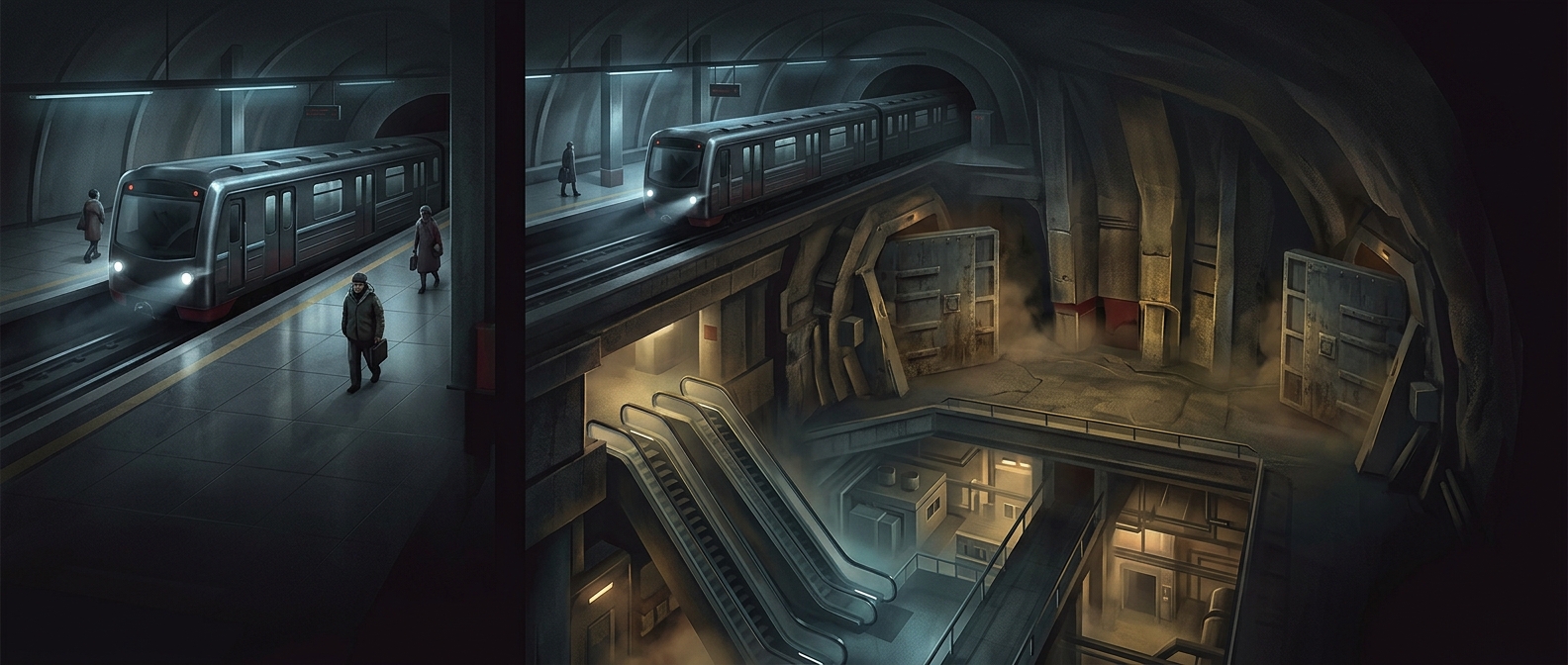
Haifa rises from its lower city toward the Carmel slopes. An underground incline can connect levels of the city while avoiding a railway climbing visibly across the hillside. The result looks like a subway to passengers—stations and cars beneath the streets—but operates more like a cable railway.
That hybrid is the Carmelit’s useful oddity: the tunnel hides the slope, while the cable makes the slope practical. Beneath the city, every uphill trip is paired with a downhill one.