Why the stations are built so deep
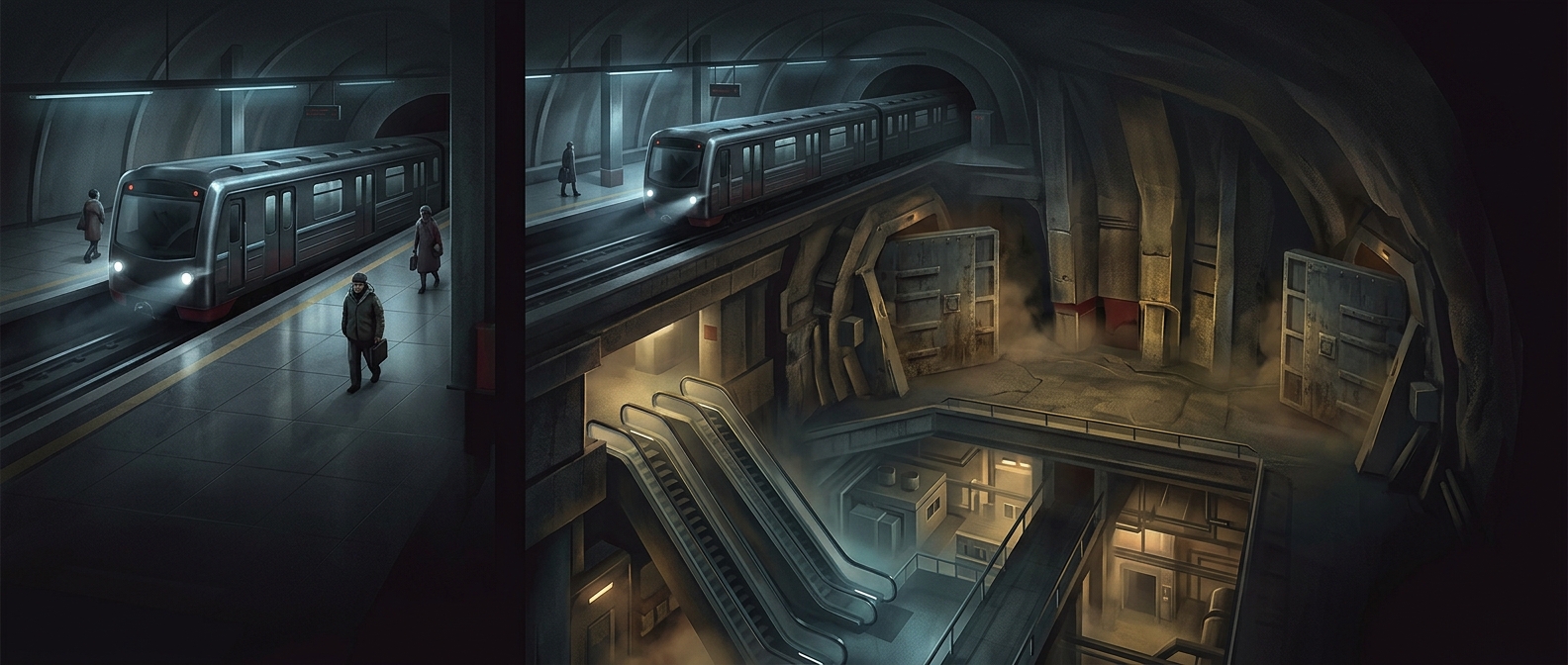
Pyongyang’s subway was designed with civil defense in mind as well as daily travel. Its platforms lie far below street level, reached by long escalators. That depth puts substantial earth and concrete between passengers and hazards at the surface, including flying debris and some effects of an explosion. It also makes the stations usable as protected gathering spaces when people cannot remain outdoors.
The doors change the station’s role
Heavy blast doors at underground entrances can be shut to seal off routes from the surface. In ordinary service, trains and passengers pass through an open station; in an emergency, closing those doors helps isolate the underground space. The same basic features that make a deep metro difficult and expensive to build—reinforced construction, protected access and substantial underground rooms—also make it adaptable for shelter.
That does not mean a subway station could protect people from every nuclear attack or from a direct strike. Its protective value depends on the explosion’s location and force, and on conditions underground. But the design reflects a practical civil-defense calculation: a transit network already extending deep beneath the city can serve a second purpose when streets become unsafe. A ride to work and a refuge from danger occupy the same concrete space.