Why the subway needed a cash route of its own
Fare money accumulated at stations, but it could not stay there indefinitely. Booths had limited space, and cash left on site was vulnerable to theft. Moving it out meant coordinating many collections across a sprawling system without sending every load onto crowded city streets.
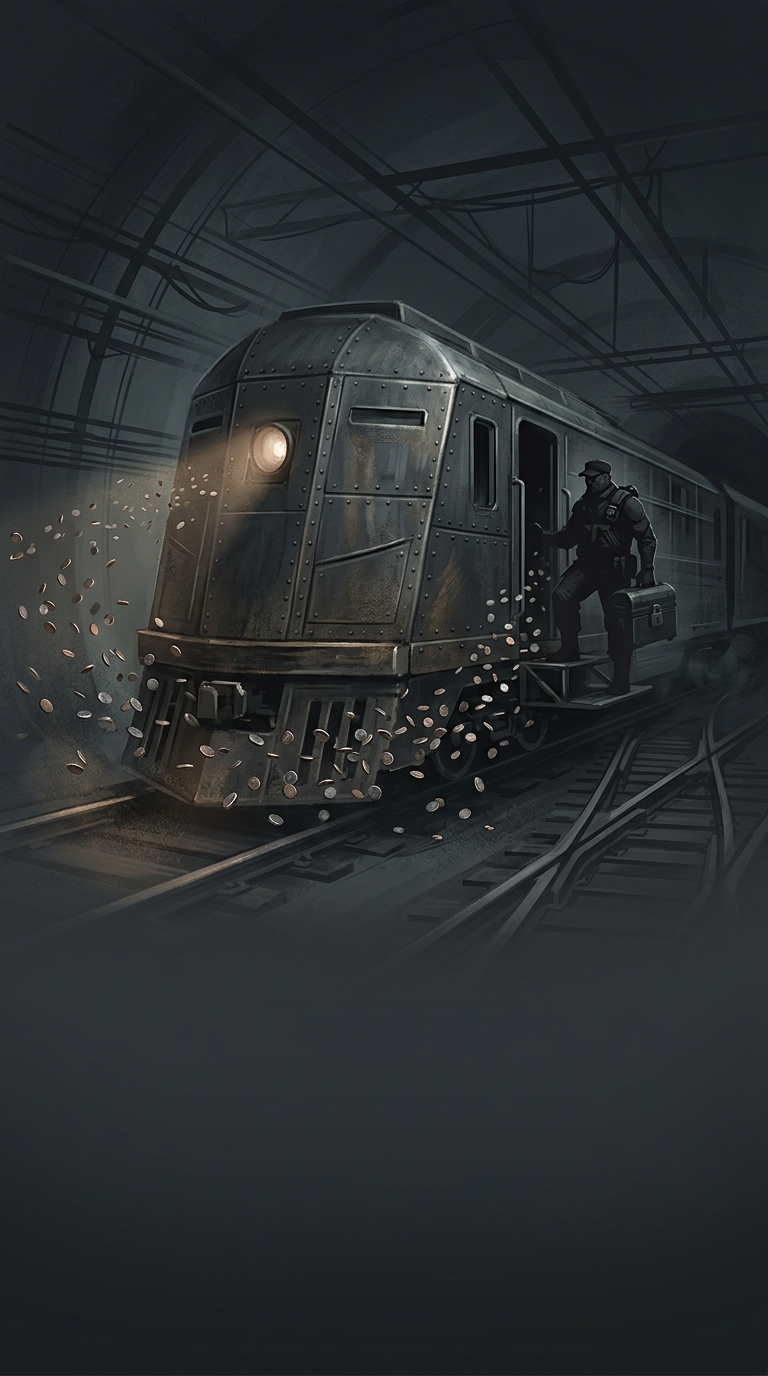
New York’s money train turned the subway itself into that route. Transit workers gathered fare revenue from station booths, then moved it through the tunnels toward the places where it could be counted and deposited. Running the operation at night made it easier to work around passenger service and keep the collection out of public view.
The tunnels changed the security problem
A street-level cash pickup has to contend with traffic, exposed vehicles, and stops that anyone can watch. Underground, the transit system could move money along its own tracks, under the protection of armed transit police. The train concentrated the cargo and its guards in one controlled operation rather than leaving cash to travel station by station through the streets.
That arrangement depended on the subway’s ordinary infrastructure: tracks already connected stations across the city, and trains could carry a load between them without competing with daytime crowds. The same network built to move passengers could therefore serve a second, less visible purpose.
The money train was a reminder that a transit system does more than carry people. Every fare creates a return journey for the cash—and in New York, that journey ran through the tunnels after the stations had quieted.