What a black window can—and can’t—tell you
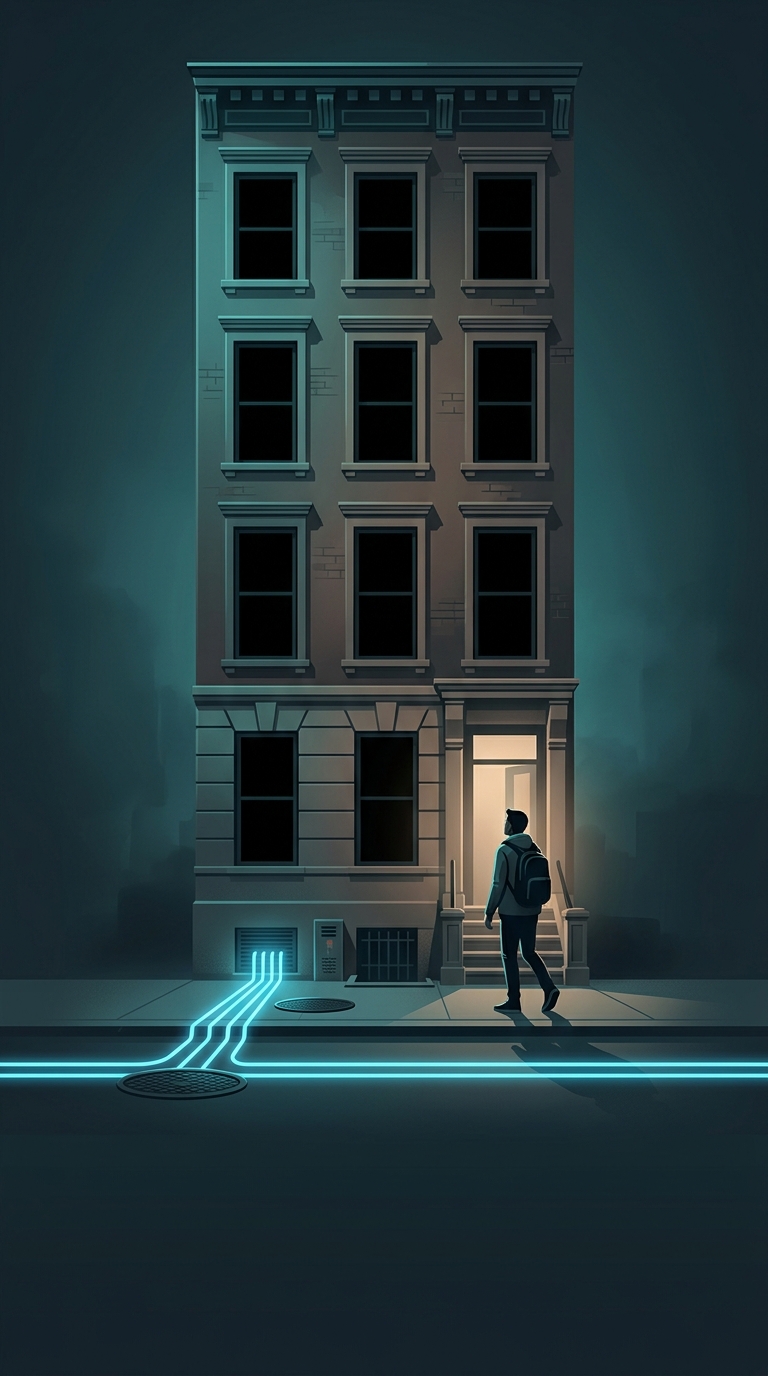
A townhouse with black windows is not necessarily abandoned, and the darkness does not have one universal explanation. From the street, several different things can look alike: a room with heavy curtains drawn, a temporary covering inside the glass, or dark reflective glazing. The windows show that little light is coming through; they do not reveal why.
Privacy, vacancy, and work inside
In a dense city, privacy is a practical concern. Windows facing a pavement or a neighboring building can be screened with blinds, curtains, or film, especially when a room is used at night or overlooked by passersby. Dark coverings may also keep out sunlight and reduce glare. These choices can make an occupied home look sealed from the outside.
A property undergoing renovation may be covered to limit dust, protect furnishings, or keep work out of public view. And when a house is empty, its lights are off and its curtains may stay closed; a long-dark facade can therefore suggest vacancy without proving it. Large townhouses can also have rooms used for storage or service rather than everyday living, leaving windows unlit even when other parts of the building are occupied.
Why the effect stands out
Townhouses often put many windows directly at street level, so a single dark facade is easy to notice. In a row of bright, lived-in homes, an unlit building can look especially stark—and invite guesses about its owner or purpose. But a blacked-out window is an ambiguous clue, not a reliable vacancy sign. The same appearance may come from a household seeking privacy, a property in the middle of work, or simply rooms that are not being used at that moment.