How jet thrust changed the rail-speed test
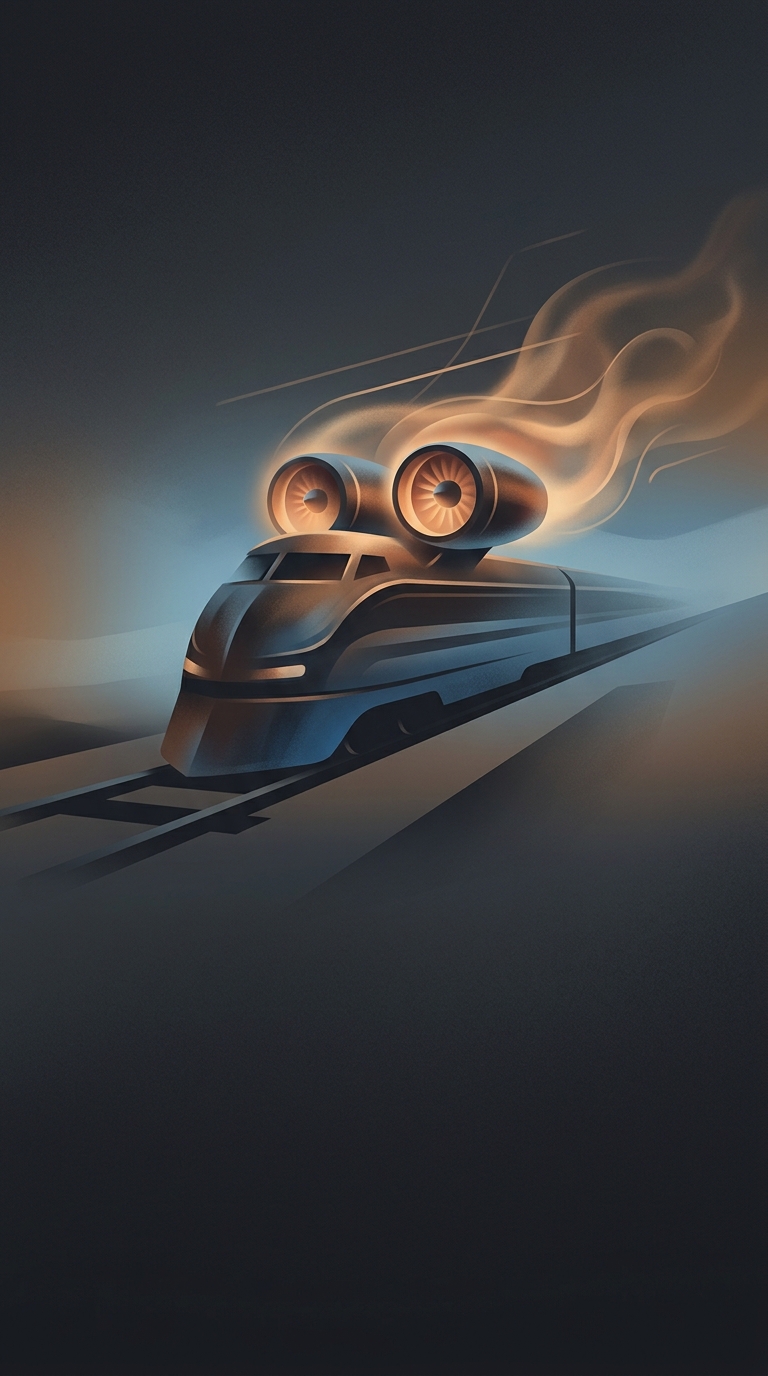
A conventional train accelerates by pushing its wheels against the rails. That grip is useful, but it also limits how much force the train can put down: if the wheels spin, extra power will not produce extra speed. The experimental jet-powered railcar sidestepped that limit. Its engines pushed air backward, creating forward thrust without relying on wheel grip.
The wheels still carried and guided the vehicle, so engineers could use existing rails rather than build a dedicated test track. But the jets did not make the railway irrelevant. The vehicle still had to remain stable on the track, and its speed depended on track condition, curves, and the railcar’s ability to brake safely.
A laboratory vehicle, not a commuter upgrade
Borrowing aircraft engines offered a way to investigate high-speed running without first designing an entirely new propulsion system. It also made the experiment unusual in an important way: the engines supplied acceleration, while the rail equipment handled the vehicle’s weight and direction.
That arrangement was better suited to a test than everyday service. Jet engines consume substantial fuel and produce intense noise, and thrust alone does not solve the problems of stopping, operating around stations, or safely sharing tracks with ordinary trains. The experiment tested what a rail vehicle could do when wheel traction was no longer the main source of acceleration—not whether jets were a practical replacement for railway motors.