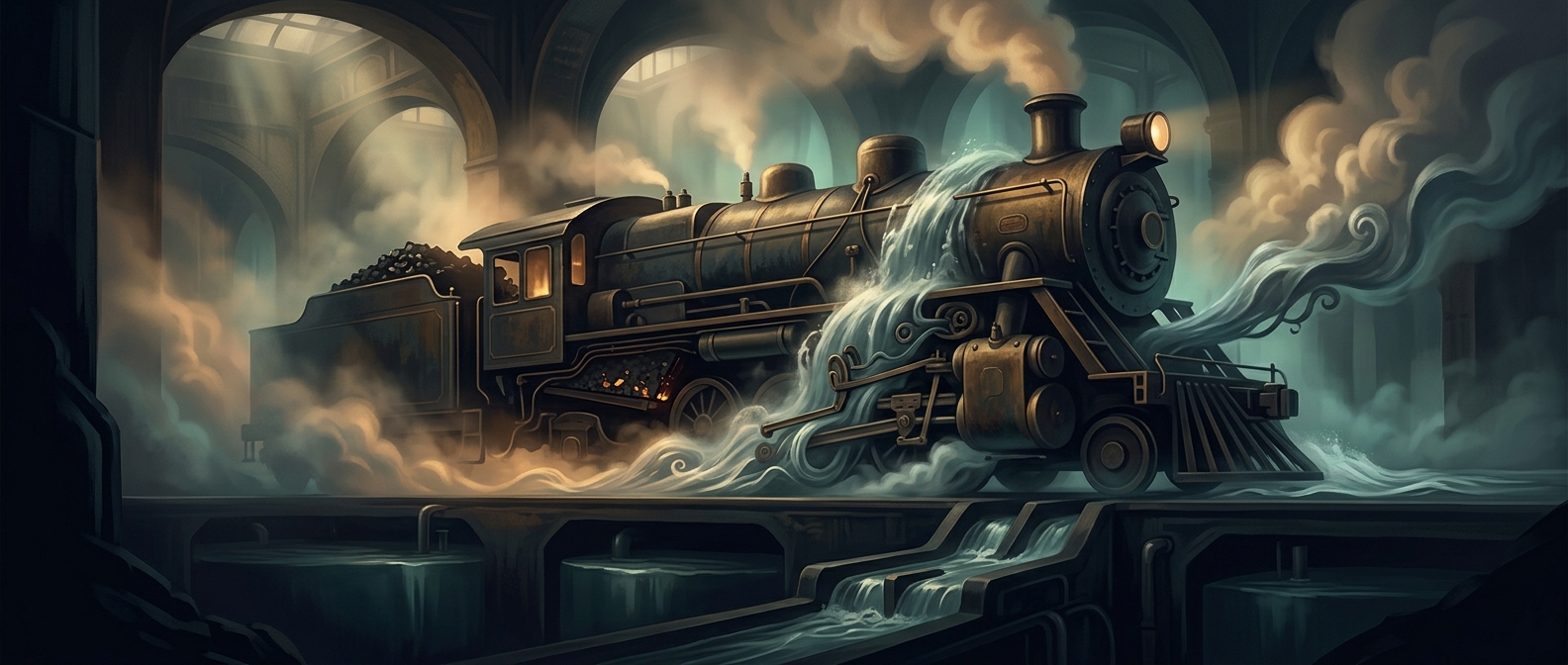
The exhaust did more than make noise
A locomotive’s steam circuit was open-ended. After steam pushed the pistons, it was sent up the chimney rather than cooled back into liquid. That blast helped draw air through the fire, feeding oxygen to the burning coal and keeping the boiler hot. Recovering the water would have required a condenser—and changing the exhaust flow could also weaken this useful draft.
Every mile spent water
Water vanished from the system with each stroke of the pistons, so a train’s range depended on how much it could carry and where it could refill. The tender behind the engine was therefore not just a coal wagon: its water tank was essential equipment. Railways built water columns at stations and other points along routes so crews could replenish the supply without hauling the train to a major depot.
The need shaped operations. A route with scarce water sources could be harder to serve than its distance alone suggested, and a long train might need to stop for water even when it had plenty of coal left. In dry regions, railways sometimes gathered water from distant sources or treated it before use; mineral deposits inside a boiler could hamper heat transfer and damage equipment.
A tradeoff built into the machine
A stationary steam plant could use bulky equipment to condense exhaust and recycle water. A locomotive had to fit its working parts into a moving vehicle and still produce strong pulling force. Its designers accepted frequent refilling as the price of a simpler, lighter engine—and railways made water supply part of the trackside infrastructure, as necessary to a steam route as rails and signals.