Why wood has a place in a subway brake
A moving train can use its motors to slow down: the motors resist the wheels’ rotation, and some systems can turn that motion back into electricity. But motor braking is less effective as the train creeps toward a stop. A friction brake supplies the final, direct grip: a block presses against a wheel, turning motion into heat through contact.
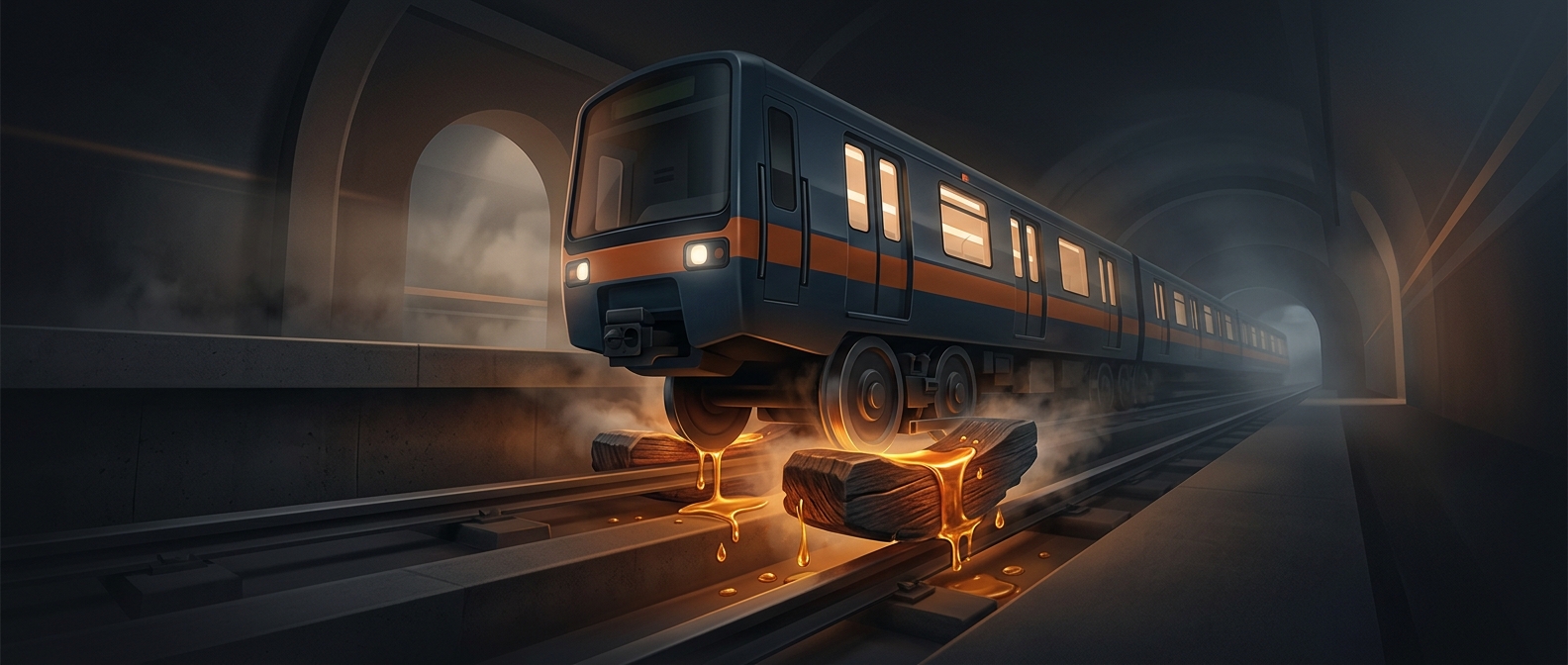
That makes the brake block’s material crucial. It must grip reliably, tolerate repeated heating, and wear in a manageable way. In Montreal’s subway, treated wood serves that job. It is not bare lumber: oil and fire-retardant salts help the blocks withstand the heat and reduce the chance that friction will ignite them.
A controlled material, not a makeshift one
Wood may sound fragile beside steel, but a brake block is chosen for how it behaves under pressure and heat—not simply for being hard. Pressed against a moving wheel, the block wears as it creates friction; its treatment helps it cope with that demanding contact. The system pairs the train’s motor braking with a material that can provide a different kind of braking force when needed.
The striking detail is that the subway’s last few moments of motion can be managed by a renewable, carefully treated material. The wood is doing industrial work: bearing against a wheel, generating friction, and helping bring a train to rest.