An escalator is a moving queue, not a passing lane
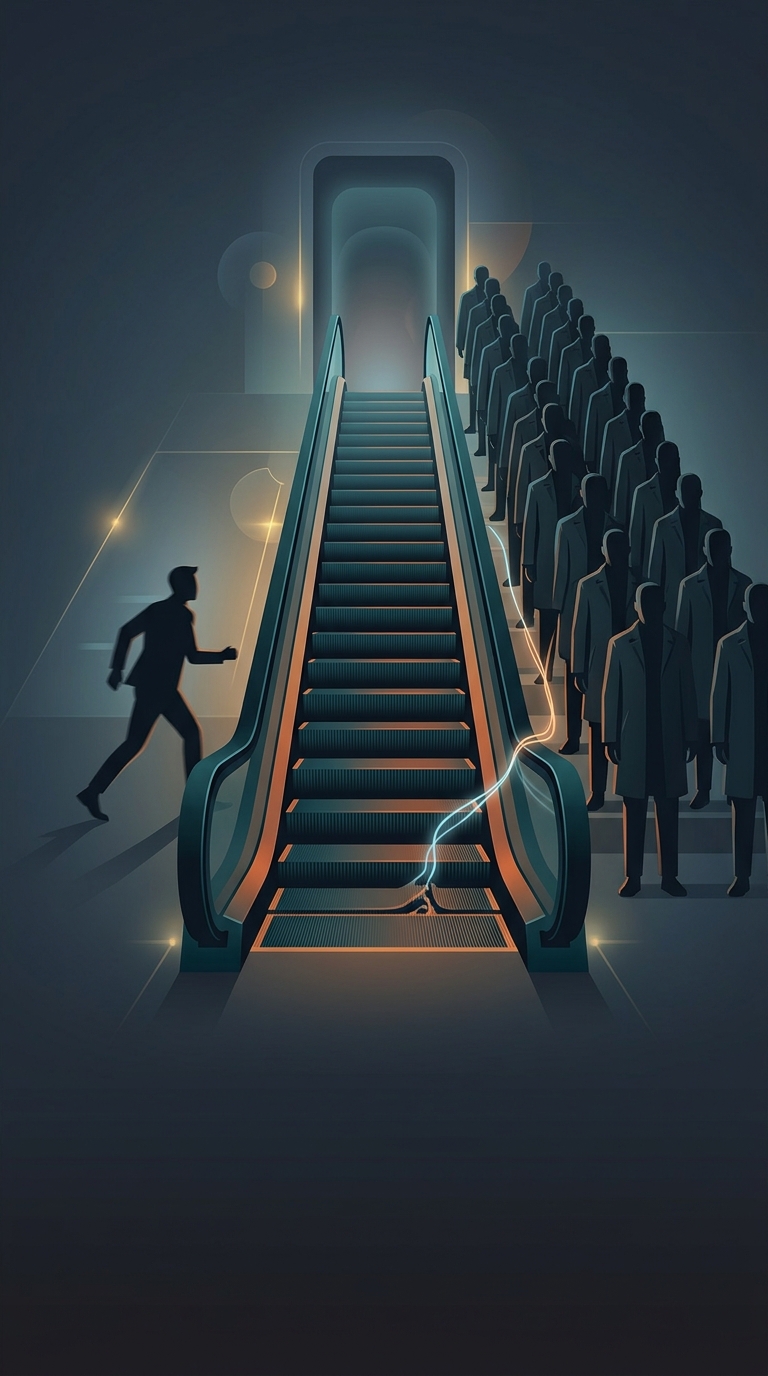
The keep-right, walk-left convention feels efficient because a moving person appears to be using the escalator faster. But the whole staircase has limited space: every step occupied by a walker is a step that could carry someone standing. If one side is left empty for passing, the escalator may move fewer people overall than if riders stand on both sides.
That matters most at busy stations. A line of people walking also needs gaps between riders, while two standing lines can fill more of the available steps. The result is counterintuitive: asking everyone to stand can make the queue move faster in terms of people carried per minute, even though no individual rider reaches the top sooner.
Walking adds risk and disruption
Walking on moving steps brings together different speeds, changing distances between people, and a narrow, sometimes crowded landing. A stumble can affect riders behind the person, and someone who stops suddenly can create a blockage. Standing still, holding the handrail, and leaving space at the landing make the flow more predictable.
Escalators are also built to carry riders continuously, not to guarantee a clear lane for overtaking. When a crowd treats one side as a walking track, that side can be underused while the other becomes congested. Encouraging riders to stand across the steps is therefore a practical way to use the machine’s width and reduce risky movement—not merely an etiquette rule.
The tradeoff is individual speed versus total flow
Walking may save time for one person when the escalator is relatively empty. In a packed rush-hour queue, however, the useful measure is how many people get through, not how quickly one walker passes a stationary rider. The empty strip kept open for passing can mean fewer commuters reach the platform or exit with each passing minute.