How Hong Kong’s trams grew upward
Hong Kong’s tramway opened in 1904, when electric street railways were a practical way to move large numbers of people along busy streets. As ridership grew, the city’s operators faced a familiar constraint: adding more vehicles meant asking already crowded roads to accommodate more traffic. A second passenger deck offered another option—more seats in roughly the same street-level footprint.
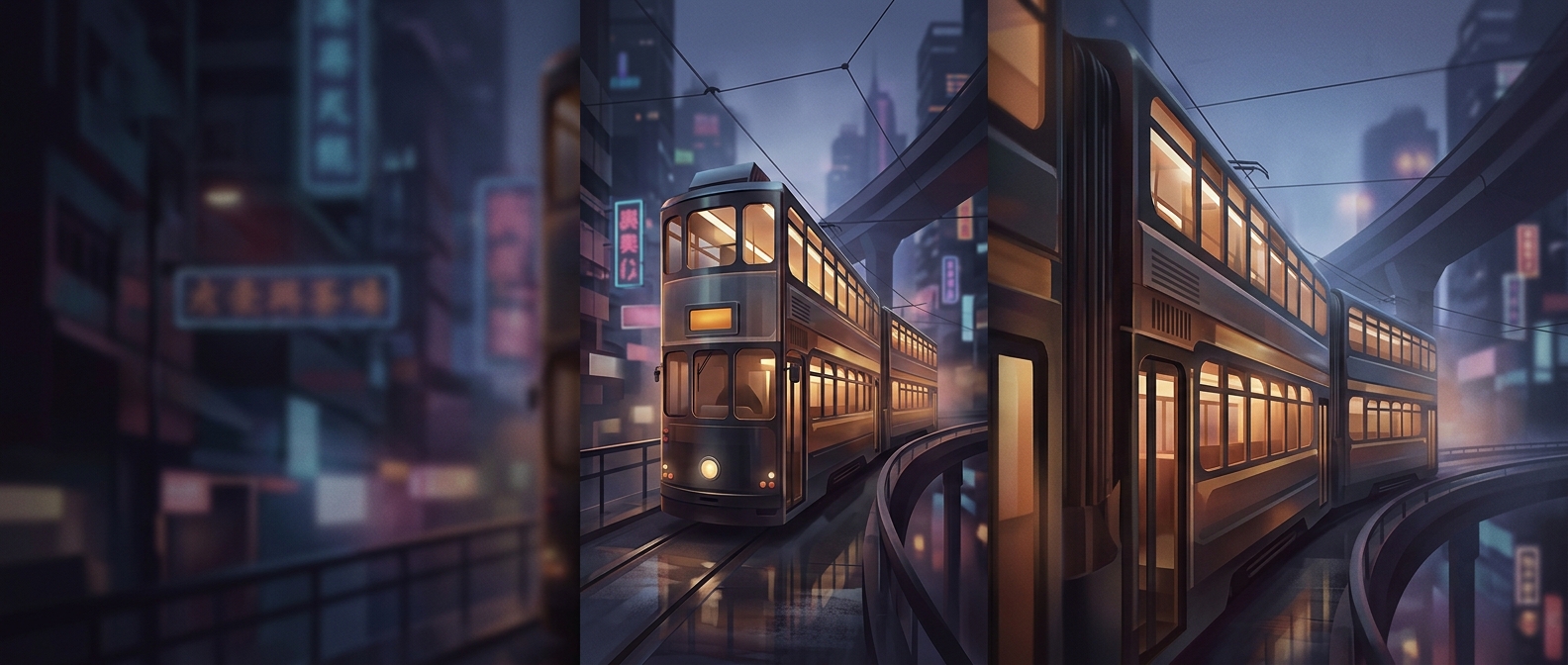
Double-decker trams appeared on the system in 1912. The arrangement borrowed a recognizable idea from double-decker buses, but rails made the tram’s route predictable: it stayed on its track rather than weaving through traffic. That helped make a tall vehicle workable on a fixed urban corridor.
The tradeoff built into two decks
Passengers board at street level and climb an interior staircase to the upper deck. The extra floor adds capacity without widening the vehicle, but it also adds weight and height. Tram designers must account for the load on the wheels and keep the cars within the clearances allowed by overhead wires and street structures. A tram cannot simply turn onto any road, either; it is limited to the tracks.
Hong Kong’s system is notable because double-deck cars became its defining form, not an occasional novelty. The result is a practical piece of city design: the same narrow strip of track can carry passengers on two levels, while the tram remains tied to a route that runs through the street rather than taking more space beside it.