How a trolleybus closes its electrical circuit
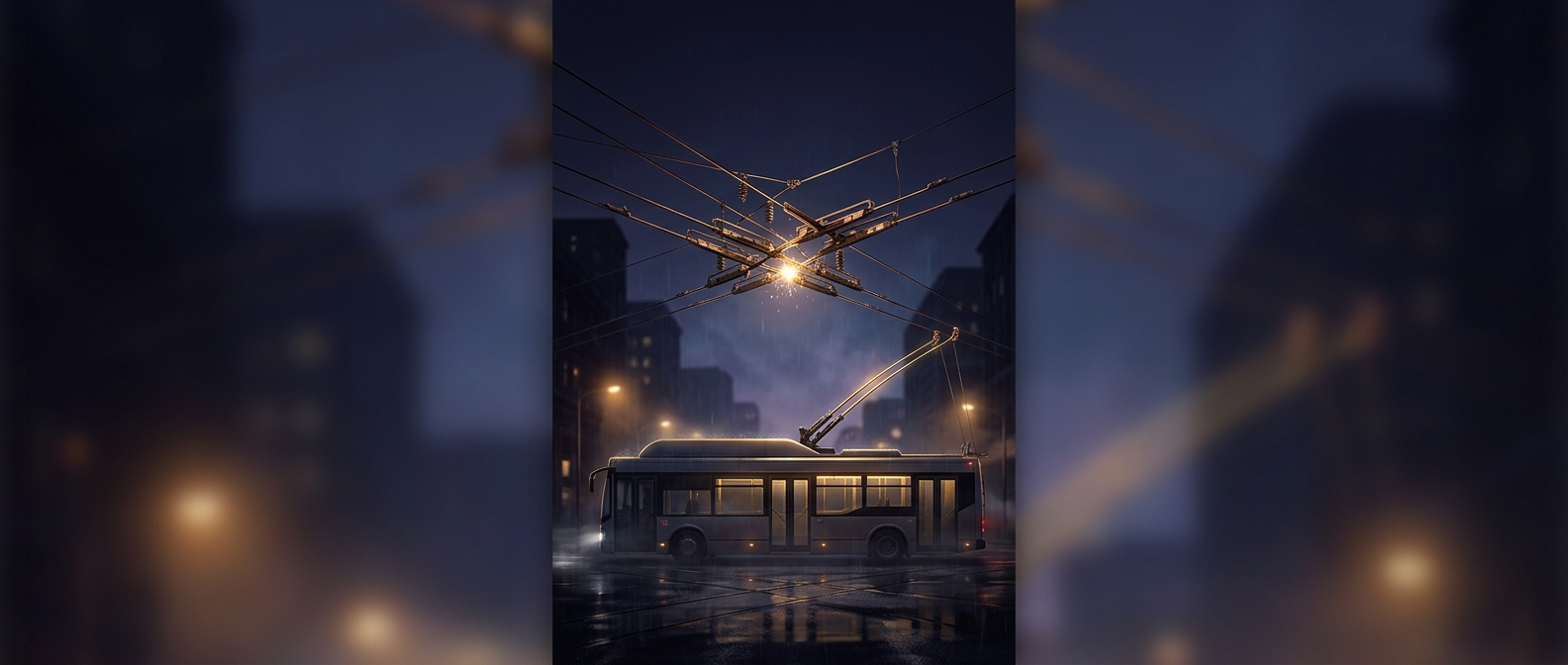
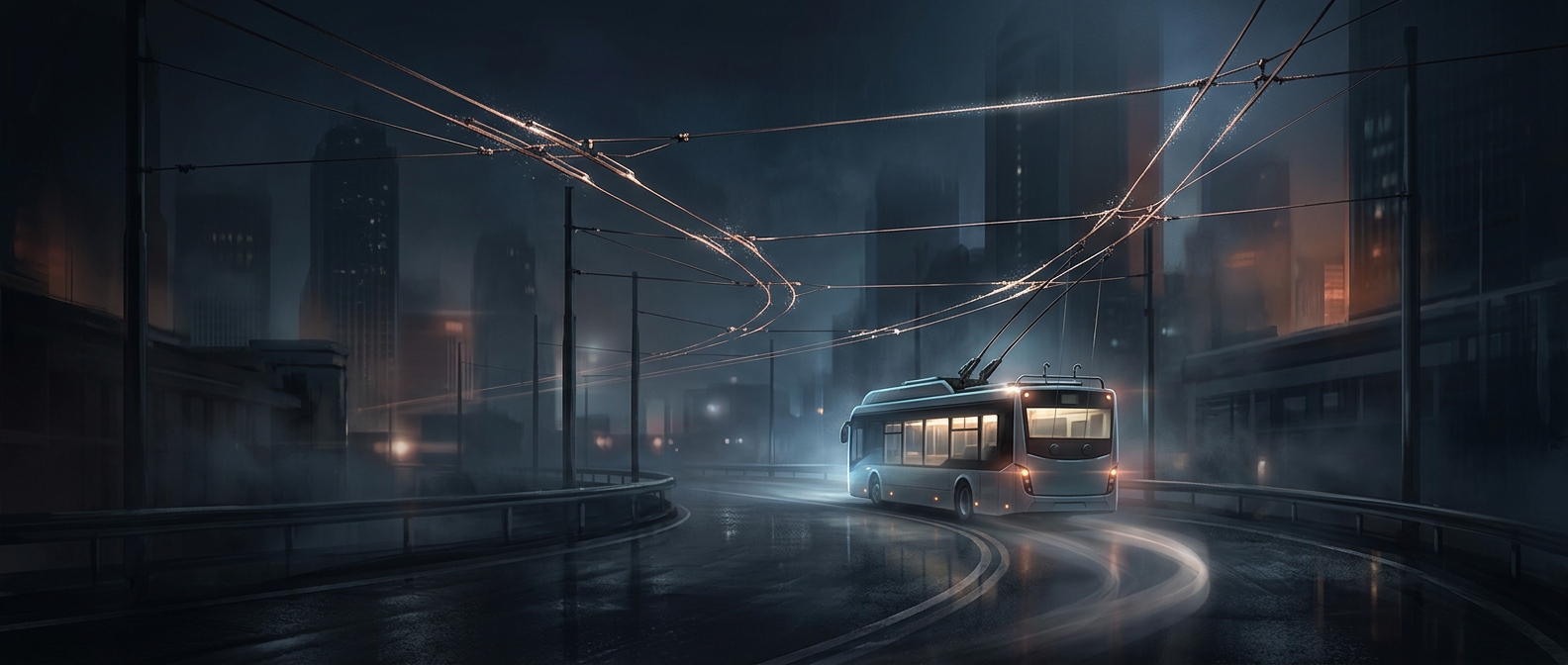
A trolleybus draws power through spring-loaded poles mounted on its roof. Each pole presses a small collector against one overhead wire, keeping contact as the bus moves. Electricity travels from one wire through the vehicle’s motor and electrical equipment, then returns through the second wire. The pair forms a complete circuit without using the road or the tires as part of the electrical path.
That arrangement is what lets the bus run on ordinary pavement. A rail vehicle can use its metal wheels and rails as part of its electrical system; a trolleybus cannot rely on rubber tires to carry current back to the power supply. Its second wire supplies a separate return path overhead.
The wires shape the route
Because both poles must stay connected, trolleybuses cannot wander as freely as buses powered only by batteries or fuel. The overhead wires guide where they can travel, especially at intersections, where special fittings let the collectors pass from one wire arrangement to another. A sharp turn or a badly placed fitting can make it harder to keep both poles in contact.
The poles can move to follow the wires, but their reach is limited. If a collector comes off, the bus loses its connection to the overhead supply and has to stop while the poles are put back in place. The system trades some freedom of movement for a direct electrical feed: the vehicle can operate without rails, but its path remains visibly tied to the wires above it.