How a Trolleybus “Frog” Picks a Branch
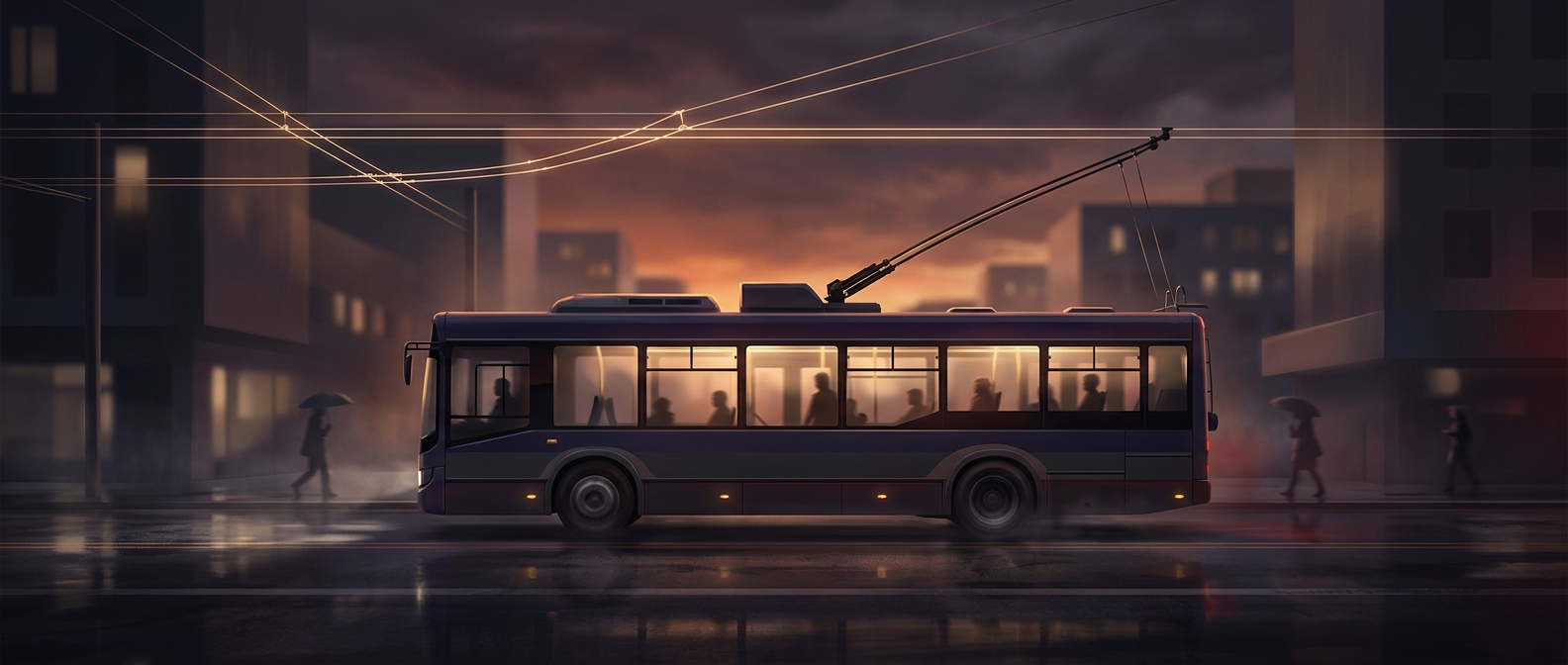
A trolleybus cannot steer its way off an overhead wire. Its two spring-loaded poles press against separate wires, carrying electricity to the motor and keeping the bus connected to its power supply. At a junction, the wires themselves must split in a controlled way so the poles follow the intended route instead of snagging or slipping free.
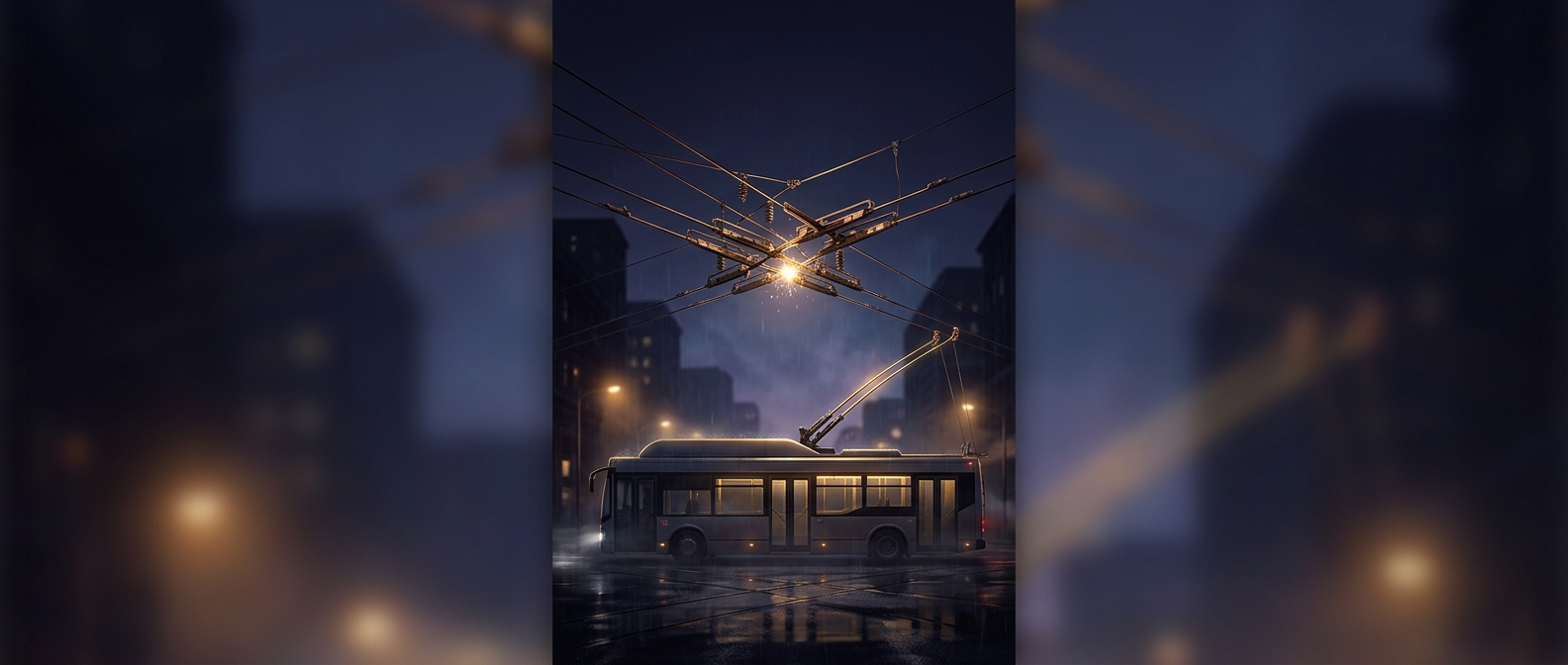
That overhead junction is called a frog. Like a railway switch, it guides a moving vehicle from one track onto another—but here the “track” is made of wires, and the parts that guide the poles are small metal channels and movable contacts.
The Switch Acts Before the Bus Arrives
As the trolleybus approaches, its poles pass over electrical contact points in the wire assembly. Those contacts can signal or energize a switch mechanism, which moves a guide into the position for the selected branch. The poles then slide through the guide and onto the chosen pair of wires. The change happens overhead and quickly, while the bus continues rolling beneath it.
The precise control method varies by installation. In some systems, the driver’s use of the accelerator helps determine the route: drawing power can trigger one setting, while coasting selects another. Other switches can be controlled electrically from elsewhere. In either case, the key is that the route is selected before the poles reach the point where the wires diverge.
Why the Detail Matters
A frog makes a street junction usable without requiring the trolleybus to stop and reconnect its poles by hand. But the poles must enter the guide at the right angle and in the right position; a missed or poorly timed switch can send them off the wire, forcing the bus to stop while they are put back in place.
So the odd name belongs to a practical piece of infrastructure: a compact overhead switch that lets a vehicle follow its branch while remaining tethered to the power lines.