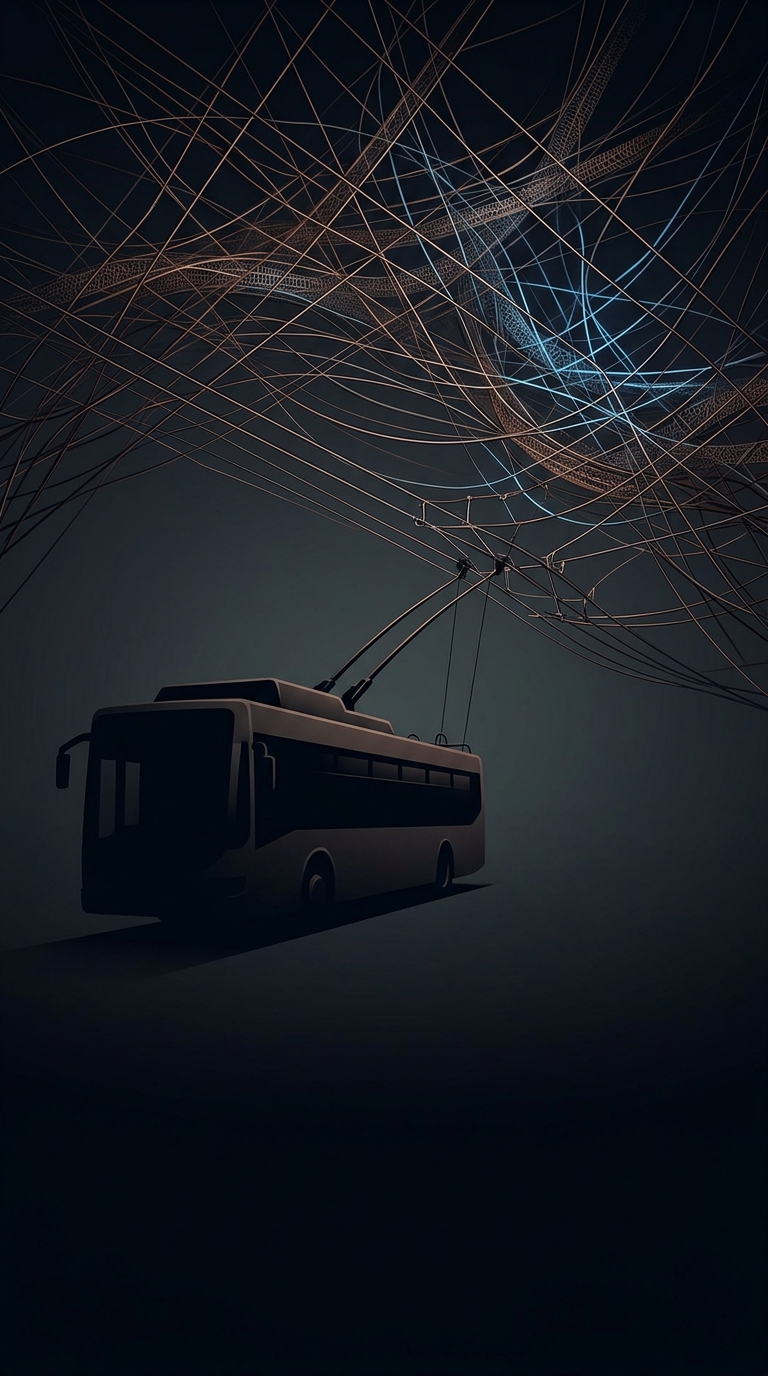
How a bus stays connected to the wires
A trolleybus carries two long poles on its roof, each pressed against an overhead wire. The wires deliver electricity to the vehicle’s motor and provide a path for the current to return. Because the bus steers on the road rather than following rails, the poles can pivot and slide along the wires as the vehicle turns or shifts position.
That arrangement combines two kinds of infrastructure: the road provides the bus’s path, while the wires supply its power. It also creates a limit. A trolleybus can move around obstacles more freely than a rail vehicle, but it must remain within reach of its wires. Pulling away from them means losing its electric supply until the poles are reconnected.
Why the ride sounds different
Steel wheels rolling over rails produce vibration and clatter; a trolleybus’s rubber tires meet ordinary pavement instead. Its electric motor also avoids the persistent engine noise of a diesel bus. The result can be a noticeably calmer sound along a busy street, especially during acceleration and at stops.
Quiet does not mean silent: tires still hiss against the road, and the bus makes other operating sounds. But replacing rail noise and diesel-engine rumble changes what dominates the street’s soundscape. For people nearby, the vehicle can pass with less mechanical clamor—even though its route is still visibly tied to the wires above.