Why a trolleybus needs two wires
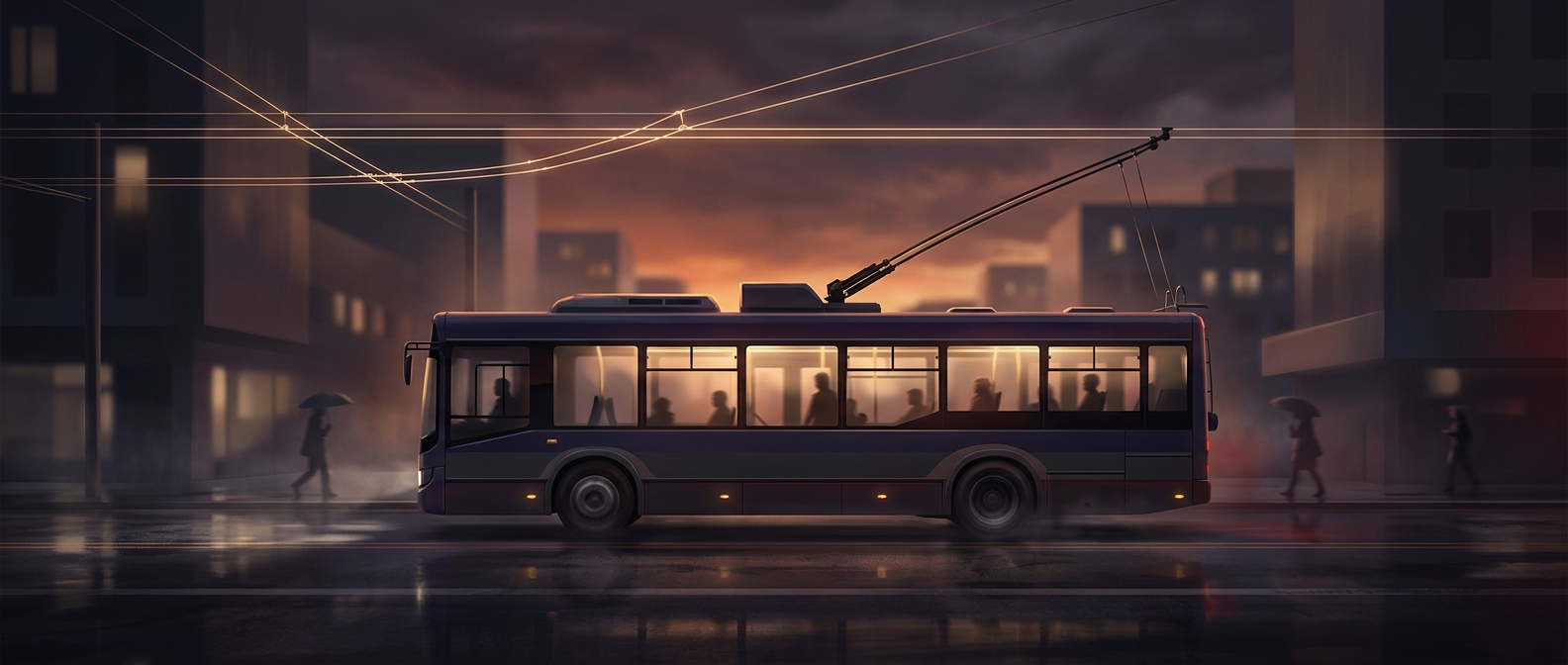
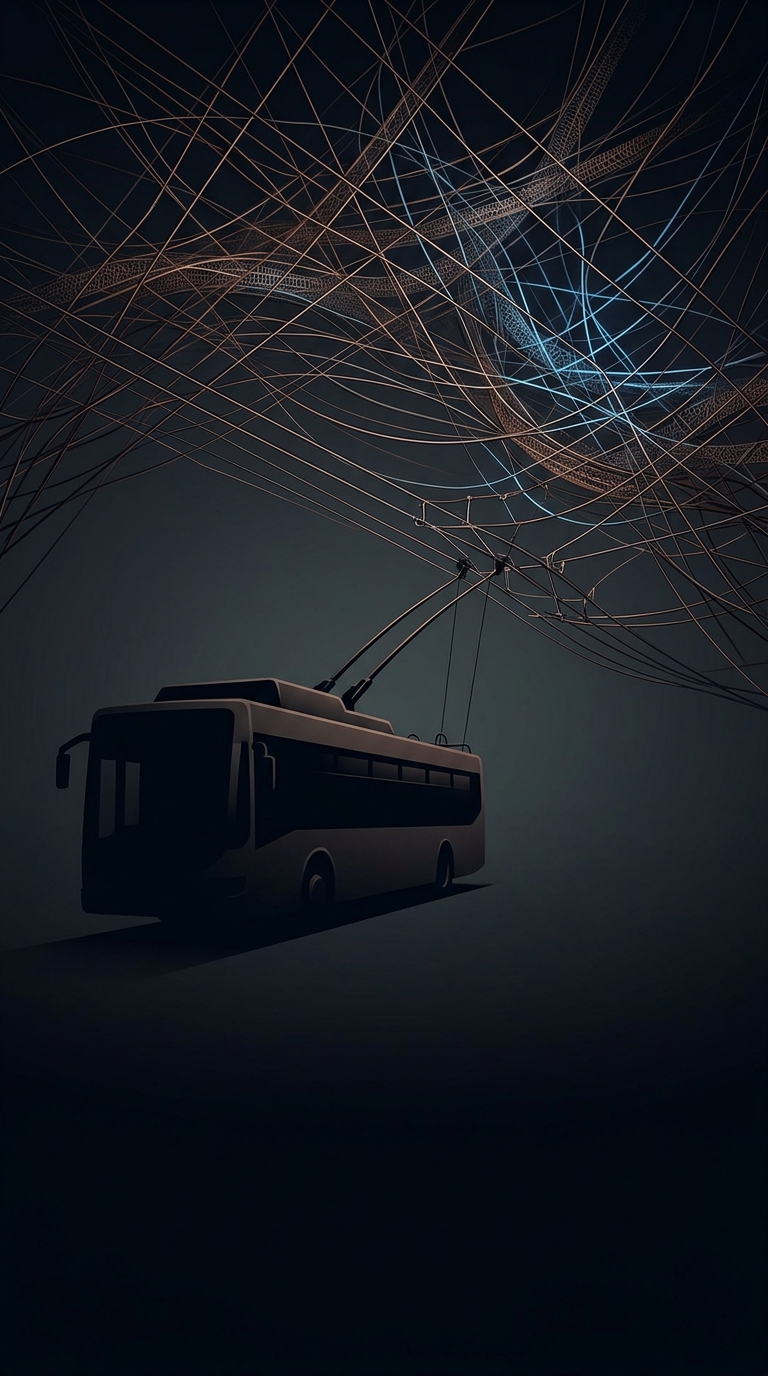
A trolleybus cannot use the road as an electrical return path. It therefore draws power from one overhead conductor and sends current back through a second, running parallel to the first. Two spring-loaded poles on the roof keep contact with the separate wires as the bus moves.
That paired circuit is the source of much of the visual complexity: every place the bus may go must provide a continuous path for both conductors, not just one.
A turn becomes a piece of trackwork
At a junction, the wires must guide both poles through the bus’s chosen turn while avoiding the paths for other routes. Special overhead fittings let the paired wires cross, branch, and reconnect. These junctions are sometimes called frogs; they are electrical and mechanical guides, not merely intersections of cable.
The bus’s path is constrained by the geometry above it. Drivers generally approach complicated switches carefully, because a pole that misses its intended wire can come off the line, forcing a stop while it is put back into place. A route split may require several extra lengths of wire and fittings, and a busy intersection can accumulate overlapping branches for multiple directions.
The tradeoff at street level
Unlike a battery bus, a trolleybus can draw power continuously without carrying a large traction battery. But that shifts infrastructure onto the street: conductors, supports, crossings, and switching hardware must be installed wherever service needs to go. The more route choices concentrated at one intersection, the more elaborate its overhead network tends to become. From below, the result can look less like a single pair of lines and more like a map of the routes buses are allowed to take.