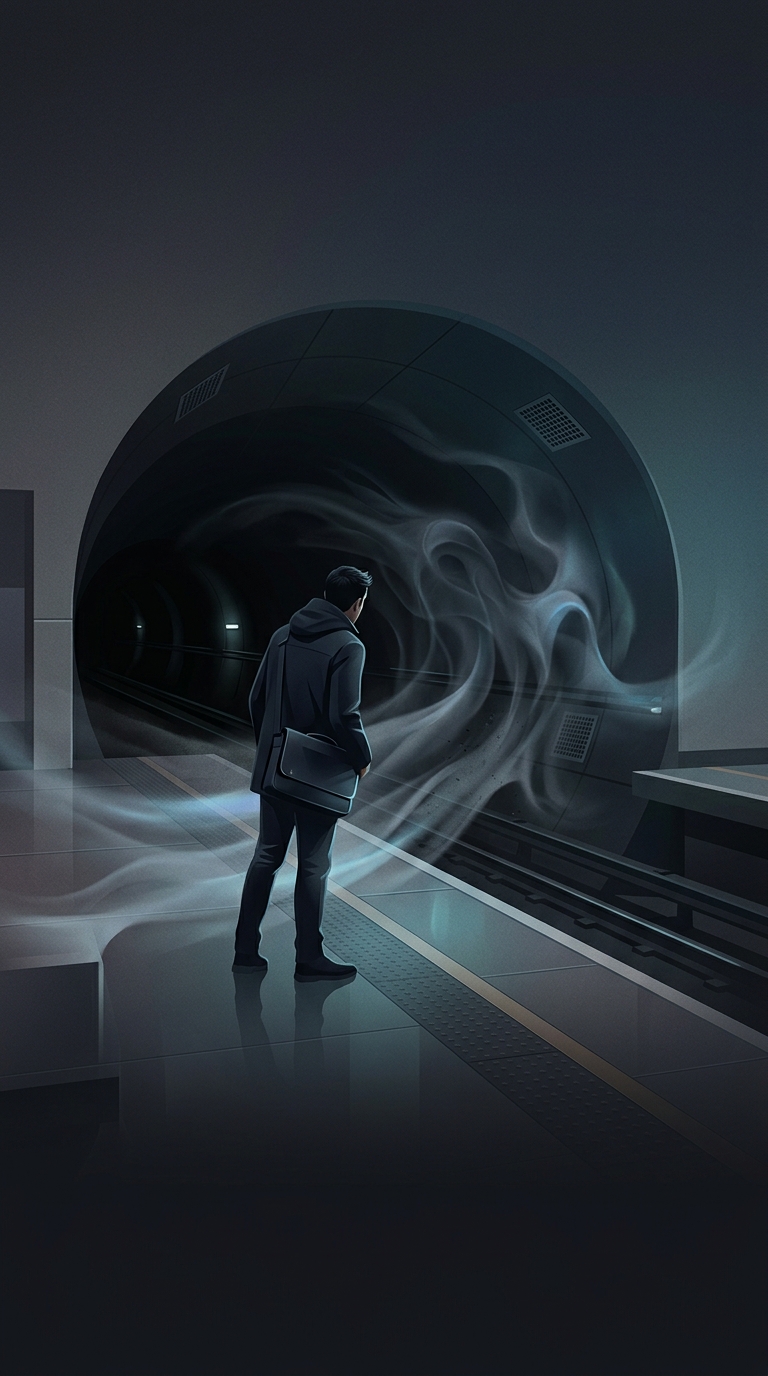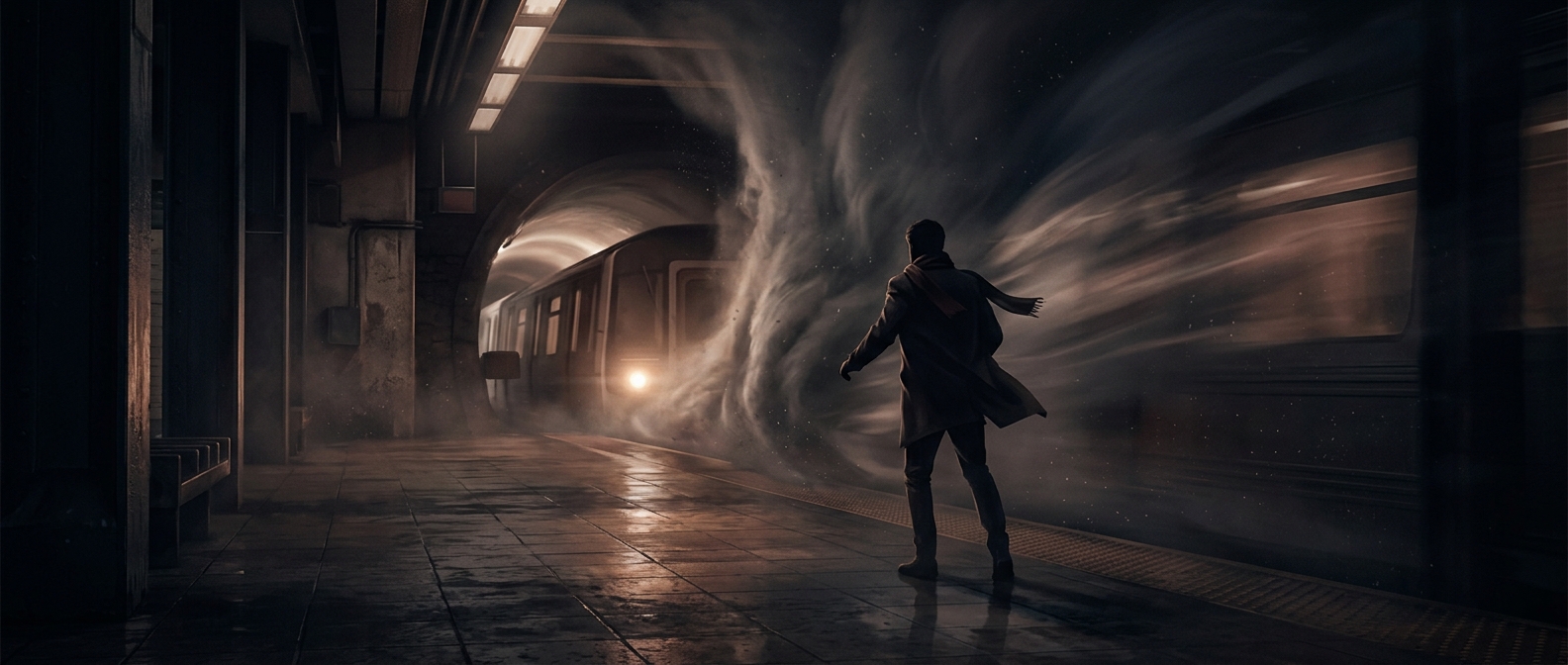
A train acts like a moving plug
A subway tunnel has little room around a train. As the train advances, its body takes up space that air previously occupied, so air ahead must move out of the way. The train also leaves a lower-pressure region behind it, which helps draw air along the tunnel. Engineers call this airflow the piston effect: the train’s motion drives air through the underground network much like a piston moves air inside a cylinder.
Why the gust reaches the platform
Air does not travel only down the track. Tunnels connect to stations through openings, and stations connect to the outside through passages, shafts, and ventilation equipment. Those routes give displaced air somewhere to go. When a train approaches or passes, pressure differences can push a burst through the station and out toward the platform. The airflow may carry dust and odors that have accumulated in the tunnel, which is why the blast can smell stale.
The strength and direction of the gust depend on the layout: the space around the train, nearby tunnels and shafts, and how open the station is all affect where the air moves. That is why one train may produce a noticeable rush while another seems to pass quietly.
A side effect of moving air underground
The same motion can help exchange air in a subway system, though it is not a substitute for deliberate ventilation. The platform gust is the visible, and sometimes unpleasant, part of a larger circulation pattern: each passing train sets air in motion, sending it through whatever paths the underground network provides.