How the DLR runs without a conventional cab
The Docklands Light Railway (DLR) uses automatic train operation: systems on the railway control routine movements, including acceleration, braking and stopping at stations. That removes the need for a driver’s cab at the front of each train, freeing the space behind the windscreen for passengers.
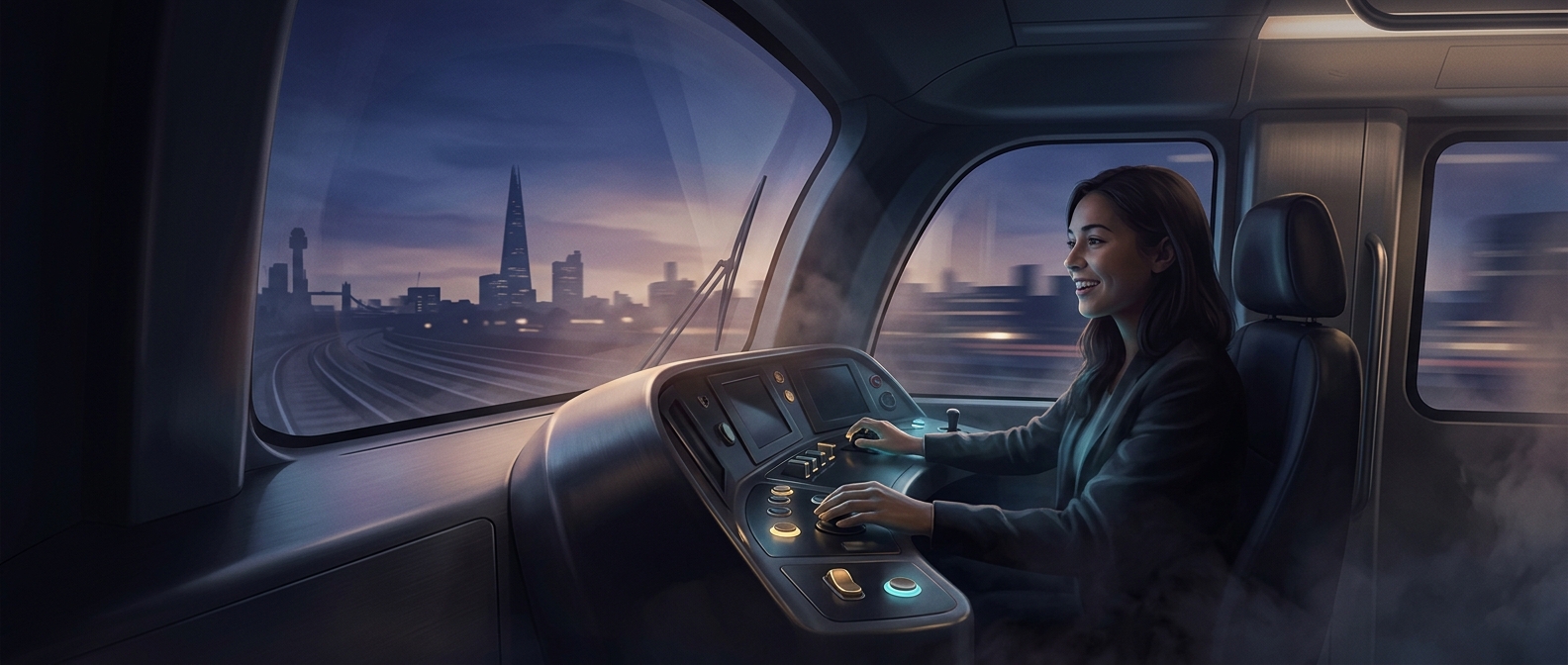
“Driverless” does not mean unattended. Staff travel on the trains to assist passengers and oversee the journey, and can take action when the automatic service cannot proceed normally. The railway’s control staff also monitor operations and coordinate the network. Automation handles the repeated task of moving between stations; people remain part of the safety and service arrangements.
A view from the train’s nose
On many trains, the front cab blocks passengers from looking straight through the windscreen. On the DLR, riders can sit or stand at the leading end and watch the track approach, making the journey feel unusually direct. The open view is a visible consequence of the railway’s operating design—not just a window added for scenery.
That perspective also makes ordinary details of the route part of the ride: curves, station entrances and the elevated track through Docklands unfold from the train’s front. The seat feels like a front-row view because, in a practical sense, the space where a driver’s cab would usually be has been given to passengers.