The geometry behind the squeeze-through
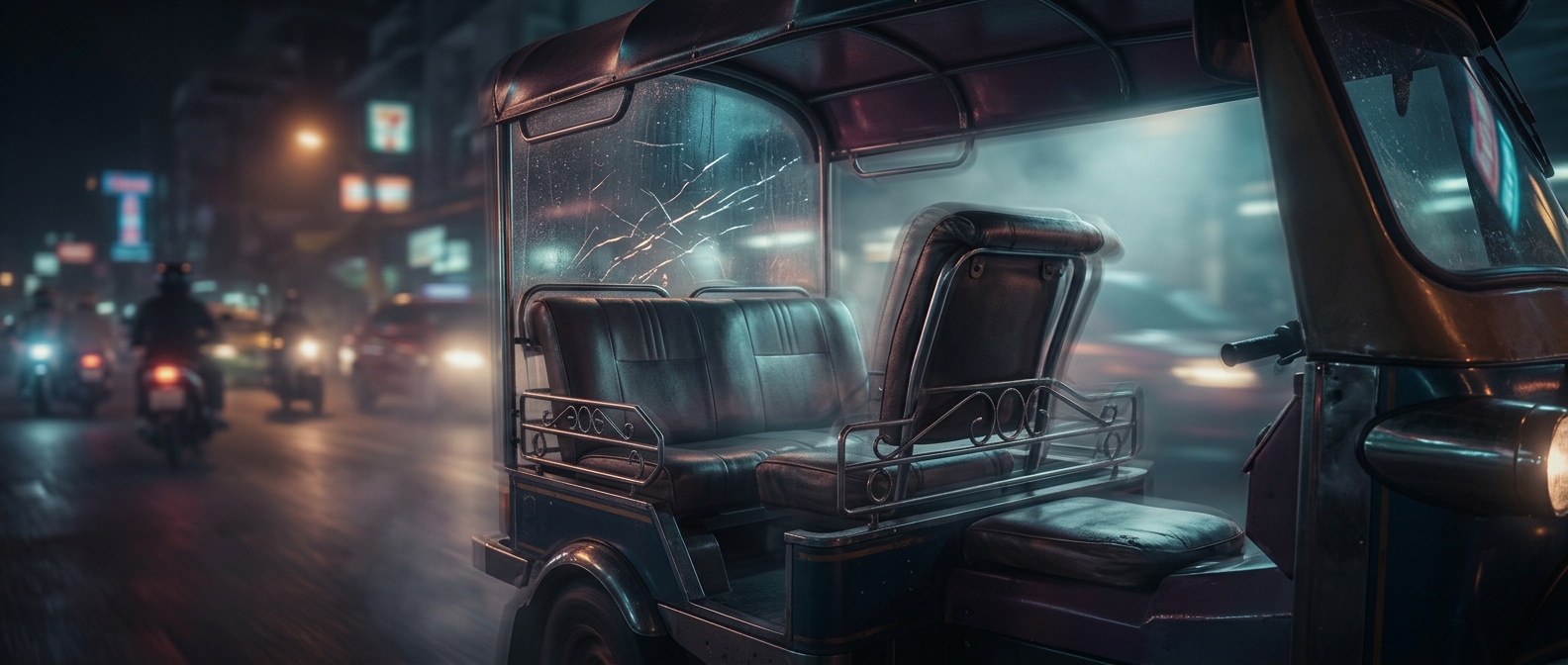
An auto-rickshaw’s three wheels are usually arranged with one wheel at the front and two at the rear. That layout lets the body stay narrow, which can help the vehicle pass through crowded streets and make tight low-speed maneuvers. But the same layout gives it a smaller base of support than a car: its wheels form a triangle rather than a broad four-cornered footprint.
Why a turn changes the balance
When a vehicle turns, its momentum pushes its body outward relative to the turn. The faster the turn or the sharper the curve, the greater that sideways force. In a three-wheeler, the narrow spacing between the rear wheels leaves less room for the vehicle’s weight to shift before the inside wheel becomes lightly loaded. If the balance shifts far enough, a wheel can lift and the vehicle can tip.
A car’s wider stance generally gives it more lateral margin, though it does not make a car immune to overturning. For an auto-rickshaw, speed, a sudden steering input, uneven pavement, and how passengers or cargo are distributed can all affect stability. A load placed high or off-center can make the balance harder to manage.
Maneuverability has a limit
The narrow shape is useful in stop-and-go traffic, where fitting through a small opening can matter more than carrying a wide cabin. But squeezing through a gap and cornering safely are different tasks: the former rewards a compact footprint, while the latter depends on keeping the vehicle’s weight within its support base. That is why a three-wheeler can feel nimble in a queue yet demand a gentler hand when the road bends.