Why one fault can stop an escalator
An escalator is not simply a staircase being pulled upward. Its steps are linked into a continuous loop by chains and guided along tracks: they flatten out at the landings, then rise or descend together. A motor and gearbox drive that loop, while a separate mechanism moves the handrail at roughly the same pace. The parts must stay aligned and synchronized under the changing weight of passengers.
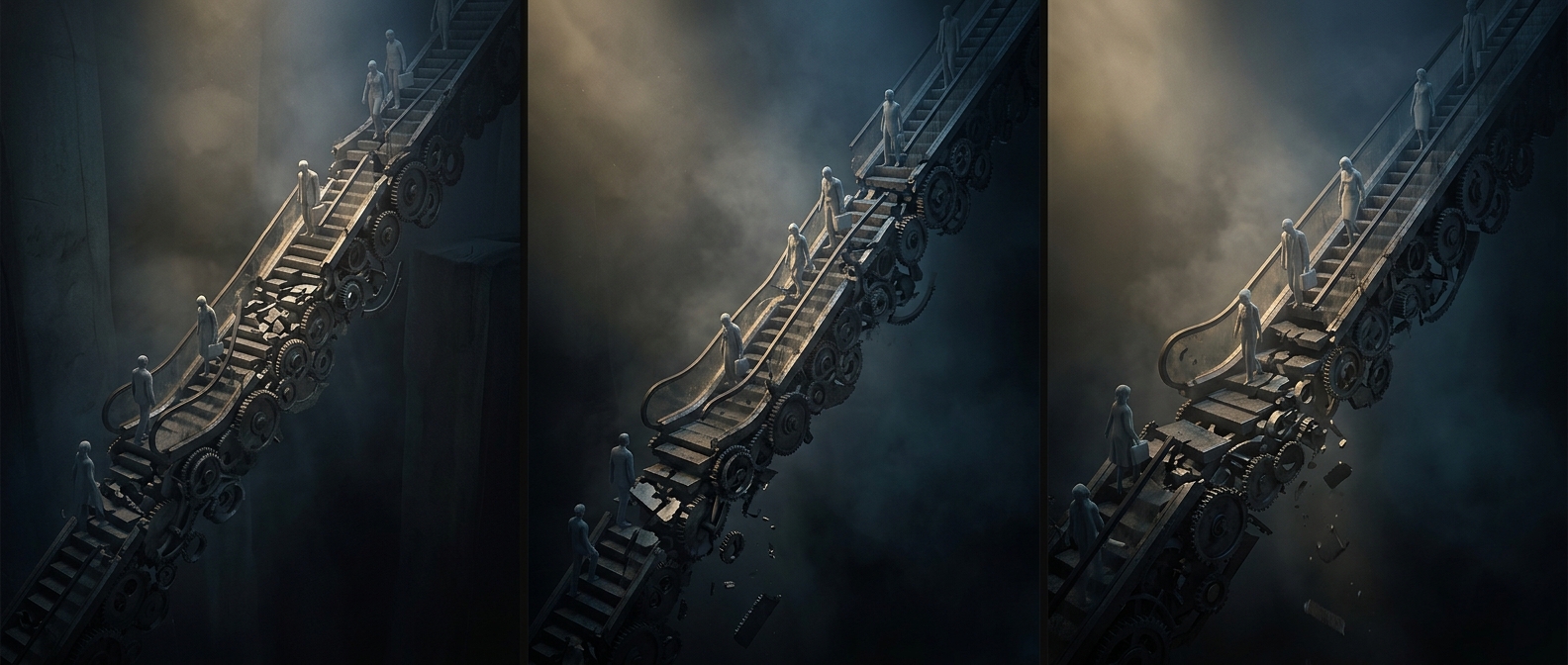
That coordination leaves little room for a problem to go unnoticed. A worn chain, a jammed step, or a handrail that slips can disrupt movement or create a hazard. Sensors and safety switches monitor conditions such as a displaced step or an obstruction near the landing. When a safety device detects trouble, it can cut power and bring the escalator to a stop. The shutdown is deliberate: continuing to run could turn a small mechanical fault into an injury or more serious damage.
Why a stopped staircase takes time to reopen
Stopping the motor is only the beginning of a repair. Technicians may need to inspect the steps, tracks, drive system, and safety devices to find the cause, then test the equipment before returning it to service. A fault that appears minor from the outside can involve parts hidden beneath the steps or inside the machinery.
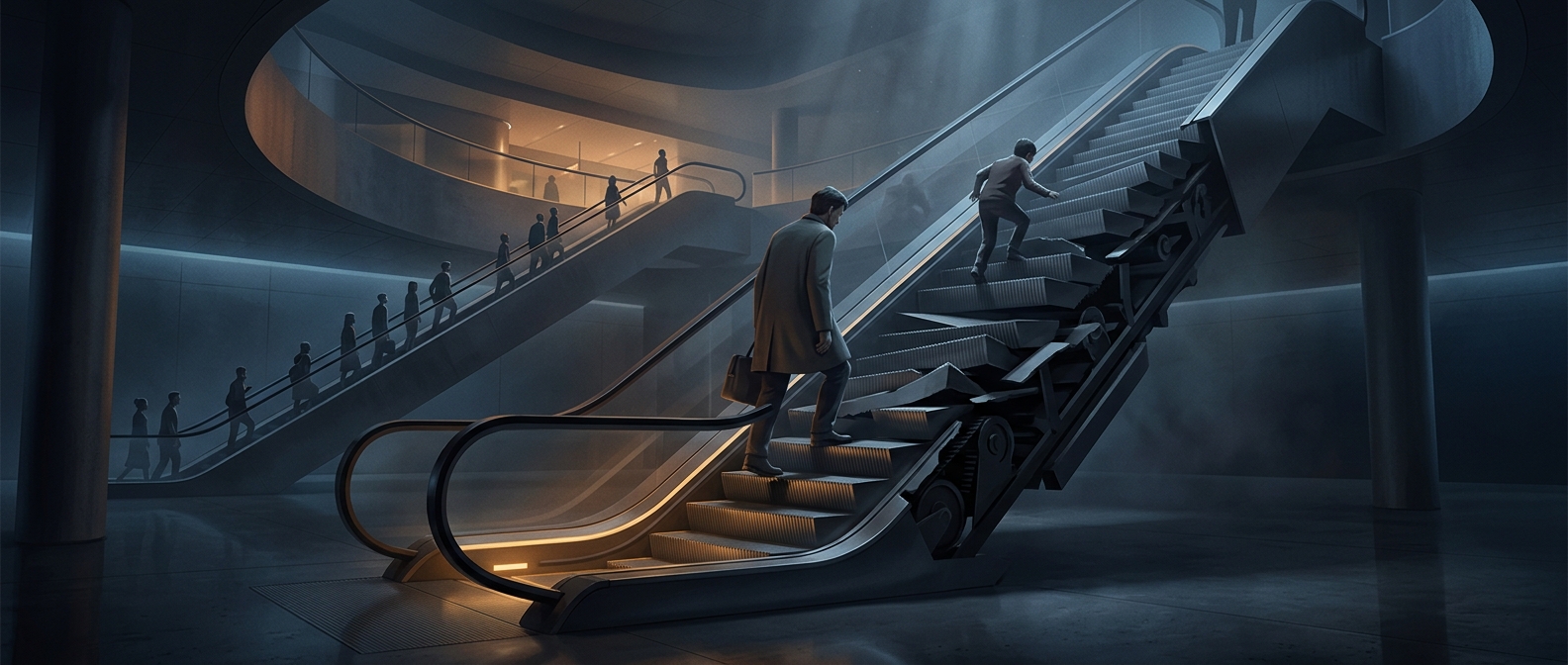
That makes reliability a tradeoff built into the design. Escalators carry people continuously with less effort than stairs, but their many moving parts require inspection and maintenance—and a safety system that favors stopping over risking continued motion. In a station or shopping center, the result is immediate: the machine meant to move a crowd becomes a staircase that everyone must climb on foot.