Why a Donkey Cart Can Reach Where a Truck Cannot
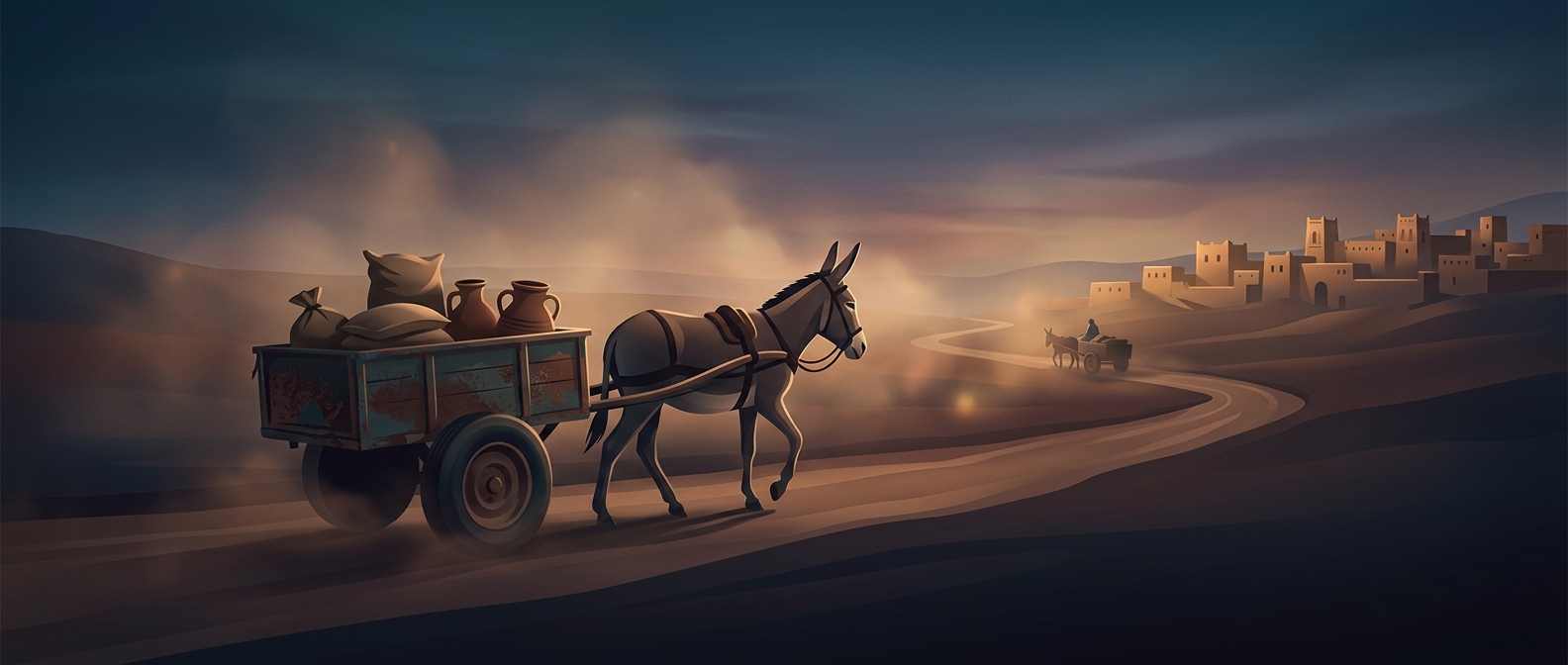
A cart drawn by a donkey is a small transport system built around what is available nearby. The animal supplies the pulling power; a harness transfers that force to the cart, whose wheels carry the load. Because the setup does not require an engine, fuel delivery, or a paved road, it can keep goods moving on rough tracks and through places where motor transport is costly or unreliable.
The Tradeoff Is Capacity for Access
A donkey cart cannot match a truck’s load or speed. Its advantage is that it can make short, practical trips with modest equipment: moving produce from fields to a market, carrying water or building materials, or connecting a village to a larger road. When a journey is local and the alternative is a long walk or an expensive vehicle, that lower capacity can still make the cart useful.
The system also depends on local conditions. Feed and water must be available, loads must suit the animal, and someone must care for it and maintain the cart. These needs do not disappear when fuel stations and smooth highways do; they shift the costs from machines and infrastructure to animal care, labor, and time.
A Different Kind of Logistics Network
Where roads and budgets limit motor vehicles, donkey carts can fill the gap between a household, a farm, and a market. They are not a universal replacement for trucks, but a way to move everyday necessities without waiting for a larger transport network to arrive. The telling detail is that the route need not be a highway: a passable track and a nearby source of feed may be enough to keep a local supply chain moving.