Why the Army tried a different kind of pack animal
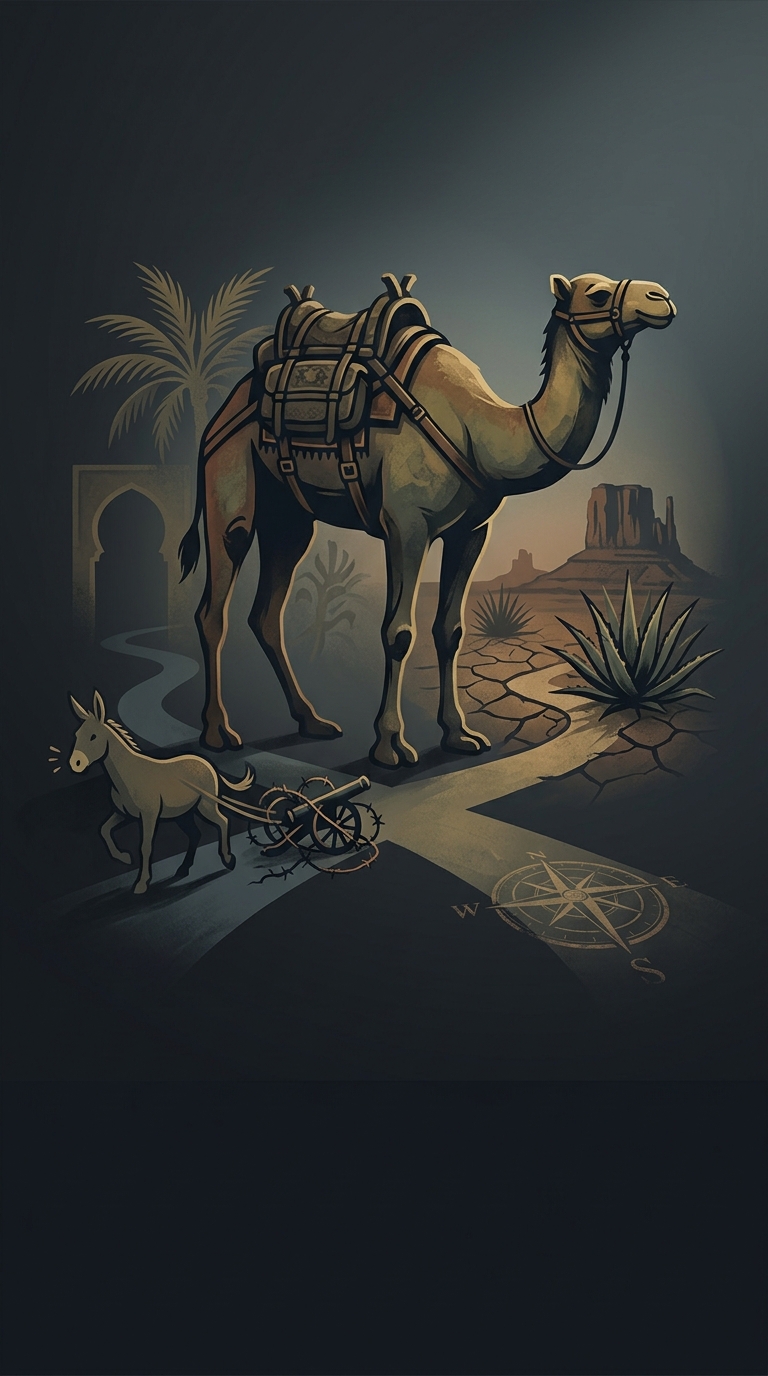
In the mid-19th century, moving supplies across the arid Southwest meant planning around water. Horses and mules needed regular watering, and their hooves could sink into loose sand. Camels offered a different set of advantages: their broad, cushioned feet helped them travel over soft ground, and they could go longer between drinks. That made them promising carriers for routes where water was scarce and wagon travel was difficult.
The experiment was not simply a matter of buying animals. Camels had to be shipped across the ocean, assigned to military posts, and handled by soldiers accustomed to horses and mules. Their value depended on whether an unfamiliar animal could fit into the Army’s routines for loading, care, and transport—not just on how well it crossed sand.
A useful animal, but a difficult fit
A camel’s ability to carry heavy loads did not automatically make it an ideal army animal. Soldiers needed to learn how to manage and pack them, and the Army had to work out how to obtain suitable feed and maintain the animals far from established supply lines. The trial therefore tested a whole transport system: handlers, equipment, routes, and resupply, as well as the camels themselves.
The animals demonstrated that they could carry freight through the Southwest, but that did not settle whether the Army could make them a routine part of military logistics. An advantage on the trail had to outweigh the cost and effort of building a new system around them.
War interrupted the experiment
The Civil War redirected the Army’s people and resources just as the camel project needed continued support and evaluation. Without sustained institutional backing, the trial did not develop into a standard military transport service. The camels were dispersed rather than incorporated into a lasting network of western supply routes.
The experiment’s lesson was practical: a transport animal can be well suited to the terrain and still fail to transform an army’s logistics if the organization around it cannot adapt.