Why a Search Helicopter Needed a Different Kind of Lookout
From the air, a person in the water can be almost impossible to pick out. Waves break up the view, whitecaps create visual clutter, and a life jacket may occupy only a few pixels in a broad sweep of ocean. Project Sea Hunt explored whether pigeons could take on the narrow but crucial job of noticing that small patch of color.
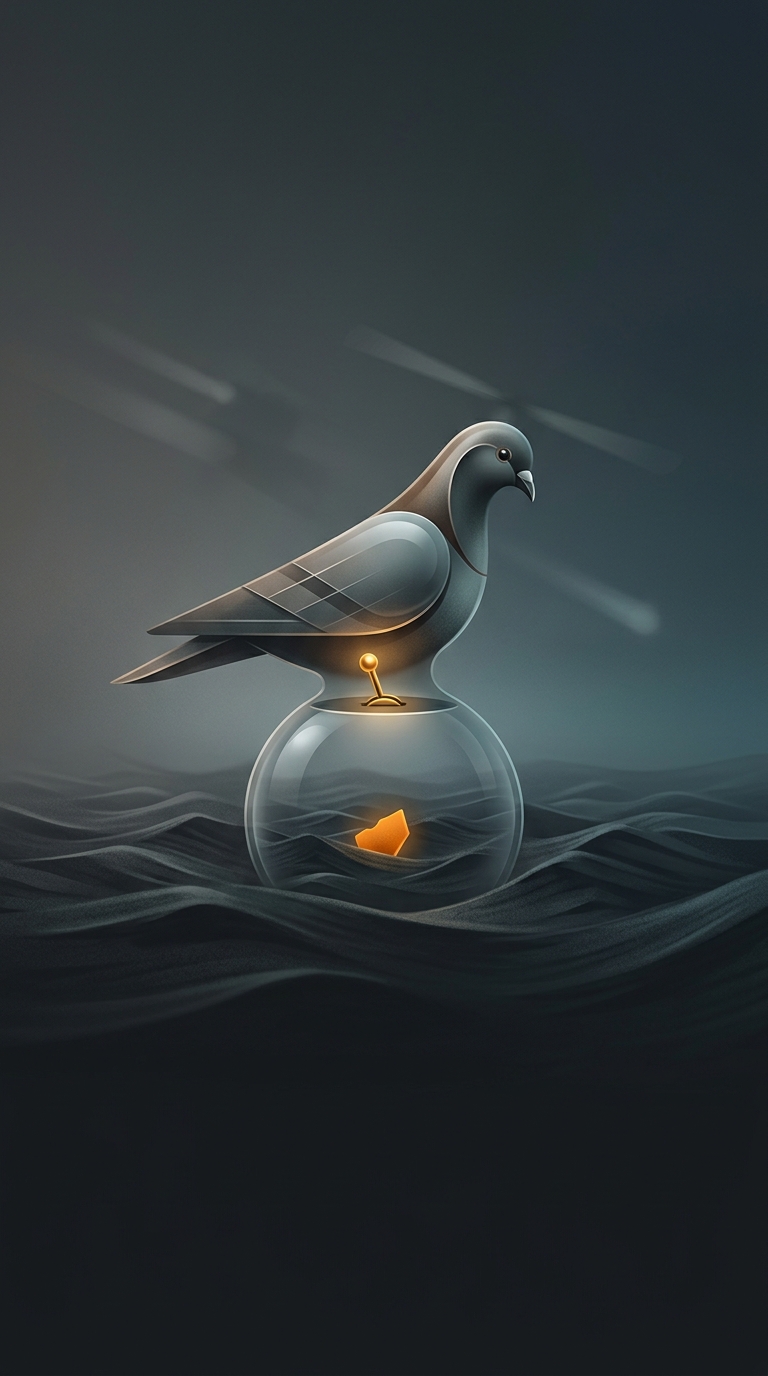
The idea was not to let birds navigate or operate a helicopter. Their proposed role was closer to an alert system: watch a limited field of view, recognize a target color, and signal when it appeared. A peck on a switch could direct the crew’s attention to a possible sighting. The humans still had to judge what they were seeing and decide how to respond.
Turning a Bird’s Attention into an Alert
A pigeon’s visual system can distinguish colors well, and birds can be trained to associate a visual cue with a response. In a search setup, that makes the task a practical one: scan moving water for a conspicuous color, then peck when it appears. The signal does not establish that the object is a person; it flags a spot for human inspection.
That division of labor addresses a real weakness in visual search. A crew must fly safely, monitor instruments, communicate, and scan a huge area at once. A trained animal assigned only to watching for a target could offer another set of eyes without being asked to manage the flight.
The Promise—and the Constraint
The arrangement depended on more than a pigeon’s ability to spot color. The bird had to be positioned so it could see the search area, remain attentive amid motion, and produce a signal the crew could interpret. Any alert also had to be useful in practice: a false alarm costs time, while a missed person defeats the purpose.
Sea Hunt’s lasting intrigue lies in that sharply defined engineering question: could a living observer notice what a busy human crew might miss? The experiment treated rescue not as a contest between people and animals, but as a possible partnership—one in which the bird watched for the tiny orange mark and the crew decided what to do next.