Why the Cargo Hold Still Sounds Like an Airport
A live-animal compartment can be pressurized and kept within a suitable temperature range without being quiet. Those systems protect animals from changes in air pressure and temperature; they do not make the hold soundproof. Aircraft structure and airflow carry a steady mix of engine and machinery noise, while loading equipment adds clatter before departure.
For a crated dog, that unfamiliar soundscape arrives with other changes: the crate is moved, the light is dim, and the floor may vibrate. Even when the animal is physically secure, it has few familiar cues to help interpret what is happening.
A Familiar Voice Is a Small, Immediate Cue
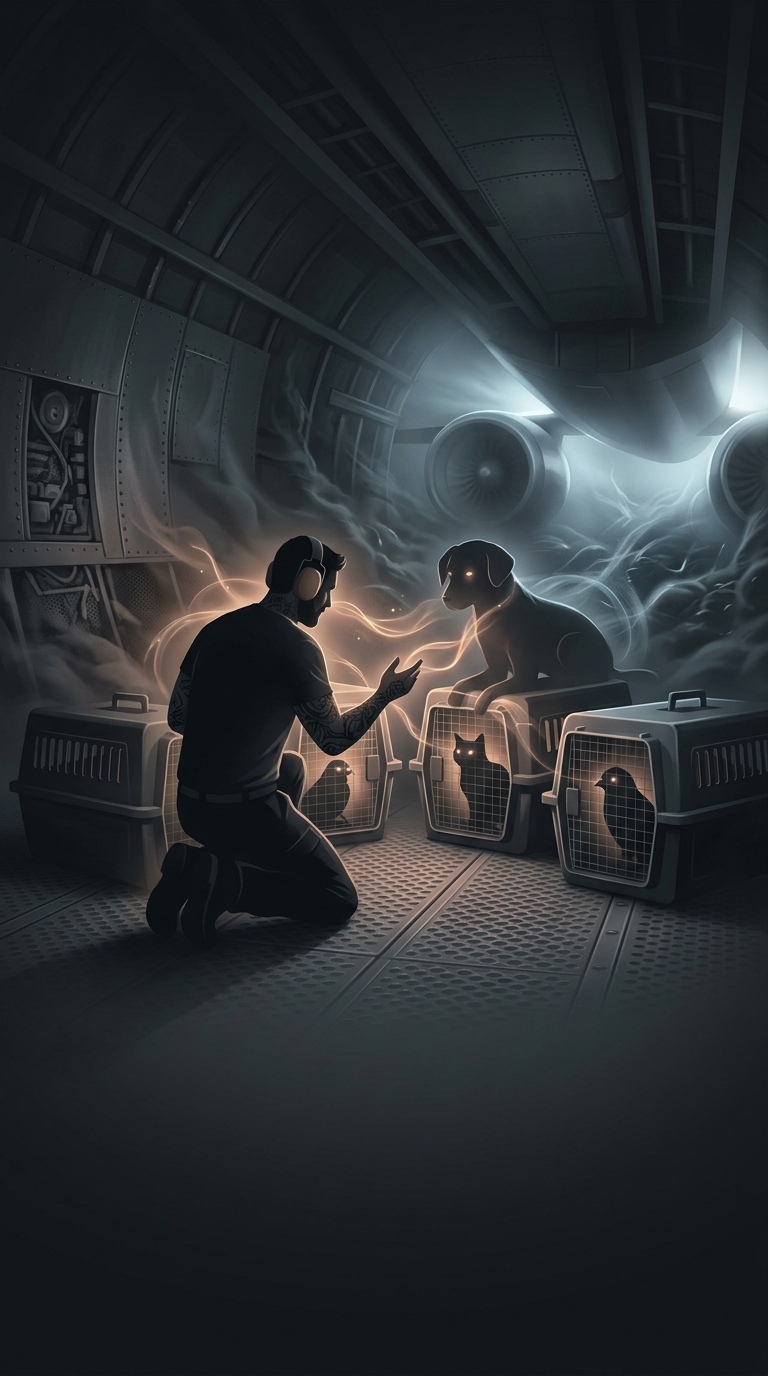
A handler speaking gently cannot cancel the noise or explain the flight. But a calm human voice is at least recognizable amid the machinery. Talking while positioning a crate can also keep the handler’s attention on the animal rather than treating the kennel as just another piece of freight.
Where space and loading arrangements allow, placing kennels so animals can see one another may offer another point of reference. It does not remove the stress of transport, but it can make the dark compartment feel less isolating before the aircraft doors close.
Comfort Has a Short Window
Ramp workers are present during loading, not beside the animals throughout the flight. Their reassurance is therefore brief, and it cannot control the sound or motion once the plane is airborne. Still, that short interaction matters: the animal gets a calm, familiar human signal at the moment its surroundings are changing most dramatically. Under the aircraft, a few quiet words are a modest kindness—not a cure for the noise, but a reminder that someone has noticed the passenger in the crate.