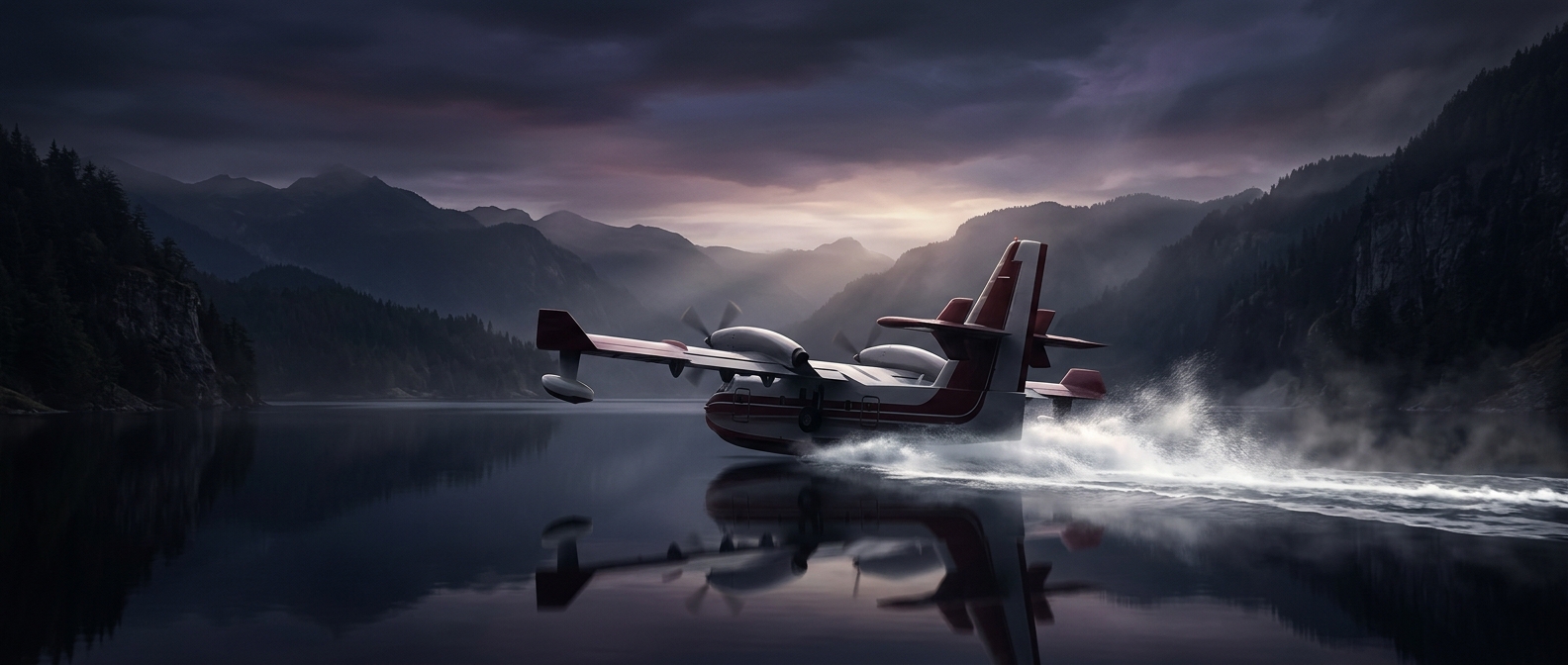
Refilling at speed
A water-scooping firefighting aircraft is built to turn a brief pass over a lake into a refill. As it settles onto the water, small intake tubes—often called scoops—dip below the surface. The aircraft keeps moving, and water is driven through the intakes into tanks inside the hull or fuselage. The pilot then lifts off and carries that load to a fire.
The key is forward motion: the scoops do not work like buckets lowered from a hovering aircraft. Water entering through them is forced along by the plane’s speed and the pressure at the submerged openings. Once the tanks reach their intended load, the pilot raises the scoops clear of the water.
The lake becomes part of the route
Because the aircraft refills on the water rather than returning to an airport, a suitable lake can serve as a temporary supply point close to the fire. That can shorten the time spent traveling back and forth, allowing more of each flight to be devoted to dropping water. It also means crews must choose a lake with enough open space for the fast, low approach and departure.
The maneuver demands a carefully controlled path: the aircraft must touch the surface, keep its wings level, and accelerate while the intakes are submerged. A small change in water conditions or alignment can matter when a large aircraft is skimming only a few feet above the lake.
The tradeoff is practical. Scooping can save a landing and a trip to a distant base, but only where water and room to maneuver are available. In the right location, the lake is not merely scenery below the flight path—it is a refill station the aircraft can use without stopping.