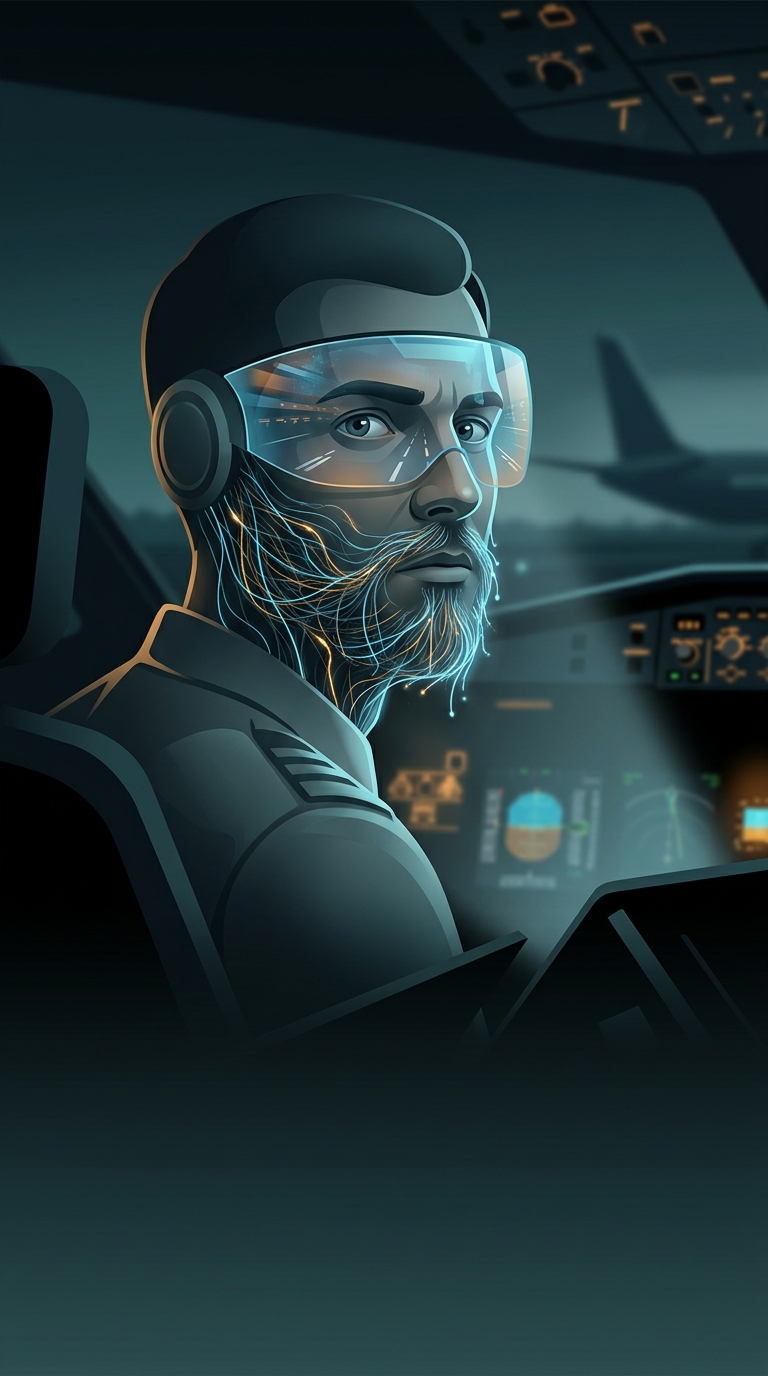
A Pilot’s Beard Can Interfere With an Oxygen-Mask Seal
The concern is not appearance or tradition. It is whether a pilot’s oxygen mask can seal against the face during a sudden loss of cabin pressure. At altitude, cabin air can become too thin to support consciousness; pilots must put on their masks quickly and receive oxygen while they descend to a safer altitude.
A tight-fitting mask works only if its cushion presses against skin closely enough to keep outside air from leaking in. Hair beneath that sealing edge can create tiny gaps. That may reduce the oxygen reaching the wearer, particularly when a mask is supplying oxygen under pressure in an emergency.
Why the Rule Is Often an Airline Policy
There is no single worldwide law that simply says every airline pilot must be clean-shaven. Aviation rules require appropriate equipment and procedures, while airlines set grooming policies intended to ensure that crew members can use their assigned masks effectively. The exact policy can vary with the airline, the mask and its fit requirements.
That makes the beard restriction a practical precaution: in an emergency, there may be no time to adjust equipment, troubleshoot a leak or switch to another mask. A mask that seals reliably on a clean-shaven face is easier to count on across a crew than one whose fit may depend on the length and location of each person’s facial hair.
Some mask designs or approved fit arrangements may accommodate limited facial hair. But the key test is not whether a beard looks short; it is whether hair crosses the mask’s sealing surface and whether the equipment can still provide a dependable seal. The rule is ultimately about keeping oxygen flowing when seconds matter.