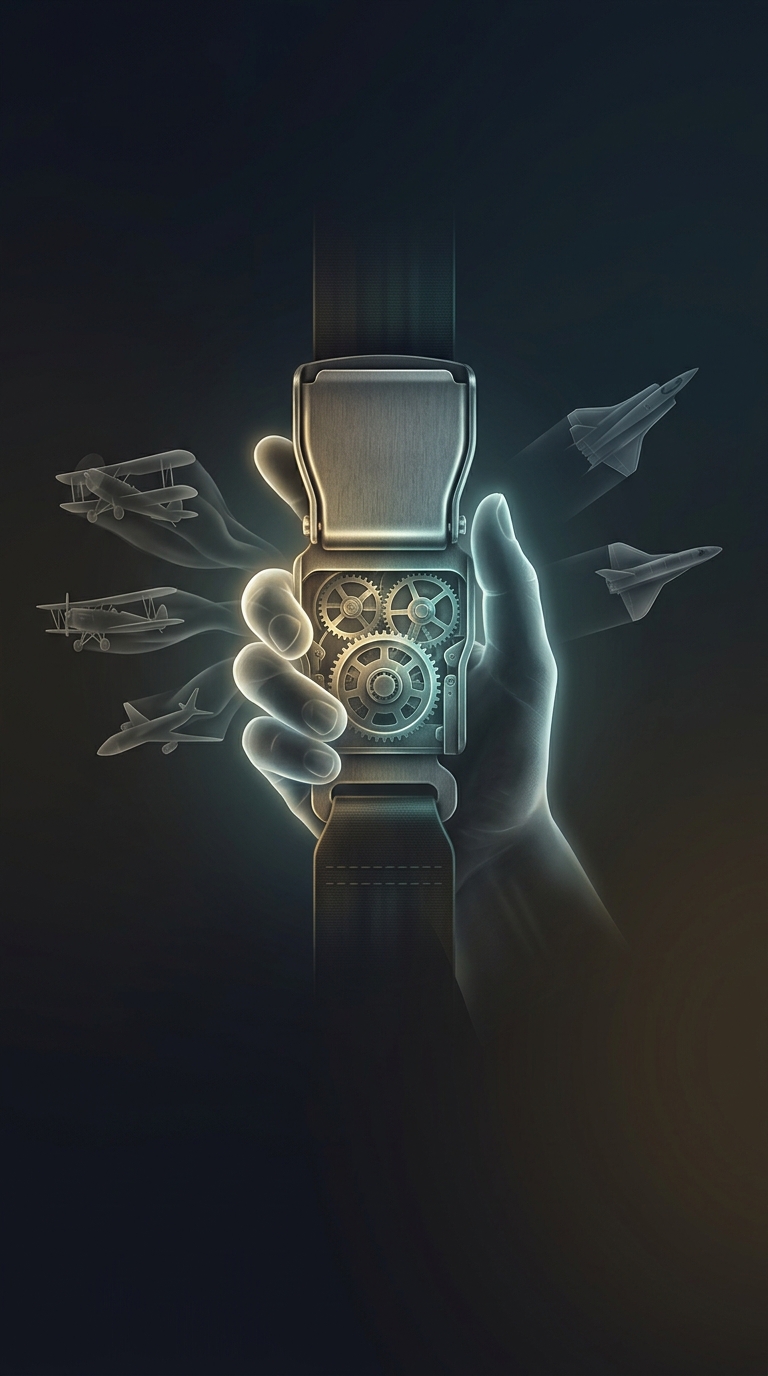
A buckle built for a seat, not a car
The familiar airplane belt uses a simple metal tongue and a hinged latch: slide the tongue into the buckle, then fold the latch down to secure it. To release it, lift the latch. It may look old-fashioned beside a car’s push-button buckle, but the two designs solve slightly different packaging problems.
A car buckle has a fixed receiver designed to accept a particular kind of tongue. The airplane’s lift-latch design is compact and easy to adjust, and its parts are plainly visible for inspection. It can be fitted to different seat layouts without adding a bulky receiver or a button mechanism. In an aircraft cabin, where seats must be light and many configurations may be used, a simple, standardized restraint is practical.
Why not switch to the car style?
A push-button buckle could hold a belt securely; the issue is not that the technology is incapable. Replacing the existing hardware would mean changing seat components and testing the revised seat-and-belt arrangement as a system. The new buckle would need to offer a worthwhile benefit to justify that work, weight, cost, and maintenance. For a lap belt that passengers fasten briefly and release at the end of a flight, the gain may be modest.
The belt itself is only one part of the safety design: the seat, its attachment to the floor, and the restraint are designed to work together. So the plain-looking latch persists not because airplanes are stuck with an obsolete idea, but because a durable, inspectable mechanism already does its job with little fuss. The airplane buckle’s most modern feature may be precisely that nothing about it needs to be complicated.