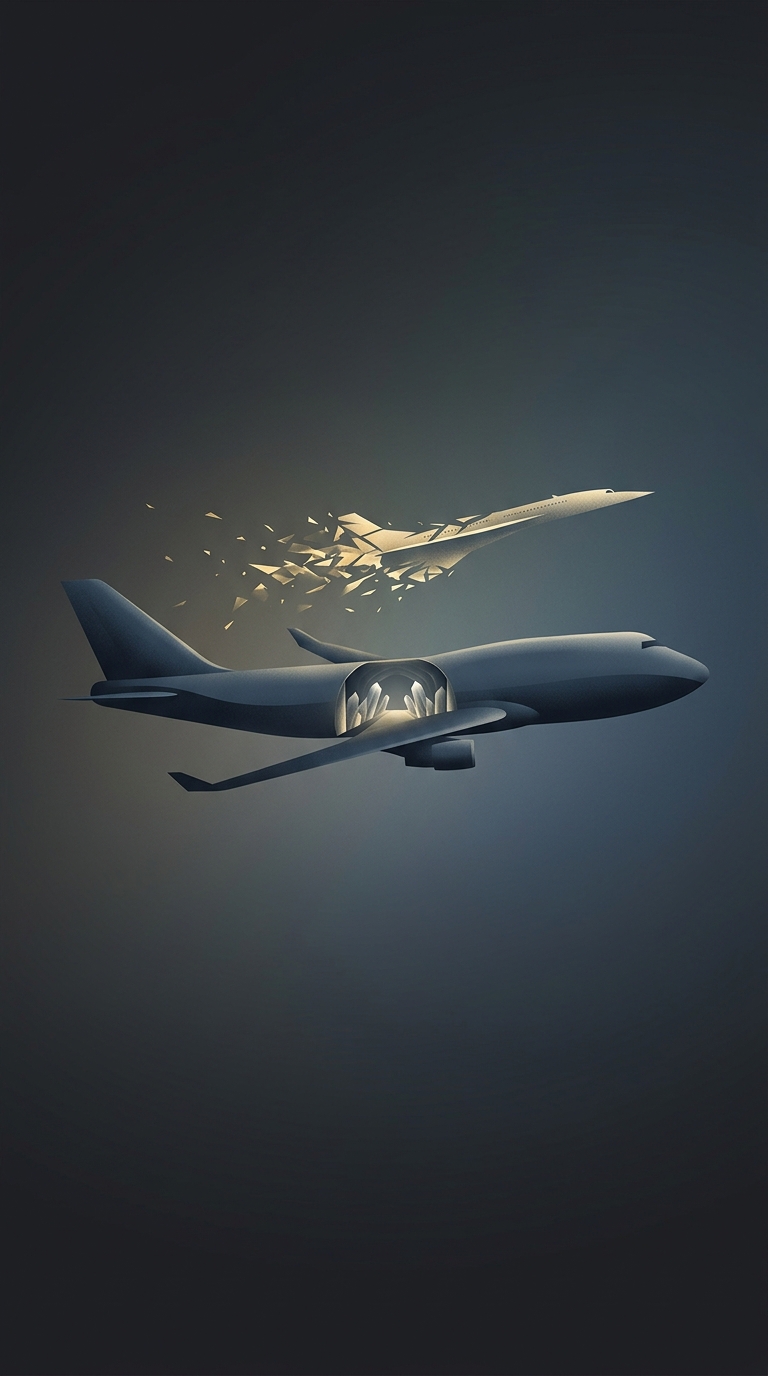
The Comet’s windows turned pressure into a hidden weakness
In the early 1950s, Britain’s de Havilland Comet became the first commercial jet airliner to enter regular passenger service. Its cabin was pressurized so people could breathe comfortably at high altitude. Each flight therefore put the fuselage through a small but repeated strain: pressure expanded the cabin slightly in the air, then eased after landing.
The Comet’s nearly square windows had sharp corners, and those corners concentrated stress in the surrounding metal. Instead of spreading evenly across the fuselage, the load gathered at a few points. Tiny cracks could begin there and grow with each pressurization cycle—a process called metal fatigue.
How investigators found the failure
After Comets broke apart in flight in 1954, investigators examined wreckage and tested a reconstructed fuselage in a water tank, repeatedly pressurizing and depressurizing it to mimic flights. The tests exposed fatigue cracking around the windows, including at places where rivet holes further weakened the metal.
The crashes were not simply a matter of a designer choosing the wrong shape. The Comet was a pioneering jet, flying higher and cycling through cabin pressure in ways that made the effects of repeated stress especially consequential. Its failures revealed how a seemingly minor detail could interact with an entire airframe’s loads.
Why modern airliner windows are rounded
Rounded corners let stress flow more smoothly around an opening, reducing the intense concentration found at a sharp corner. Aircraft designers also strengthened the structure around windows and paid closer attention to fatigue testing and inspection. The familiar rounded-rectangle window is thus a practical response to a hard-won engineering lesson: every opening in a pressurized fuselage must be shaped and reinforced for thousands of cycles, not just for the view it provides.