The weight problem built into steam flight
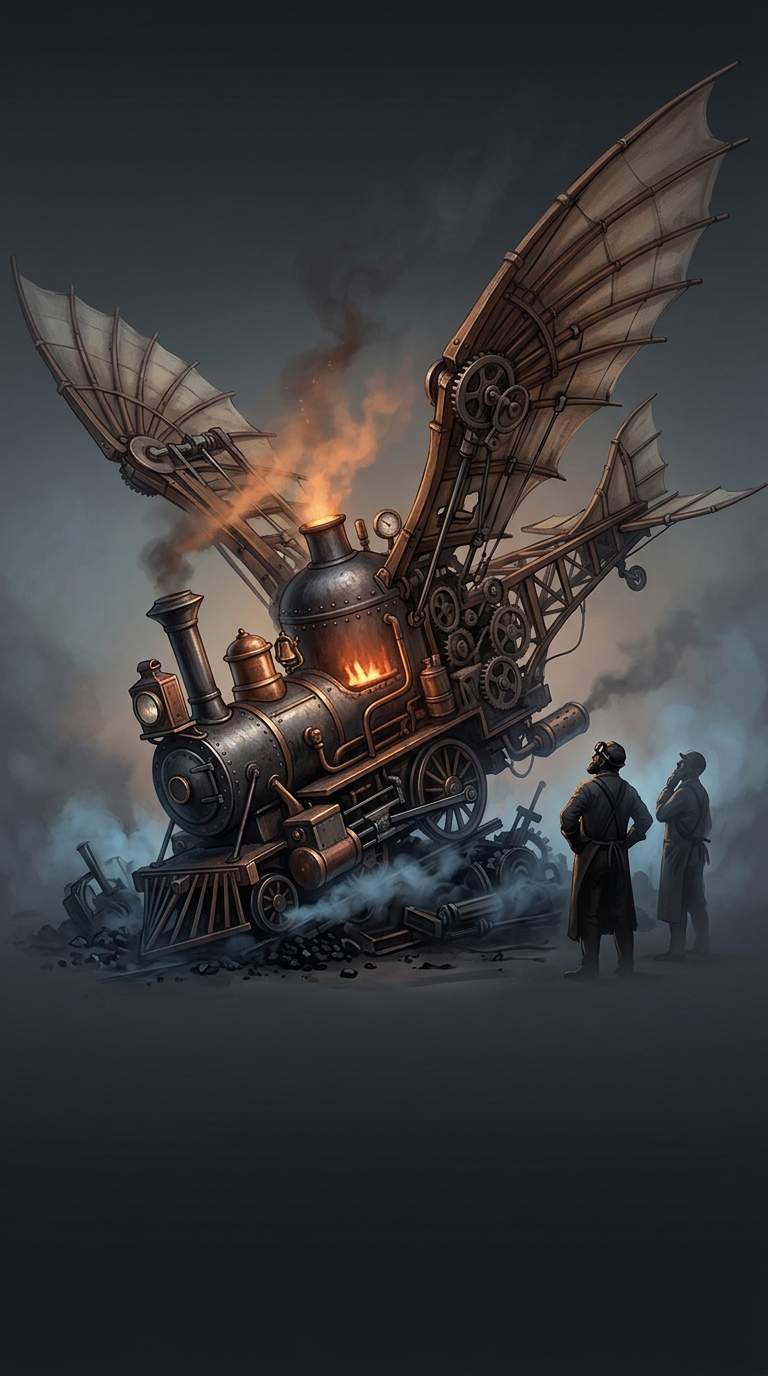
The Aerial Steam Carriage, designed by the English inventor William Samuel Henson in 1842, was an ambitious proposal for powered passenger flight. Its steam engine was meant to turn propellers, while a large fixed wing supplied lift. But drawing the machine was easier than making its power plant light enough to fly.
A steam engine needs more than a piston and a propeller. It also needs a boiler to heat water, water to produce steam, and fuel to keep the fire burning. Those components add weight before a single passenger climbs aboard. The structure must then generate enough lift to support not only the people and airframe, but also the engine, boiler, water, and coal.
Why added power could make the problem worse
Lift increases with a wing’s area and with the speed of air flowing over it. In principle, a larger wing or a faster takeoff could help support a heavier craft. But both options bring costs: a larger wing needs stronger, heavier supports, while a faster aircraft needs more thrust. More thrust, in turn, calls for a more powerful engine and more fuel.
That creates a punishing loop. The machinery needed to lift the aircraft adds weight; lifting that extra weight requires more power; and producing more power means carrying still more machinery and fuel. Steam technology was well suited to stationary engines and locomotives, where weight could rest on a foundation or wheels. In an aircraft, every added pound had to be carried into the air.
A design ahead of its practical power source
Henson’s proposal imagined a future network of aerial travel, but the design was never built as a working passenger aircraft. The obstacle was not simply a lack of determination: the available steam machinery could not deliver enough useful power for its weight to make the proposed airplane practical.
Later aviation succeeded by pairing lift-producing wings with power plants that offered far more thrust for the weight they added. The enduring lesson of the Aerial Steam Carriage is that an aircraft must carry its own means of flight—and every part devoted to producing power has to earn its place in the air.