Why Make Ice Cream at Sea?
In the Pacific, distance made ordinary supply lines especially difficult. A finished ice-cream shipment had to stay frozen from its point of production to the moment it reached troops—often across long voyages in a hot climate. Any break in refrigeration could turn a carefully packed cargo into waste.
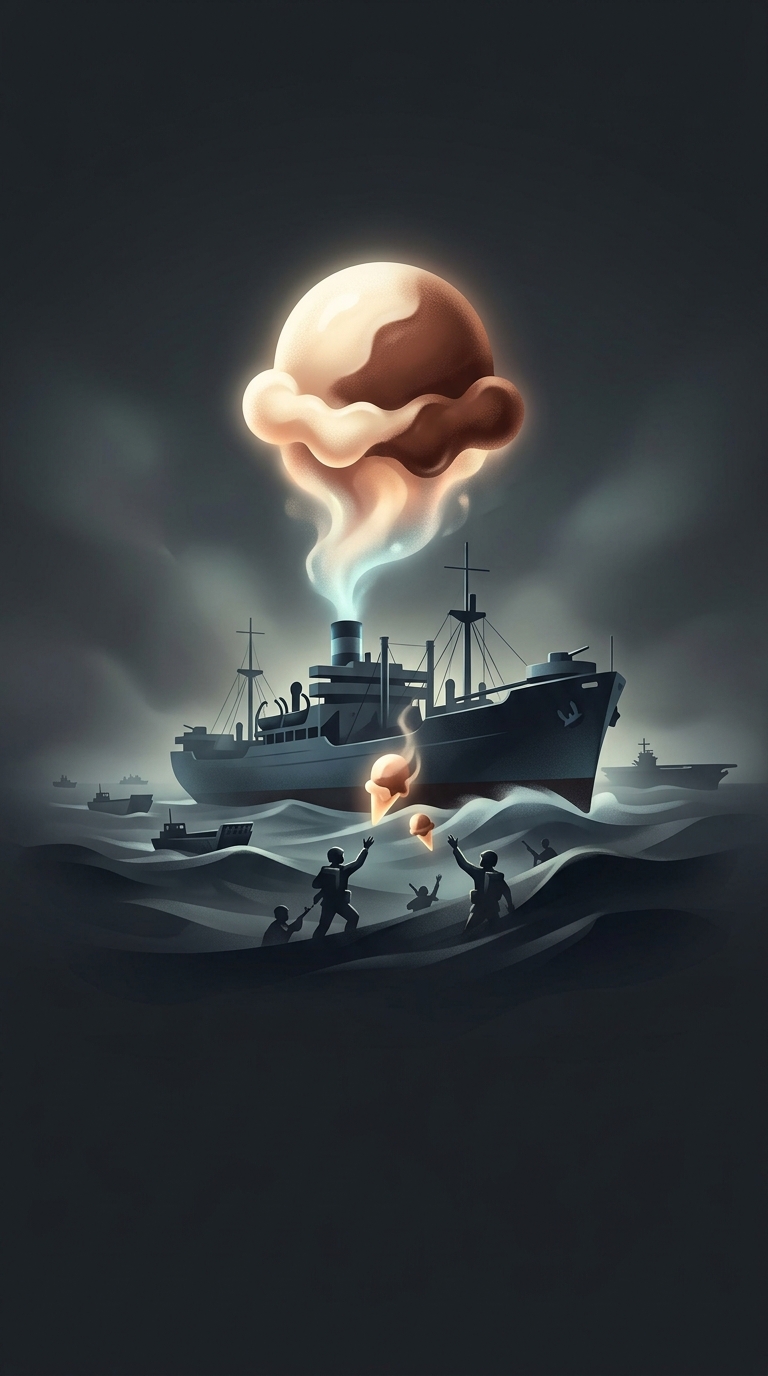
A floating factory changed what needed to travel. Refrigerated ships carried ingredients and equipment, then churned the dessert near the forces it was meant to reach. Instead of protecting every serving as finished ice cream for the whole journey, crews could transport ingredients and make the product aboard.
A Treat Built Into the Supply System
Making ice cream required more than a recipe: the ship needed dependable refrigeration and machinery, along with space for ingredients and production. Those demands competed with other uses of ships and cargo. The arrangement made sense because the Navy could bring production close to troops without relying on a shore-based factory in the theater.
The result was a small but deliberate use of transport capacity. Ships already moving through the Pacific became part of the chain that supplied a familiar comfort, not just fuel, food, and equipment. In a hot war zone, a cold dessert was a visible payoff from a complicated operation at sea.
Morale Had a Physical Delivery Route
Ice cream could not change the dangers or shortages of war, but it gave commanders a practical way to offer troops a moment of relief. The striking part is how literal that effort was: morale depended on refrigeration, machinery, ingredients, and ships able to keep them together far from shore.